
Disclosure: this article contains affiliate links. If you buy through them, Bright Technology may earn a small commission at no extra cost to you. As an Amazon Associate, we earn from qualifying purchases.
The best 3D printers of 2026 no longer stand out by speed, because almost all of them pass 500 mm/s. What changes is what you want to do with them: learn on PLA, print engineering materials in an enclosed machine, make multicolor parts, go large-format, or pour detail into resin miniatures. This ranking covers eight models sorted by use case, with the criteria you need to pick the right one.
- Best 3D printers of 2026 compared
- How we chose the best 3D printers
- 1. Bambu Lab P2S: best 3D printer overall
- 2. Bambu Lab A1 mini: best cheap 3D printer
- 3. Bambu Lab A1: best for beginners who want more size
- 4. Elegoo Centauri Carbon 2: best cheap enclosed 3D printer
- 5. Bambu Lab X2D: best advanced multicolor 3D printer
- 6. Bambu Lab A2L: best cheap large-format 3D printer
- 7. Prusa CORE One+: best professional 3D printer
- 8. Elegoo Saturn 4 Ultra 16K: best resin 3D printer
- Best 3D printer brands
- Which one should you choose?
- Common mistakes when buying a 3D printer
- Frequently asked questions
- Keep reading
- Official sources
Quick answer: the best 3D printer for most people is the Bambu Lab P2S: enclosed, fast and multicolor-ready. On a tight budget, get the Bambu Lab A1 mini. For ABS and carbon fiber at the lowest price, pick the Elegoo Centauri Carbon 2. For miniatures, choose a resin printer like the Elegoo Saturn 4 Ultra 16K.
Best 3D printers of 2026 compared
| Model | Best for | Type | Build volume | US price |
|---|---|---|---|---|
| Bambu Lab P2S | Best overall | Enclosed CoreXY FDM | 256 × 256 × 256 mm (10.1 in) | See listing |
| Bambu Lab A1 mini | Best cheap starter | Open-frame FDM | 180 × 180 × 180 mm (7.1 in) | See listing |
| Bambu Lab A1 | Beginners who want more size | Open-frame FDM | 256 × 256 × 256 mm (10.1 in) | See listing |
| Elegoo Centauri Carbon 2 | Cheap enclosed, engineering materials | Enclosed CoreXY FDM | 256 × 256 × 256 mm (10.1 in) | See listing |
| Bambu Lab X2D | Advanced multicolor | Enclosed, dual nozzle | 256 × 256 × 260 mm | See listing |
| Bambu Lab A2L | Cheap large-format | Open-frame FDM | 330 × 320 × 325 mm (13 in) | See listing |
| Prusa CORE One+ | Professional and repairable | Enclosed CoreXY FDM | See listing | See listing |
| Elegoo Saturn 4 Ultra 16K | Miniatures and fine detail | MSLA resin | See listing | See listing |
How we chose the best 3D printers
We did not chase the flashiest spec sheet. We looked for the printer that solves each case best. These are the criteria:
- Ease of use: automatic calibration, bed leveling and ready-made slicer profiles. A printer that needs hours of tuning is a bad buy for almost everyone.
- Materials: an open printer is fine for PLA and PETG. ABS, ASA or fiber-filled filaments need an enclosure, a bed of 100 °C or more and a hardened steel nozzle.
- Multicolor: whether you can add a four-spool feeder, or whether it ships in the Combo version.
- Ecosystem and spare parts: software, community, and how easy it is to find nozzles, plates and parts.
- Value: what you get for the money, based on the manufacturers’ own specifications.
1. Bambu Lab P2S: best 3D printer overall
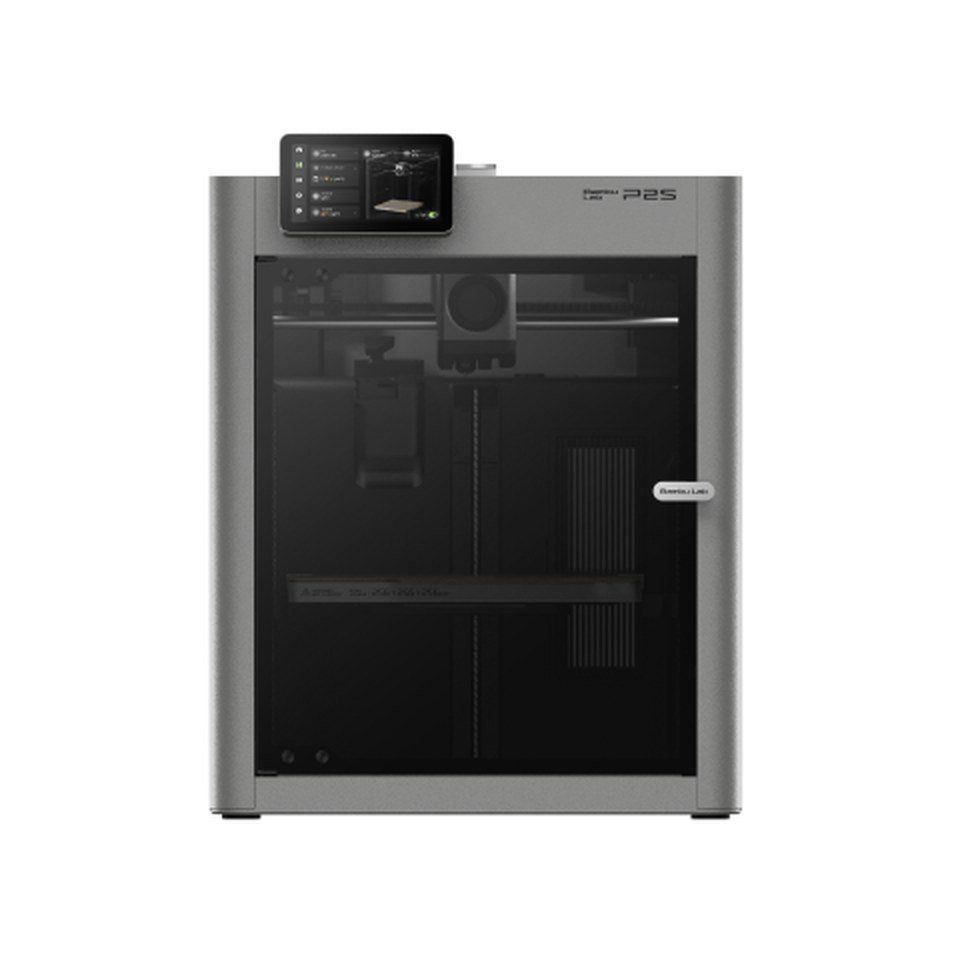
- Build volume: 256 × 256 × 256 mm (10.1 in)
- Speed: up to 600 mm/s
- Acceleration: 20,000 mm/s²
- Nozzle: 300 °C, hardened steel
- Bed: up to 110 °C
- Built-in 1080p camera and door sensor
The P2S is the printer we would point almost anyone to if they are serious about printing. It is enclosed, so it handles PLA and PETG easily. It also prints ABS, ASA and carbon fiber filaments thanks to its hardened steel nozzle. It reaches 600 mm/s, and the built-in camera lets you watch the part from your phone.
It is also ready for multicolor. Buy it alone and add an AMS later, or go straight to the Combo version. Check the current listing for pricing.
- Enclosed and fit for engineering materials
- Very fast, with automatic calibration
- Multicolor-ready with the AMS
- Costs more than an open printer if you only print PLA
- Tied to the Bambu Studio ecosystem
- The Combo raises the price a lot
2. Bambu Lab A1 mini: best cheap 3D printer
Few printers are easier to use at this price. The A1 mini calibrates itself, is quiet and arrives almost fully assembled. You can be printing in about half an hour. That makes it the classic plug-and-play 3D printer for beginners.
Its limit is size: 180 × 180 × 180 mm (about 7 inches). It suits figures, keychains, spare parts and organizers, but not helmets or big parts. It has an open frame, so stick to PLA, PETG and TPU.
- Very low price
- Automatic calibration and bed leveling
- Quiet and compact
- Small build volume
- Not suited to ABS or ASA
- Moving bed needs clearance front and back
3. Bambu Lab A1: best for beginners who want more size
The A1 is the big sister of the mini. It is just as easy to use, with a 256 × 256 × 256 mm build volume. It is the logical choice if you want to print medium parts, or if you know you will outgrow the mini soon. The Combo version includes the four-spool AMS lite, the cheapest way to print in several colors.
Torn between the two? Read our Bambu Lab A1 mini vs A1 comparison.
- Good build volume for the money
- Cheap multicolor with the AMS lite
- Very reliable with PLA and PETG
- Open frame: no ABS or ASA
- Louder than an enclosed printer
- Needs plenty of desk space
4. Elegoo Centauri Carbon 2: best cheap enclosed 3D printer
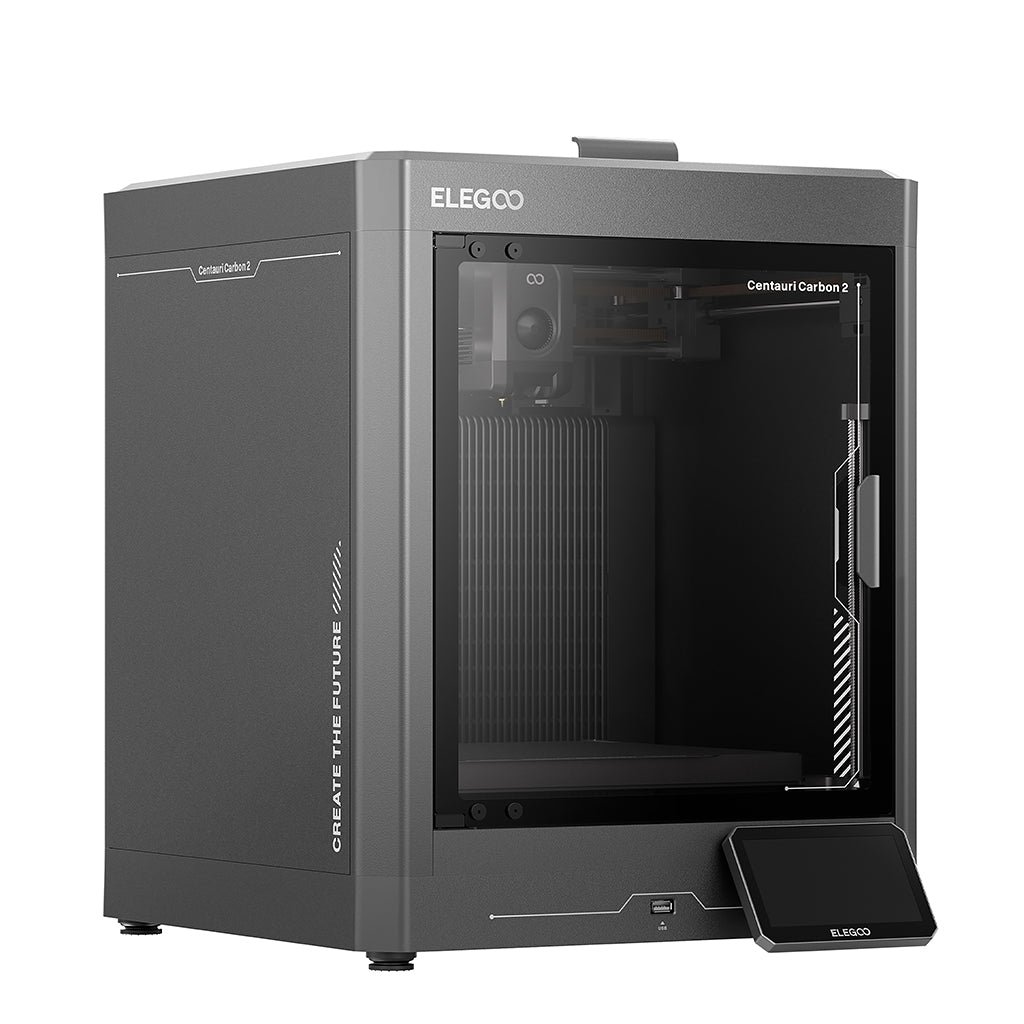
- Build volume: 256 × 256 × 256 mm (10.1 in)
- Nozzle: 350 °C, hardened steel
- Bed: up to 110 °C
- Enclosed, with HEPA and activated carbon filter
- Four-spool CANVAS multicolor system in the Combo
The Centauri Carbon 2 is the cheapest way to get an enclosed CoreXY with a 350 °C nozzle. That means ABS, ASA and carbon or glass fiber filaments without fighting warping. Elegoo rates it at about 45 dB, and it includes a camera with failure detection.
It is the main rival to the P2S if you want to spend less. It comes as a standard version and as a Combo with the CANVAS multicolor system.
- Enclosed, with a 350 °C nozzle
- Very affordable multicolor Combo
- Quiet
- Ecosystem less polished than Bambu Lab
- Standard volume, not large-format
- Heavier and bulkier
5. Bambu Lab X2D: best advanced multicolor 3D printer
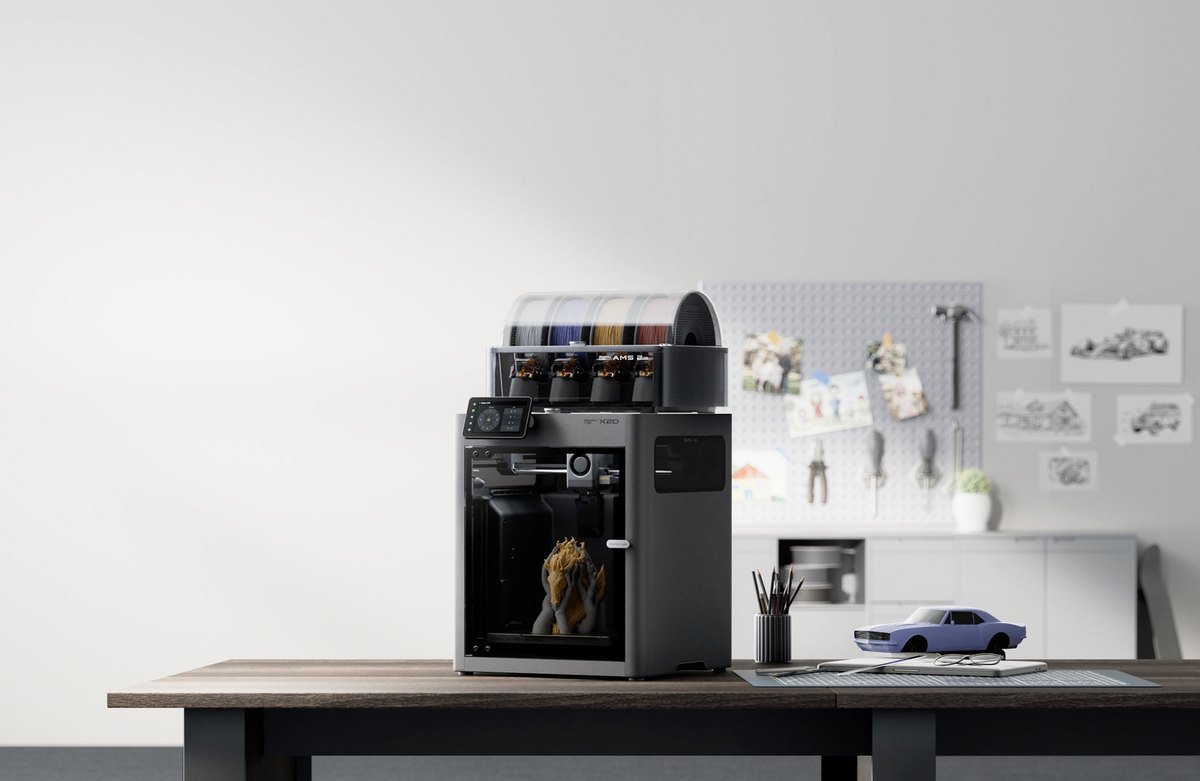
The X2D has two nozzles and an actively heated enclosed chamber. Reserve the second nozzle for a heavily used color or for support material, and you cut purge waste a lot. With more AMS units it reaches 16 colors.
If multicolor is your priority, compare it with the rest in our ranking of the best multicolor 3D printers.
- Dual nozzle: less purge waste
- Heated chamber for engineering materials
- Expandable to 16 colors
- High price once you add the AMS
- The second nozzle is slower
- Overkill if you only print single-color PLA
6. Bambu Lab A2L: best cheap large-format 3D printer
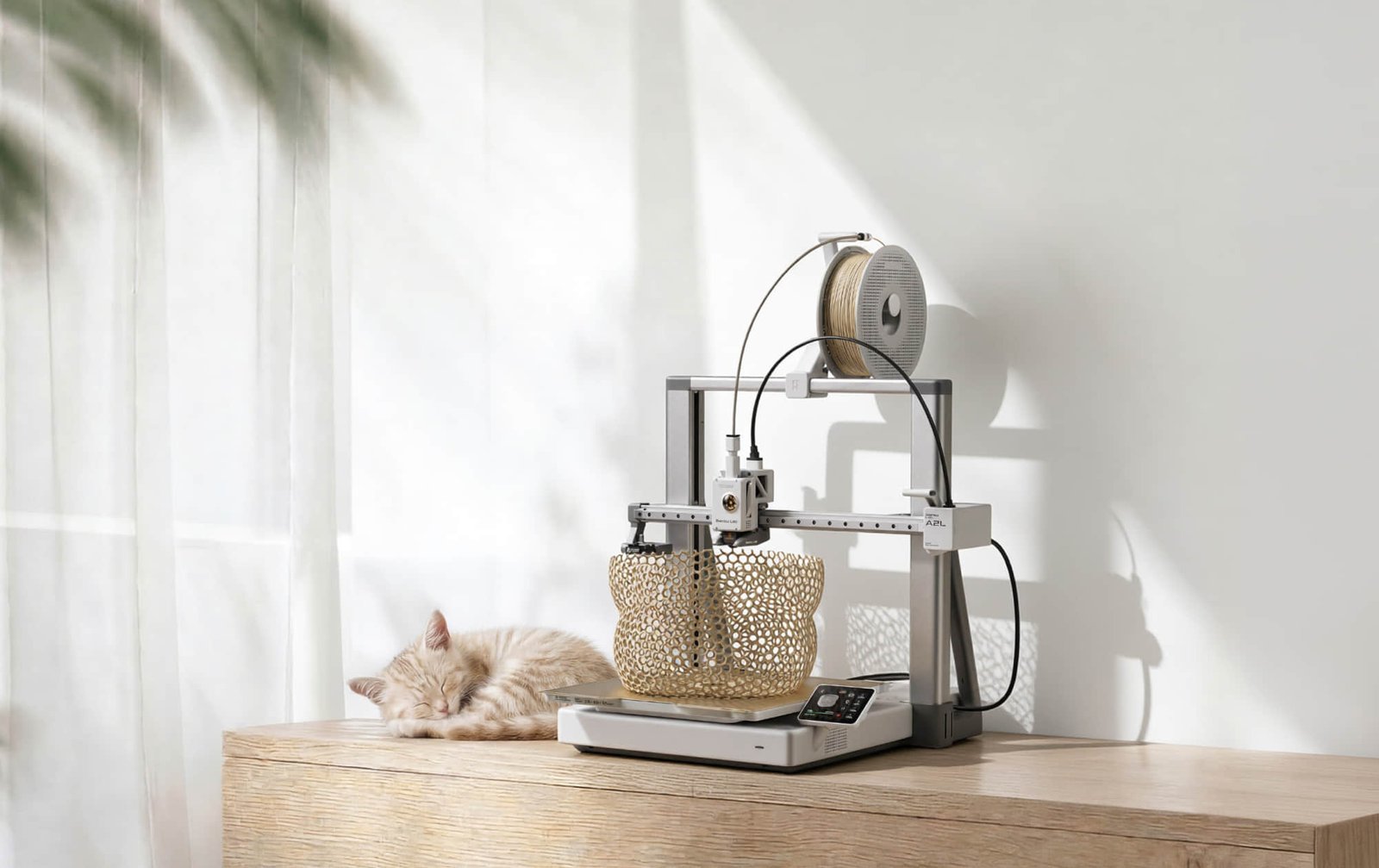
- Build volume: 330 × 320 × 325 mm (13 in)
- Speed: up to 500 mm/s
- Nozzle: 300 °C
- Bed: up to 80 °C
- Works with AMS lite and AMS
With about 34 liters of usable volume, the A2L prints almost twice as much as a 256 mm printer. It is great for cosplay helmets, planters or one-piece scale models, with no need to split the model. It is open-frame, and Bambu Lab aims it at PLA and PETG.
- Large volume for the money
- Same ease of use as the A1
- Optional cut-and-trace kit
- Open frame with an 80 °C bed
- Takes a lot of room because of the bed travel
- Not suited to ABS or ASA
7. Prusa CORE One+: best professional 3D printer
The CORE One+ is an enclosed CoreXY made in Czechia, with easy-to-get spare parts and open firmware. It is not the fastest or the cheapest. It is the one that fits a workshop or a company that wants a repairable machine for years, with no cloud dependence.
Prusa sells it assembled or as a kit. If you need a bigger build volume or several toolheads, see the best professional 3D printers.
- Very repairable, with spare parts available
- Open firmware, no mandatory cloud
- Expandable with the INDX tool changer
- High price for its volume
- Slower than comparable Bambu Lab models
- Multicolor adds a lot to the cost
8. Elegoo Saturn 4 Ultra 16K: best resin 3D printer
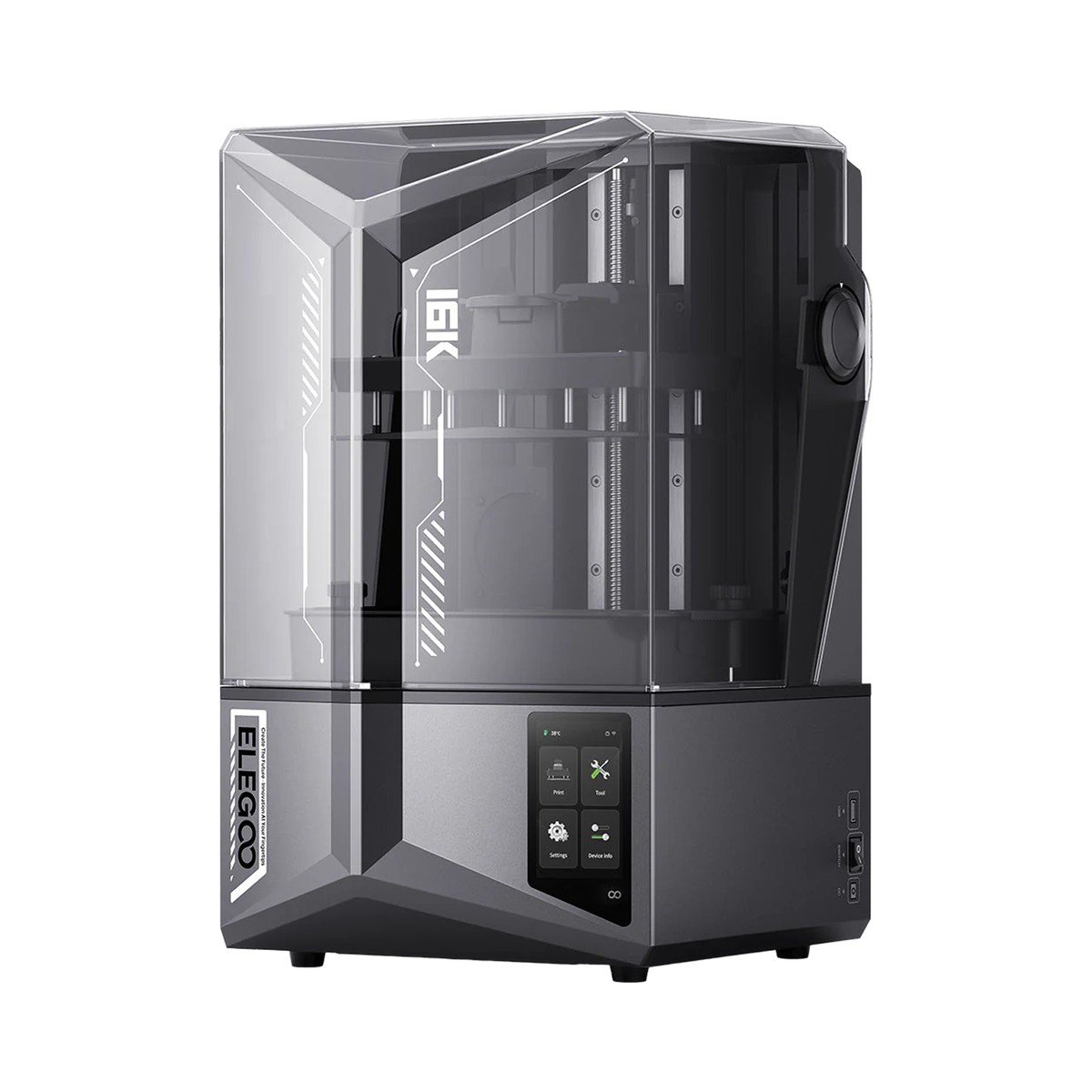
- Technology: MSLA resin
- 16K monochrome screen
- Ideal for miniatures, jewelry and dental work
- Parts need washing and curing
If you make tabletop miniatures, figures or jewelry, resin gives a level of detail no FDM printer reaches. The Saturn 4 Ultra 16K is the sweet spot: a high-resolution screen and enough room for several figures at once.
Resin needs gloves, ventilation and a wash-and-cure station. If you are unsure, read our guide to resin 3D printers.
- Excellent detail
- Good size for batches of figures
- Strong value for a 16K screen
- Toxic resin: needs protective gear
- Post-processing is mandatory
- Not for large functional parts
Best 3D printer brands
The best 3D printer brands in 2026 are Bambu Lab, Prusa, Elegoo, Creality, Anycubic and Snapmaker for filament, and Elegoo, Anycubic and Formlabs for resin. Each has a different profile:
- Bambu Lab: the benchmark for ease of use and speed. A full range, from the A1 mini to the professional H2D.
- Prusa: the Czech brand of repairable, open machines. Pricier, but hard to beat on support and spare parts.
- Elegoo: hard to beat on price, in resin (Mars and Saturn) and in its enclosed Centauri line.
- Creality: the maker of the Ender and K series, with a very wide range. See our Creality K3 review for its four-nozzle model.
- Anycubic: good value in resin (Photon) and affordable multicolor with its ACE system.
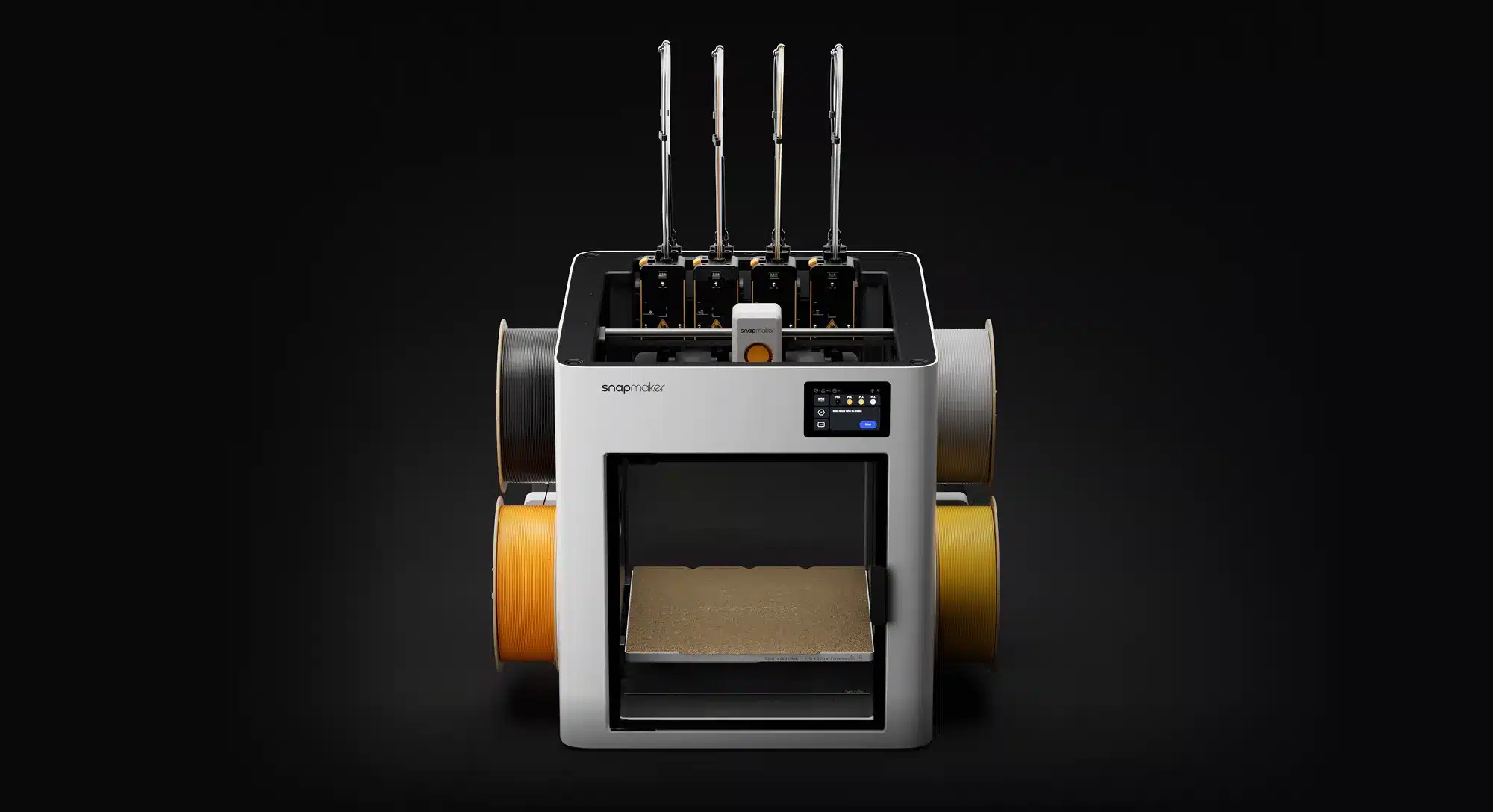
- Snapmaker: a pioneer of affordable toolhead swapping with the U1.
Which one should you choose?
- First printer, small budget: Bambu Lab A1 mini.
- First printer, medium parts: Bambu Lab A1 or its multicolor Combo.
- One printer to do everything for years: Bambu Lab P2S.
- ABS, ASA or carbon fiber on a budget: Elegoo Centauri Carbon 2.
- Lots of multicolor parts: Bambu Lab X2D.
- Big parts: Bambu Lab A2L.
- Business or workshop: Prusa CORE One+.
- Miniatures and figures: Elegoo Saturn 4 Ultra 16K.
Whatever you choose, set aside some budget for 3D printer accessories such as a filament dryer, scrapers and a spare build plate.
Common mistakes when buying a 3D printer
- Buying an open printer for ABS: parts warp and the fumes are unpleasant. If you plan to print engineering materials, go enclosed from day one.
- Looking only at top speed: quality at real speed depends on calibration and filament.
- Forgetting space: moving-bed printers need room in front and behind.
- Assuming multicolor is free: with one nozzle, every color change wastes filament and lengthens the print.
- Skimping on filament: a good PLA prevents clogs and adhesion failures. See our pick of the best PLA filament.
Frequently asked questions
For most people, the Bambu Lab P2S: it is enclosed, fast, prints engineering materials and supports multicolor. If you only print PLA, the Bambu Lab A1 offers a lot for less.
Bambu Lab is the most recommended for ease of use and value. Prusa stands out for reliability and repairability, and Elegoo is the best for resin and for budget buyers.
Starter printers sit at the low end of the market, enclosed models for engineering materials cost more, and professional machines cost the most. Check current listings, because prices shift often.
Filament printers are more versatile and cheaper to run, and they make functional parts. Resin printers give far more detail but need gloves, ventilation and post-processing. For miniatures, choose resin. For almost everything else, choose filament.
It arrives almost fully assembled and calibrates itself, so you can print in under an hour with no manual tuning. The Bambu Lab A1 mini and A1 are the clearest examples.
Keep reading
Official sources
- Bambu Lab: official spec pages and store for the P2S, A1, A1 mini, A2L and X2D.
- Elegoo: official store pages for the Centauri Carbon 2 and the Saturn 4 Ultra 16K.
- Prusa Research: official store page for the CORE One+.
- Creality: official store.