
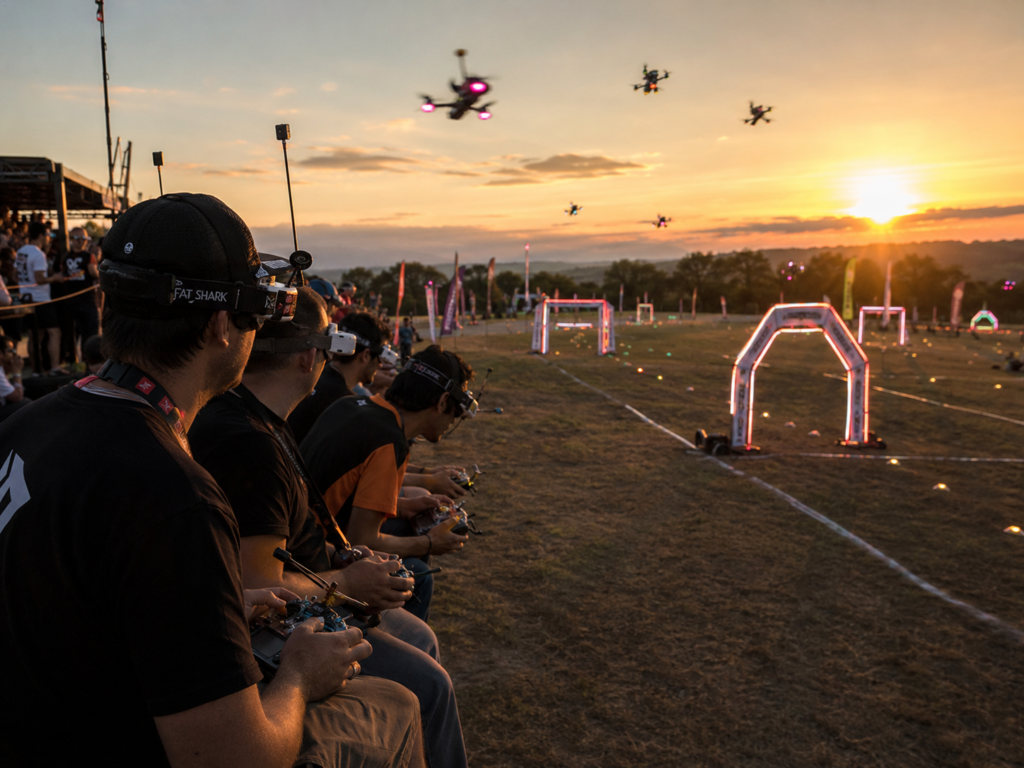
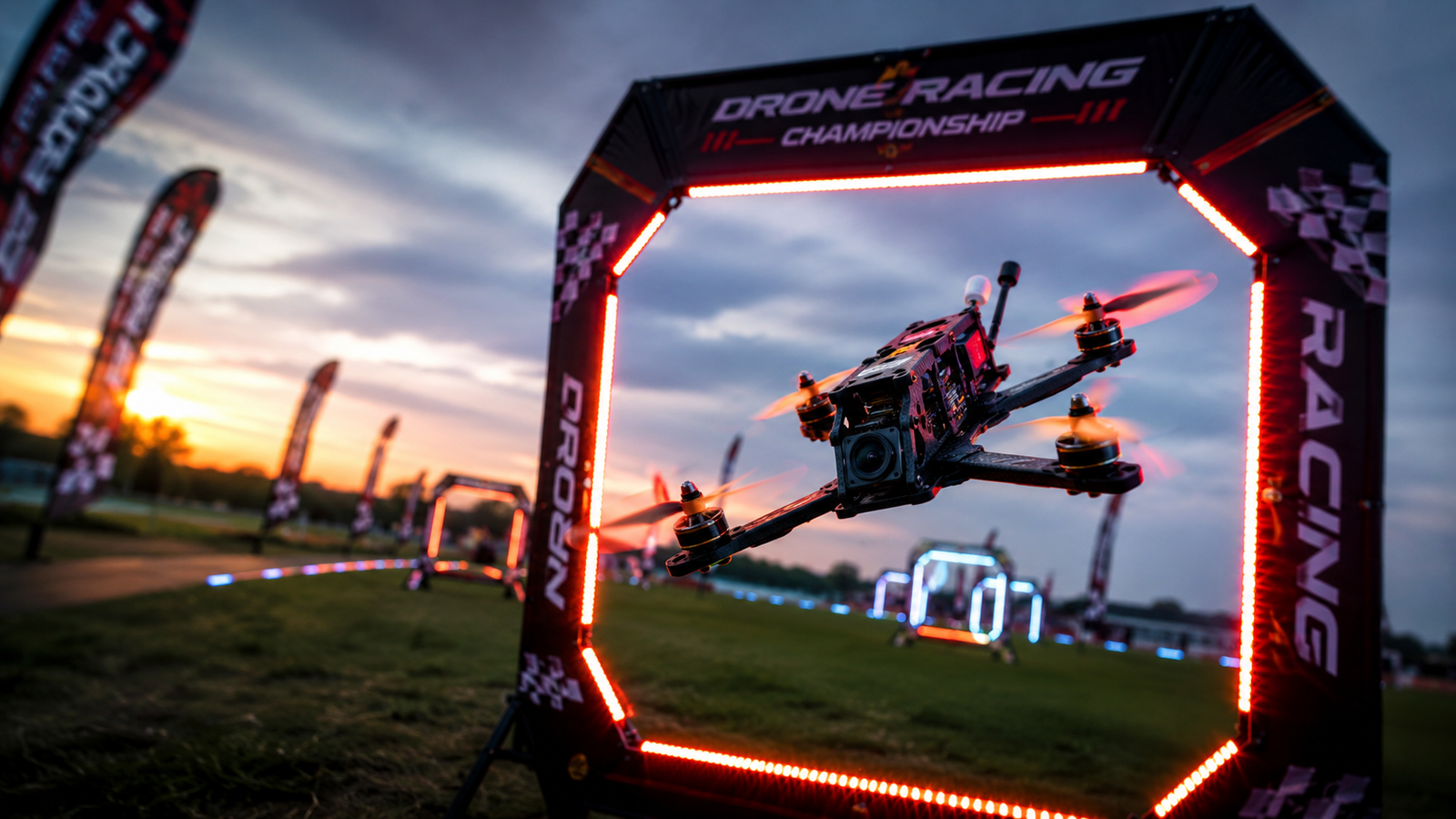
Racing drones are one of the most spectacular and exciting corners of the drone world. Unlike camera drones built for aerial photography and video, FPV racing drones are designed for extreme speed and razor-sharp maneuvers. In drone racing, pilots fly through courses full of gates, obstacles and fast direction changes while watching a live first-person view (FPV) feed through goggles.
The sport has grown quickly thanks to FPV competitions and leagues such as the Drone Racing League (DRL). If you’re wondering what racing drones are, how they work, what gear you need to compete or how to get into drone racing, this guide covers everything you need for your first steps.
Quick answer: a racing drone is a lightweight FPV quad built for top speed, instant response and precise control, flown in Acro mode through goggles. To start, practice in a simulator, learn Acro mode, then get a durable, easy-to-repair beginner quad, FPV goggles, a quality radio and several batteries.
What is a racing drone?
A racing drone is an aircraft designed specifically to compete on FPV courses. Its priorities are:
- Maximum speed
- Immediate response
- Strong acceleration
- Precise control
To get there, racing quads give up features common on camera drones, such as automatic flight modes, advanced sensors and assistance systems. In exchange they offer extraordinary maneuverability. Pilots fly with FPV goggles and a radio controller, reacting in real time to every turn and obstacle. Our guide to what an FPV drone is explains the underlying technology.
Why are racing drones so fast?
Speed is what grabs most people’s attention. Many racing drones easily exceed 60 mph (100 km/h), and some advanced setups go much faster. That is possible thanks to:
- Ultralight frames
- High-performance motors
- Optimized propellers
- Specialized electronics
The whole design is built around maximizing the power-to-weight ratio, which is why fast FPV drones feel so different from any ordinary recreational drone.
How racing drones work
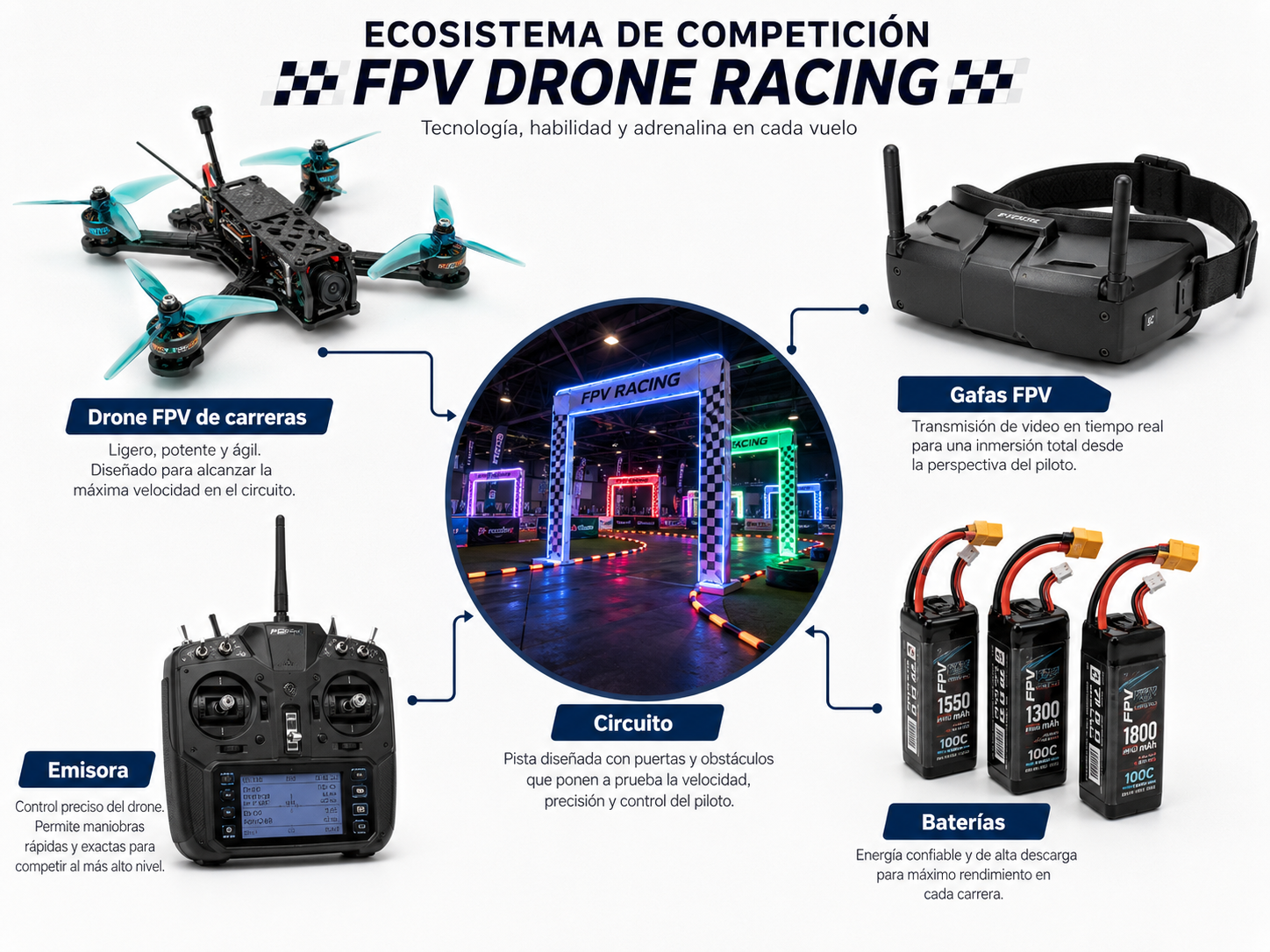
Racing drones share their technology with other FPV drones, but competition models are tuned for maximum performance. Their main components are:
Frame
It has to be light but tough. Carbon fiber is the most common material because it balances weight and durability so well.
Motors
Motors deliver the acceleration and top speed needed to compete. FPV racing uses extremely powerful setups.
Propellers
Propellers directly affect speed, acceleration, power consumption and handling. Many pilots test different setups until they find the one that suits their flying style.
Flight controller
The flight controller processes all the data and executes the pilot’s commands. Firmware such as Betaflight is especially popular in the hobby.
FPV system
This includes the FPV camera, video transmitter, receiver and FPV goggles. Together they let the pilot race while seeing exactly what the drone sees.
FPV drone vs. racing drone
One of the most common questions is the difference between an FPV drone and a racing drone. The answer is simple: every racing drone is an FPV drone, but not every FPV drone is a racer. The FPV world includes several disciplines:
- Freestyle
- Cinewhoop
- Drone racing
- Recreational flying
Racing is just one specialty, with very specific setups aimed at competitive performance. To compare options, see our picks of the best FPV drones and the overview of types of drones.
How to get started in drone racing
Getting into FPV racing is far easier today than a few years ago, but a step-by-step approach saves frustration and crashes. For a deeper walkthrough, read our guide on how to get into FPV.
- Start with a simulator. Most experienced pilots recommend it: you build reflexes and coordination without breaking hardware.
- Learn Acro mode. It is the foundation of advanced FPV flying and essential for racing.
- Practice in open spaces. Train basic maneuvers in a safe area before tackling complex courses.
- Join the FPV community. One of the most active in the drone world: groups, forums and events can speed up your learning enormously.
What you need to race drones
The basic kit is simpler than it looks:
Racing drone
The core of the setup, built to maximize speed, acceleration, durability and responsiveness. Most pilots use FPV configurations made specifically for competition.
FPV goggles
Goggles show the image transmitted by the drone in real time and are one of the most important parts of the ecosystem. Systems come in several flavors, each with trade-offs depending on your experience and budget:
- Analog
- Digital
- DJI O3
- Walksnail
- HDZero
Radio controller
The radio is what lets you control the drone. A good one offers precision, reliability, low latency and advanced customization. Many pilots consider it the most important purchase after the drone itself.
Batteries and charger
Batteries directly affect power, flight time and performance. In competition it’s normal to have several packs so you can train for long sessions.
FPV simulator
If you’re looking for how to learn drone racing, this is probably the most recommended tool. Simulators let you practice courses, maneuvers, Acro control and fast reactions with zero risk to your equipment.
Why people love drone racing
- Adrenaline and speed: few tech hobbies combine speed, precision and excitement like this.
- Skill building: FPV flying sharpens coordination, reflexes, focus and reaction time, which is why many pilots see it as a true tech sport.
- International community: thousands of pilots worldwide, with events, competitions, learning groups and specialized communities that help beginners progress.
- Constant evolution: new digital systems, better motors and more advanced flight controllers keep improving the experience.
The challenges of FPV racing
- Learning curve: learning how to race drones takes time and practice, and first flights are harder than most beginners expect.
- Frequent repairs: crashes are part of learning, so replacing propellers, frame arms, motors and electronics is normal. In time, repairs become a natural part of the hobby.
- Upfront cost: there are budget options, but a complete FPV setup can cost more than a traditional recreational drone. Most pilots find the experience is worth it.
Is drone racing legal in the US?
Yes, if you follow FAA rules. Recreational pilots must pass the free TRUST test, register drones weighing 250 g or more (registered drones must also broadcast Remote ID) and, when flying with goggles, have a visual observer next to them who keeps the aircraft in sight. Flying for business falls under Part 107 instead. Organized races usually take place at clubs or approved fields, so it’s worth checking the rules before you fly. If you’re new to flying in general, start with how to fly a drone or the best drones for beginners.
The future of drone racing
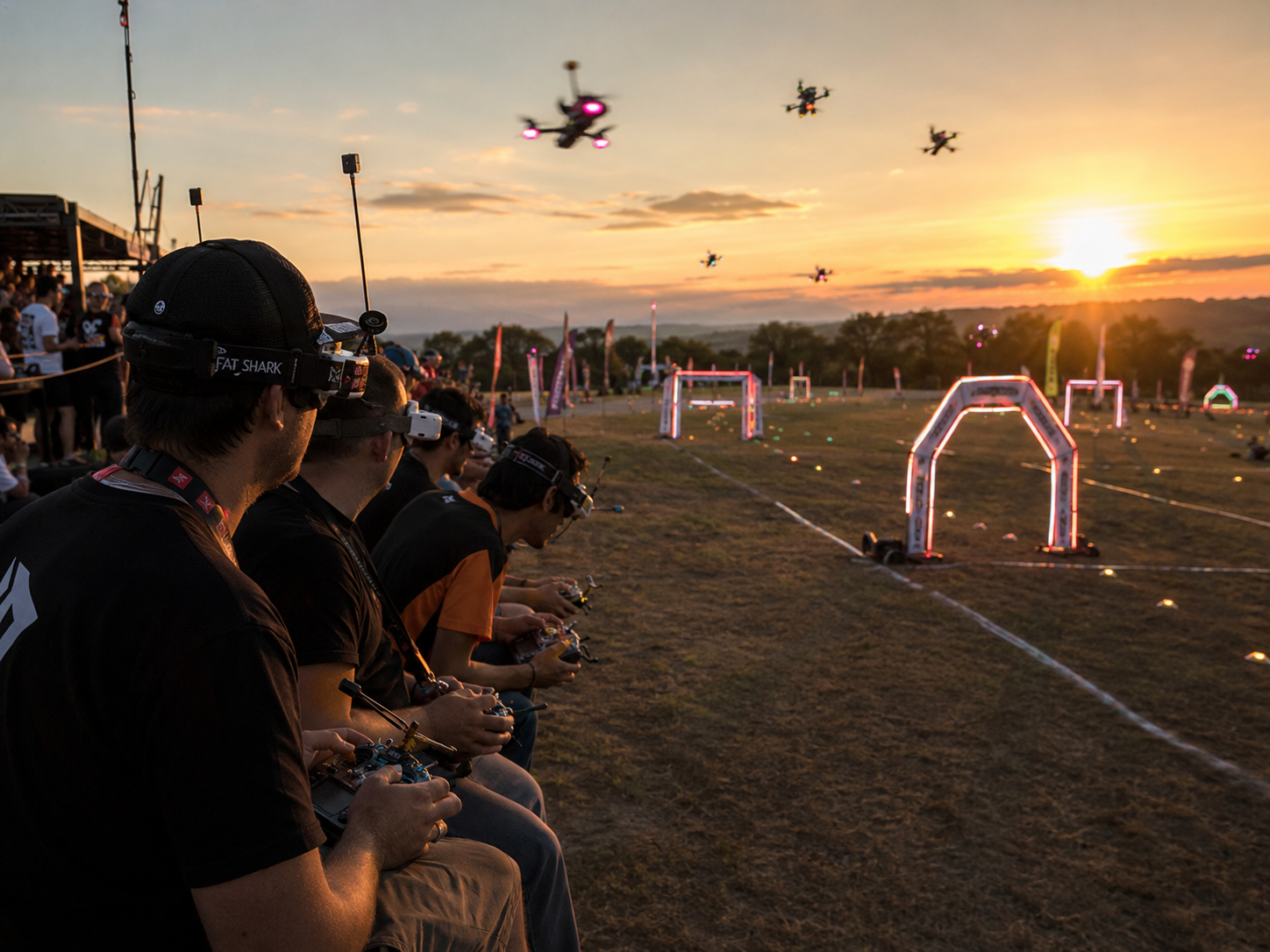
FPV competitions keep growing internationally, and organizations such as the Drone Racing League (DRL) have helped popularize the sport and bring it to new audiences. Technology is also delivering:
- Better video quality
- Lower latency
- More reliable equipment
- Easier access for beginners
Everything points to drone racing gaining popularity in the coming years, so anyone starting today is joining a sport that is still expanding.
Bottom line
Racing drones offer one of the most exciting experiences in the drone world. Thanks to FPV technology, pilots feel unique sensations while competing on courses packed with speed, precision and adrenaline. They demand dedication, practice and some upfront investment, but if you love speed, competition and continuous learning, drone racing can become one of the most rewarding hobbies there is. If you’d rather start with an immersive, easier-to-fly option, see our DJI Avata 2 review.
Racing drones FAQ
FPV aircraft designed to compete on courses at high speed, prioritizing agility, acceleration and precise control.
It depends on the setup. Many easily exceed 60 mph (100 km/h), and advanced configurations can go considerably faster.
All racing drones use FPV technology, but not all FPV drones are built to race. FPV also covers freestyle, cinewhoops and recreational flying.
The learning curve is steeper than with a regular camera drone, so start by practicing on an FPV simulator before flying for real.
Yes. Goggles are essential because they let you see the course from the aircraft’s point of view.
Start with a simple, durable, easy-to-repair setup. Your first priority is learning the basics of piloting properly.
Many pilots train on dedicated FPV simulators to build reflexes, maneuvers and Acro-mode control before competing.
A racing drone, FPV goggles, a radio controller, several batteries with a charger, and ideally an FPV simulator to practice.
Yes, as long as you follow FAA rules: the TRUST test for recreational pilots, registration for drones of 250 g or more and a visual observer when flying with goggles.