Best FPV drones: a guide to choosing the perfect model

Start » Drone » Best FPV drones: a guide to choosing the perfect model
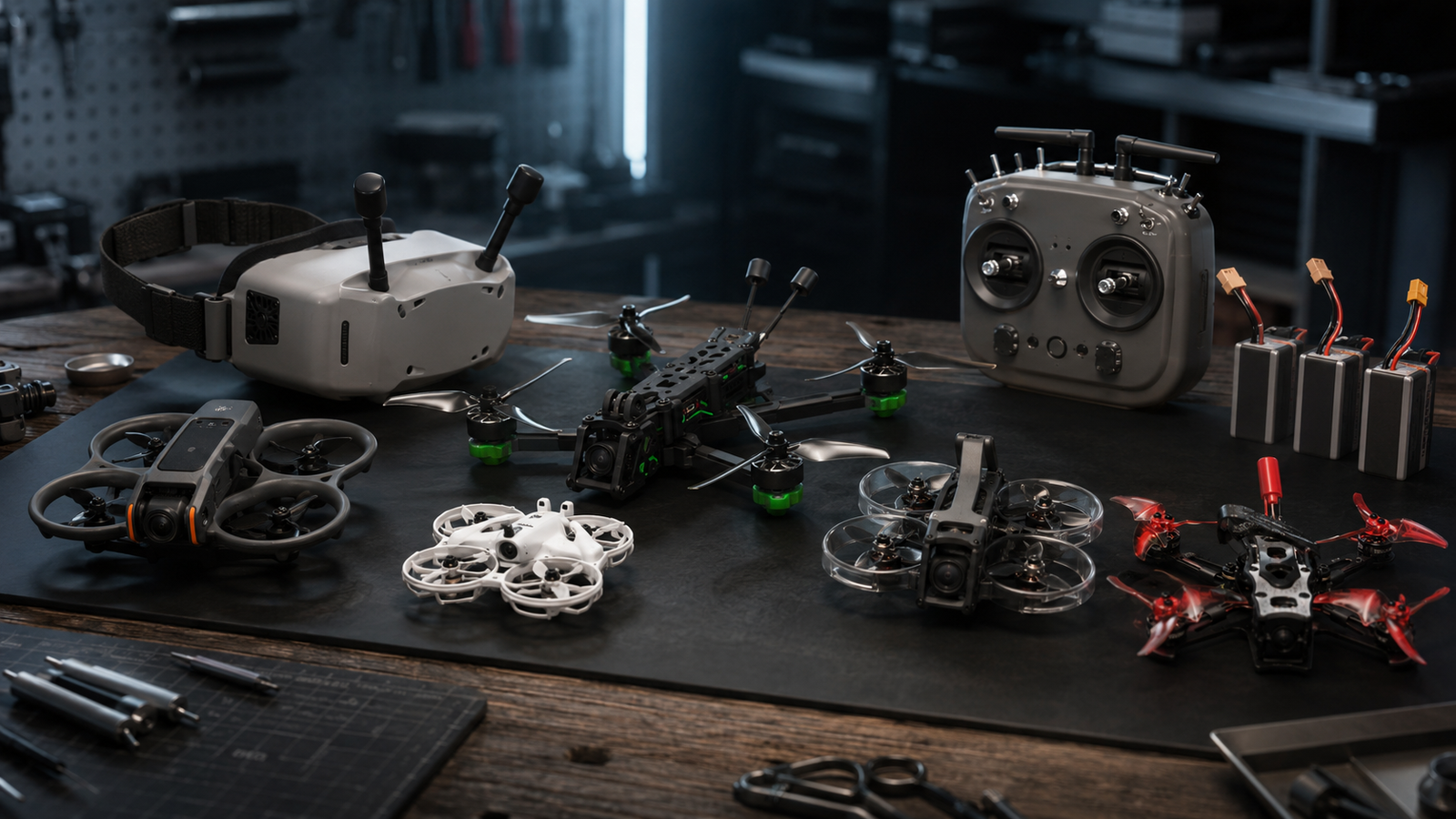
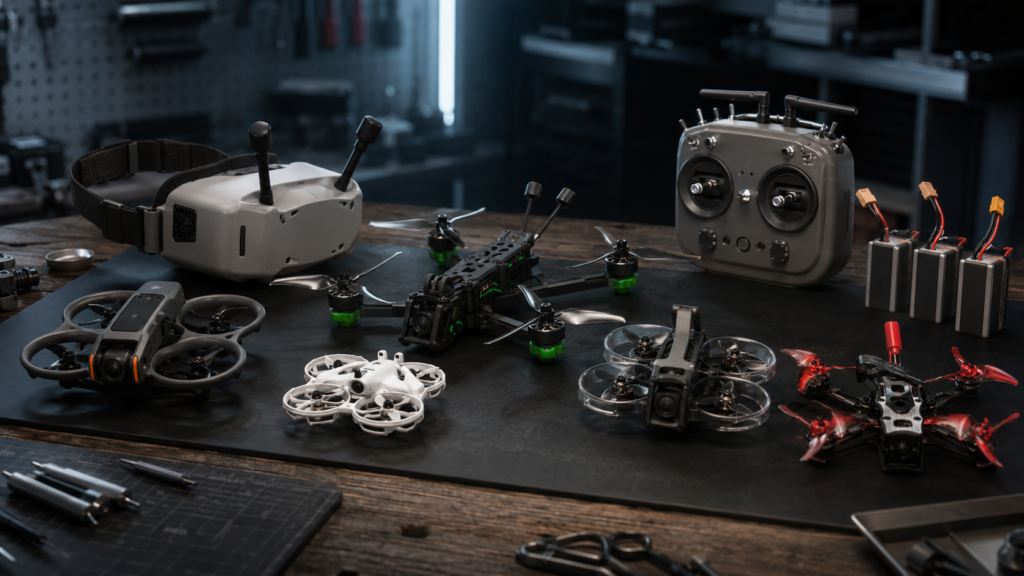
Comparison of FPV drones: DJI Avata 2, BetaFPV Cetus X, iFlight Nazgul Evoque F5, GEPRC Cinebot30 and EMAX Tinyhawk III

Table Of Contents
  1. Best FPV drones
  2. 🏆 Our quick selection
  3. How did we select these drones?
  4. Comparative table of the best FPV drones
  5. What should you know before buying an FPV drone?
  6. 1.DJI Avata 2: The best FPV drone for most users
  7. 2.BetaFPV Cetus X: The best FPV drone for learning from scratch
  8. 3.GEPRC Cinebot30: The best FPV drone for film recordings
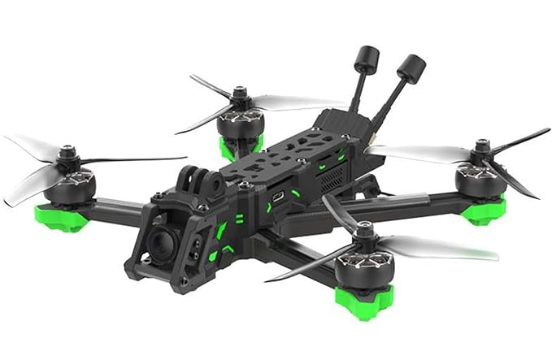
  9. 4.iFlight Nazgul Evoque F5: The best FPV drone for freestyle
  10. Other recommended alternatives
  11. Buying guide: How to choose an FPV drone
  12. Complete kit or drone in pieces?
  13. Analog or digital
  14. Which FPV glasses should I buy?
  15. How much does it cost to get started in FPV?
  16. Common mistakes when buying an FPV drone
  17. Conclusion
  18. Keep learning about drones
  19. Frequently asked questions about FPV drones

Best FPV drones

The world of FPV drones It has completely changed the way we fly and record images from the air. Unlike traditional drones, a FPV drone It allows you to pilot in first person using special glasses, offering a much more immersive experience and freedom of movement that is impossible to achieve with a conventional drone.

In recent years this modality has ceased to be reserved only for expert pilots. The arrival of models like the DJI Avata 2 It has greatly facilitated access to FPV flight, allowing any user to enjoy this technology without having to build a drone from scratch or learn complex configurations.

However, not all FPV drones are designed for the same type of pilot.

There are models designed for learning, others career-oriented, some specialized in freestyle and others created specifically to record videos with a cinematic finish.

That's precisely why, before buying, it's important to be clear about what your main use will be.

In this comparison we analyze the best FPV drones currently available, comparing their ease of use, image quality, flight behavior and value for money to help you choose the most suitable model.


🏆 Our quick selection

🥇 Best FPV drone for most users DJI Avata 2

🚀 Better for learning BetaFPV Cetus X

🎬 Best for film recording GEPRC Cinebot30

🏁 Better for freestyle iFlight Nazgul Evoque F5

💰 Better quality-price EMAX Tinyhawk III


How did we select these drones?

Unlike other comparisons, here we have not only valued the quality of the camera.

In a FPV drone Also influencing factors are aspects such as flight response, ease of finding spare parts, compatibility with different FPV systems, and the learning curve.

To prepare this selection we have taken into account:

  • Flight quality.
  • Ease of learning.
  • Camera quality.
  • Ecosystem and availability of spare parts.
  • Compatibility with FPV glasses.
  • Value for money.
  • Popularity within the FPV community.
  • Opinions from experienced pilots.

Our goal is to recommend only models that actually make sense to buy today.


Comparative table of the best FPV drones

DroneTypeHighlightsLevelSee price
DJI Avata 2CinewhoopThe most complete for mostBeginner/IntermediateSee Drone
BetaFPV Cetus XTinywhoopIdeal for learningBeginnerSee Drone
GEPRC Cinebot30CinewhoopFilm videosIntermediateSee Drone
iFlight Nazgul Evoque F5FreestylePower and acrobaticsAdvancedSee Drone
EMAX Tinyhawk IIITinywhoopBetter quality-priceBeginnerSee Drone


What should you know before buying an FPV drone?

If you come from the world of traditional drones, the first thing you should know is that a FPV drone It offers a completely different experience.

While a conventional drone is designed to obtain stable images with the least possible effort, an FPV seeks the opposite: to convey the feeling that the pilot is inside the drone itself.

This implies a different way of driving, higher speed and a somewhat more demanding learning curve.

It is also important to distinguish between three main categories:

  • TinywhoopIdeal for learning and flying in confined spaces.
  • Cinewhoop, aimed at film recordings with great stability.
  • Freestyle, designed to perform acrobatic maneuvers and aggressive flights.

Choosing the right type of drone is much more important than focusing solely on the speed or resolution of the camera.


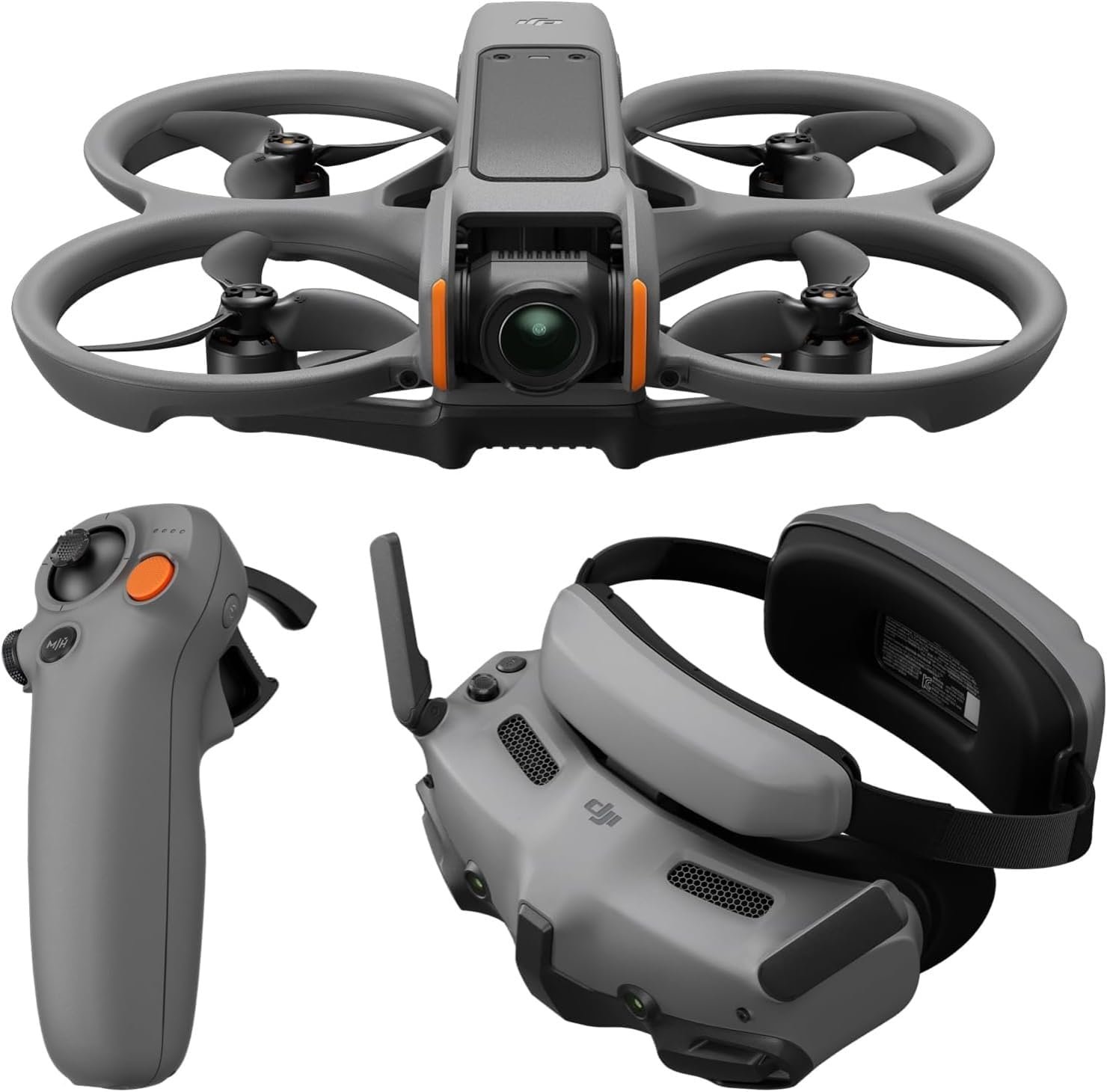
1.DJI Avata 2: The best FPV drone for most users

If I had to recommend a single one FPV drone For most people, I would choose without hesitation the DJI Avata 2.

Why?

Because it achieves something that just a few years ago seemed impossible: offering an authentic FPV experience without forcing the user to build a drone, configure Betaflight or learn for weeks before making their first flight.

DJI has greatly simplified access to the FPV world.

The result is a drone designed to be enjoyed from day one, while maintaining excellent image quality and a level of safety far superior to that of traditional FPV drones.

If you are looking for a FPV drone for recording videos, a FPV drone with camera Or you simply want to get started in this option without complications; it's currently the most recommended purchase.

Technical characteristics of DJI Avata 2

  • Ultra wide angle 4K HDR camera
  • Comprehensive propeller protector
  • Up to 23 minutes of autonomy
  • Compatible with DJI Goggles 3
  • Motion Controller 3 and FPV controller
  • DJI O4 Transmission

DJI Avata 2 technical characteristics


Design and user experience

The Avata 2 belongs to the category CinewhoopThat is, FPV drones designed to obtain very fluid images while maintaining a high level of safety.

Its structure incorporates integrated propeller guards, something especially useful when flying near people, trees or indoors.

In addition to protecting the drone, it also provides a lot of peace of mind during the first flights.

In the air it transmits a very different sensation than that of a conventional drone.

Everything is much more immersive.

The combination of the DJI Goggles 3 and he Motion Controller 3 It makes piloting it surprisingly intuitive.

After a few minutes it is now possible to make very eye-catching flights without having to master Manual mode.

That is precisely one of its greatest attractions.


Camera and video quality

Unlike many traditional FPV drones, the DJI Avata 2 You don't need an external action camera to achieve a professional result.

Its integrated camera allows you to record video on 4K HDR, offering images with an excellent level of detail, very natural colors and outstanding stabilization thanks to technologies RockSteady and HorizonSteady.

The result is very fluid videos even during rapid maneuvers.

It's the type of drone many content creators use to record:

  • Hotels.
  • Housing.
  • Sports.
  • Automotive.
  • Tourism.
  • Events.
  • Social networks.

That is precisely why it has become one of the best FPV drones with camera currently available.


Smart features

Although it belongs to the FPV world, DJI has incorporated many aids that greatly reduce the difficulty of piloting.

Among the most interesting are:

  • Emergency braking.
  • Automatic Return To Home.
  • Normal, Sport and Manual modes.
  • RockSteady.
  • HorizonSteady.
  • HDR recording.
  • DJI O4 transmission.

Thanks to these features, the Avata 2 is much more accessible than any handcrafted FPV drone.


What I like most about DJI Avata 2

🎥 What I like most about DJI Avata 2 It brings the FPV flight closer to any user.

Previously, it was necessary to invest many hours learning configurations, welding, and component repair.

Now you can open the box, put on your glasses and start enjoying yourself practically from day one.

I believe that this change has been a true revolution within the sector.


Who do I recommend the DJI Avata 2 for?

✅ Content creators.

✅ Advertising agencies.

✅ Tourism.

✅ Real estate.

✅ Sports.

✅ Users who want to get started in the FPV.


My opinion about the DJI Avata 2

The Avata 2 is not the fastest FPV drone on the market.

Nor the most radical.

And that is precisely where its success lies.

DJI has designed a product designed so that thousands of people can discover the FPV world without going through an endless learning curve.

For the vast majority of users, I believe it remains the best purchase that can be made today.


The best for…

SectionedValuation
🎥 Video⭐⭐⭐⭐⭐
🚀 Freestyle⭐⭐⭐⭐☆
🎮 Ease of use⭐⭐⭐⭐⭐
👶 Beginners⭐⭐⭐⭐⭐
💰 Quality-price⭐⭐⭐⭐☆

Ideal if…

✔️ You want to get started in the FPV world.

✔️ You're looking for a FPV drone with camera ready to fly.

✔ ️ Your priority is to record spectacular videos.

✔ ️ You don't want to mount or configure a drone from scratch.


Final verdict

The DJI Avata 2 It is, in my opinion, the best FPV drone for the vast majority of users. Its balance between ease of use, image quality and safety makes it the perfect gateway to first-person flight.

Advantages and disadvantages of DJI Avata 2

Advantages of the DJI Avata 2
  • Very immersive FPV experience.
  • Excellent 4K HDR video quality.
  • Very easy to learn.
  • Great stabilization.
  • Integrated propeller protectors.
  • Very complete DJI ecosystem.
Disadvantages of DJI Avata 2
  • Higher price than other starter FPVs.
  • Lower range than a conventional drone.
  • Manual mode requires practice.
  • It is not intended for competition.


Video review and comparison of DJI Avata 2


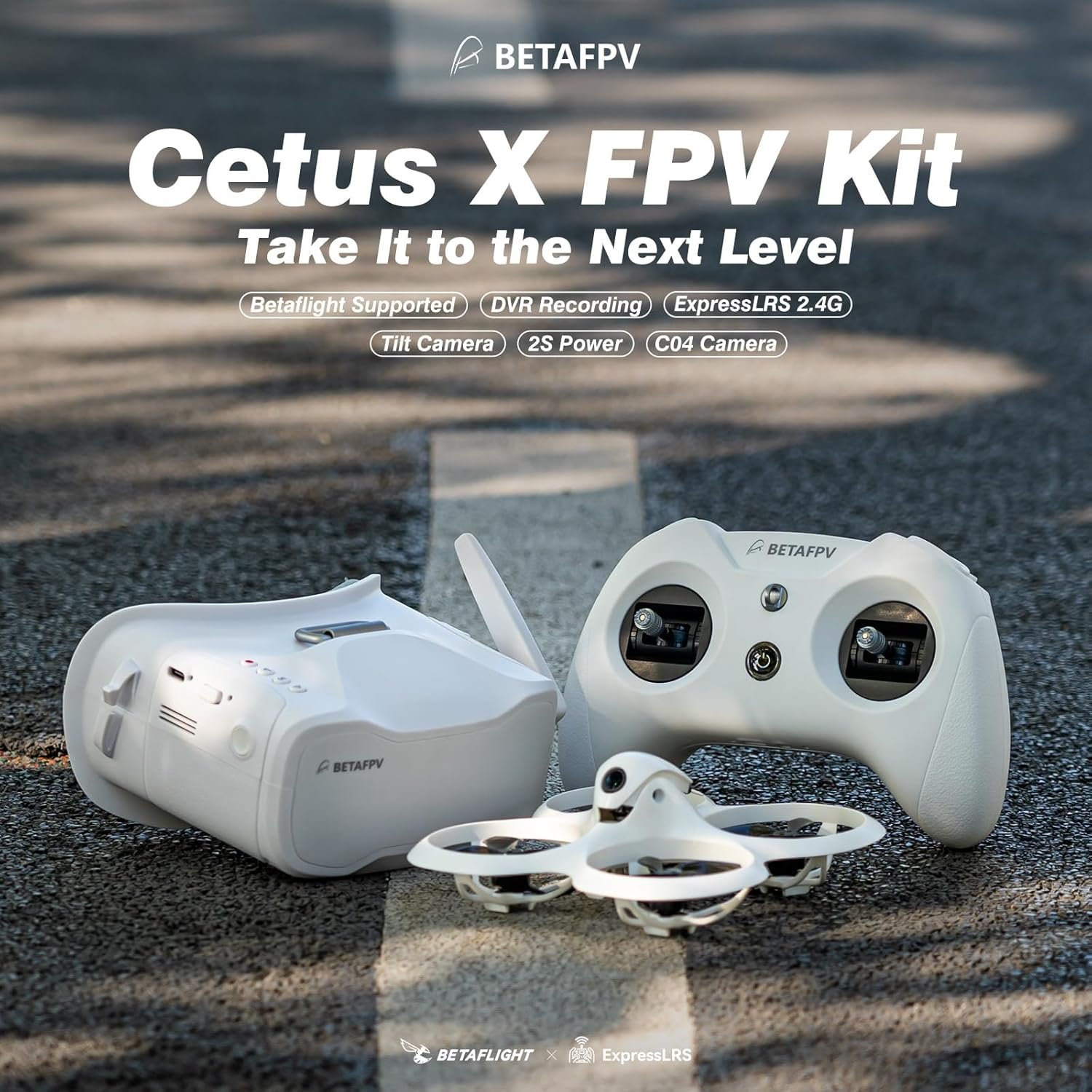
2.BetaFPV Cetus X: The best FPV drone for learning from scratch

If you've never piloted an FPV drone and want to learn without spending a fortune, the BetaFPV Cetus X is probably the best option to start with.

Unlike other much faster and more demanding models, the Cetus X has been designed with beginner drivers in mind. The entire set is designed to facilitate learning: the drone is lightweight, shock-resistant, and sold in complete kits that include FPV goggles, a transmitter, and batteries.

This means you won't have to worry about buying compatible components or making complicated configurations.

You simply charge the batteries, put on the glasses, and start practicing.

That is why it is one of the models most recommended by FPV flight schools and by the community itself.

Technical characteristics of BetaFPV Cetus X:

  • Tinywhoop type
  • Integrated FPV camera
  • Ready To Fly (RTF) Complete Kit
  • Assisted flight modes
  • Compatible with FPV simulators
  • Very resistant to shocks

BetaFPV Cetus X technical characteristics


Flight design and experience

The Cetus X belongs to the family Tinywhoop, small FPV drones with propeller guards designed to withstand shocks and practice safely.

Its small size allows you to fly both indoors and outdoors when there is hardly any wind.

And this makes a huge difference during the first few weeks.

While a 5-inch drone can break easily on the first few impacts, the Cetus X withstands the typical mistakes of any beginner very well.

That translates into more time learning and less time repairing.

In addition, it incorporates different flight modes that allow the difficulty to be progressively increased as the pilot experience improves.


Image quality

It's important to adjust expectations here.

The goal of the Cetus X is not to record cinematic videos.

Its camera is primarily designed to transmit a fluid image to the FPV glasses and facilitate piloting.

The quality is sufficient for reviewing flights or sharing the occasional recording, but it clearly lags behind models like the DJI Avata 2.

That is precisely why I recommend this drone to learn to fly and not to create professional audiovisual content.


Featured features

Although it is an introductory model, it incorporates very useful functions:

  • Normal, Sport and Manual modes.
  • Flight assistance.
  • Altitude Hold.
  • Compatible with FPV simulators.
  • Complete kit ready to fly.
  • Progressive change between difficulty levels.

One of the biggest advantages is that you can start by using electronic aids and gradually deactivate them as you gain experience.


What I like most about the BetaFPV Cetus X

🛠️ What I like most about Cetus X It's because it allows you to make mistakes.

And that, in FPV, is worth a lot.

The first flights usually end with bumps against trees, walls, or the ground.

Having a rugged drone makes learning much more fun and considerably less expensive.


Who do I recommend the BetaFPV Cetus X for?

✅ People who have never flown FPV.

✅ Users who want to learn before buying a more advanced drone.

✅ Children and adolescents (always under supervision).

✅ Pilots who want to practice indoors.


My opinion on the BetaFPV Cetus X

I believe it remains the best entry point into the FPV world.

Not because it is the most powerful.

But because it is designed exactly for what a beginner needs.

Learn.

And he does it frankly well.


The best for…

SectionedValuation
🎮 Learning⭐⭐⭐⭐⭐
🛡️ Resistance⭐⭐⭐⭐⭐
🚀 Freestyle⭐⭐⭐☆☆
🎥 Recording⭐⭐☆☆☆
💰 Quality-price⭐⭐⭐⭐⭐

Ideal if…

✔ ️ You have never flown an FPV.

✔ ️ You are looking for a complete kit to get started.

✔ ️ You want to practice without fear of breaking an expensive drone.

✔ ️ You prefer to learn before investing in a professional model.


Final verdict

The BetaFPV Cetus X It remains one of the best options for getting started in FPV flight. Its resistance, ease of use and Ready To Fly format make it a highly recommended purchase for those starting from scratch.

Advantages and disadvantages of BetaFPV Cetus X

Advantages of BetaFPV Cetus X
  • Complete kit ready to fly.
  • Very resistant to shocks.
  • Ideal for learning FPV.
  • Compatible with simulators.
  • Very easy to repair.
  • Excellent value for money.
Disadvantages of BetaFPV Cetus X
  • The camera is not intended for professional recording.
  • Little autonomy.
  • It does not perform well in wind.
  • It falls short when you gain experience.


Video review and comparison of BetaFPV Cetus X


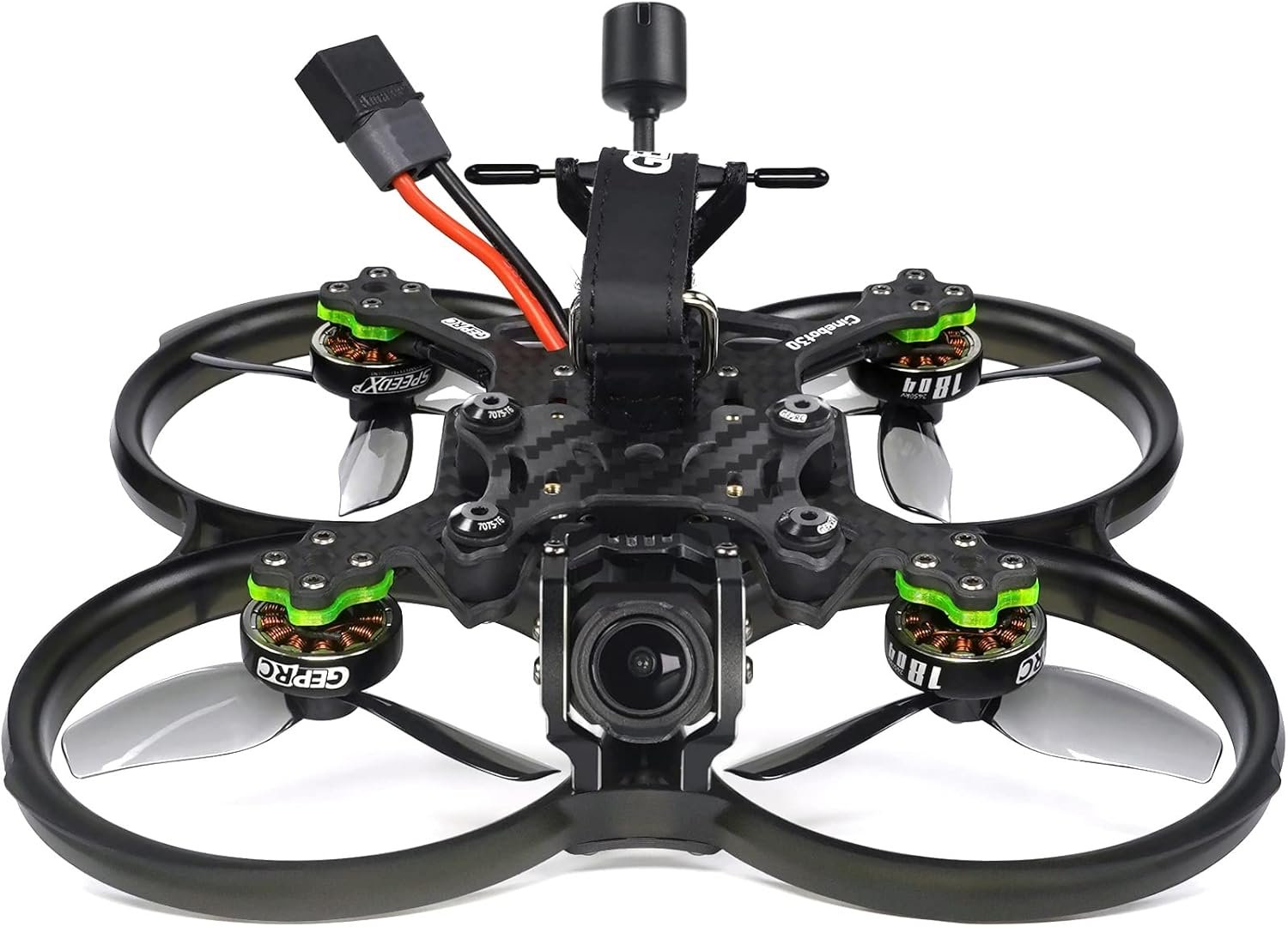
3.GEPRC Cinebot30: The best FPV drone for film recordings

If your goal is to record FPV videos with a professional finish, the GEPRC Cinebot30 is one of the best Cinewhoop you can buy right now.

Unlike FPV drones designed for racing or freestyle, this model has been designed to perform smooth, very precise and safe flights around people, buildings or vehicles.

That is why it is one of the drones most used by audiovisual production companies, content creators and professional pilots who make commercial recordings.

Its structure incorporates propeller guards, allowing it to fly much more safely in tight spaces, while its power is enough to carry cameras like a GoPro without compromising performance.

If you are looking for a FPV drone for recording videos, a Cinewhoop professional or a platform ready for commercial work, the Cinebot30 is one of the best choices.

Technical characteristics of GEPRC Cinebot30

  • 3-inch Cinewhoop type
  • Compatible with GoPro and action cameras
  • Carbon fiber chassis
  • Propeller protectors
  • Compatible with DJI O3 Air Unit
  • Very stable for cinematic flights

GEPRC Cinebot30 technical characteristics


Flight design and experience

The Cinebot30 conveys a feeling of solidity from the first moment.

Its chassis is designed to withstand demanding flights and small impacts, something common when working near obstacles.

In flight it stands out for its precision.

He's not aiming to be the fastest drone.

Look for exactly the opposite.

Smooth movements.

Clean transitions.

Absolute control.

This behavior makes it an ideal tool for real estate recordings, hotels, restaurants, events, or corporate videos.


Image quality

Unlike the DJI Avata 2, here the final quality will largely depend on the camera you install.

Most pilots use one GoPro HERO, one DJI Action or the DJI O3 Air Unitachieving truly spectacular results.

This system offers a significant advantage.

You can update the camera whenever you want without having to change the entire drone.

That is why many professionals continue to bet on traditional Cinewhoop platforms.


Featured features

More than automatic functions, the important thing here is customization.

Among its strengths are:

  • Compatible with DJI O3.
  • Transport of action cameras.
  • Great stability.
  • Excellent resistance.
  • Easy maintenance.
  • Wide availability of spare parts.

What I like most about the GEPRC Cinebot30

🎬 What I like most about the Cinebot30 It offers a very cinematic result.

When you watch recordings made with these types of drones, you quickly understand why so many production companies continue to use them.


Who do I recommend the GEPRC Cinebot30 for?

✅ Audiovisual production companies.

✅ Content creators.

✅ Real estate.

✅ Tourism.

✅ Events.

✅ FPV drivers with some experience.


My opinion on the GEPRC Cinebot30

If your job involves recording FPV videos for clients, this model probably makes a lot more sense than a freestyle drone.

It is not the easiest to learn, but it is one of the most versatile for producing professional images.


The best for…

SectionedValuation
🎬 Professional recording⭐⭐⭐⭐⭐
🚀 Freestyle⭐⭐⭐☆☆
🛡️ Security⭐⭐⭐⭐⭐
🔧 Personalization⭐⭐⭐⭐⭐
💰 Quality-price⭐⭐⭐⭐☆

Ideal if…

✔ ️ You work recording FPV videos.

✔ ️ You want a professional Cinewhoop.

✔ ️ You are going to use a GoPro or DJI O3.

✔ ️ You are looking for the highest recording quality.


Final verdict

The GEPRC Cinebot30 It is one of the best options for those who want to dedicate themselves to professional FPV recording. Its stability, robustness and ability to mount high-quality cameras make it a very safe bet.

Advantages and disadvantages of GEPRC Cinebot30

Advantages of the GEPRC Cinebot30
  • Excellent for film recording.
  • Very stable.
  • Compatible with GoPro and DJI O3.
  • Great build quality.
  • Widely used by professionals.
Disadvantages of the GEPRC Cinebot30
  • Requires knowledge of FPV.
  • It is not a ready-to-fly kit.
  • You need compatible glasses and a radio station.
  • High price once the equipment is completed.


Video review and comparison of GEPRC Cinebot30


4.iFlight Nazgul Evoque F5: The best FPV drone for freestyle

If your goal is to do stunts, extreme flights and feel maximum freedom in the air, the iFlight Nazgul Evoque F5 is one of the most recommended FPV drones on the market.

Unlike the Cinebot30 or DJI Avata 2, everything here is designed to deliver power, speed and precision.

It is the type of drone that many experienced pilots use to practice freestyle, explore mountains or make long-range flights adapted to their needs.

Its robust carbon fiber chassis, the quality of its components and the ease of finding spare parts have made it a true benchmark within the FPV community.

Technical characteristics of iFlight Nazgul Evoque F5

  • 5-inch FPV drone
  • Reinforced carbon fiber chassis
  • Compatible with DJI O3 Air Unit
  • Prepared for freestyle and long range
  • High performance electronics
  • Wide availability of spare parts

iFlight Nazgul Evoque F5 technical characteristics


Flight design and experience

All aid disappears here.

The Nazgul Evoque F5 is designed for pilots who enjoy flying in Acro mode and want to fully control the drone.

Their response is immediate.

Each movement of the stick translates into a very precise reaction, allowing flips, rolls, dives and technical maneuvers to be performed with great ease once the piloting is mastered.

It's a demanding drone, but also tremendously fun.


Image quality

As with other freestyle drones, the final quality will depend on the camera installed.

The combination with one DJI O3 Air Unit It allows obtaining spectacular images while maintaining very low latency during flight.

That is why many content creators use these types of platforms for sports recordings or action scenes.


Featured features

  • Compatible with DJI O3.
  • Ready for freestyle.
  • Very resistant.
  • Easy repair.
  • Large community of users.
  • Wide availability of parts.

What I like most about the Nazgul Evoque F5

🔥 What I like most about the Nazgul Evoque F5 It is the feeling of freedom it conveys.

It's a drone designed for enjoying driving.

He's not trying to help you.

It simply responds exactly to what you do with the station.

And that is precisely what the most experienced pilots are looking for.


Who do I recommend the Nazgul Evoque F5 for?

✅ Experienced drivers.

✅ Freestyle.

✅ Long Range.

✅ Sports recordings.

✅ Users who want to assemble and customize their equipment.


My opinion on the Nazgul Evoque F5

I would not recommend this model as a first FPV.

But if you already master flying in Acro mode, it is probably one of the platforms with the best relationship between quality, reliability and customization possibilities.

The best for…

SectionedValuation
🚀 Freestyle⭐⭐⭐⭐⭐
🎬 Dynamic recording⭐⭐⭐⭐☆
🛠️ Repairability⭐⭐⭐⭐⭐
👶 Beginners⭐⭐☆☆☆
💰 Quality-price⭐⭐⭐⭐☆

Ideal if…

✔ ️ You already have experience flying FPV.

✔ ️ You want to practice freestyle.

✔ ️ You are looking for a powerful, resistant and customizable drone.

✔ ️ You don't mind learning basic maintenance and repairs.

Final verdict

The iFlight Nazgul Evoque F5 It is one of the best options for experienced FPV pilots looking for power, precision and total flight freedom. It is not the simplest model to start with, but it is one of the most recommended when you want to make the leap to serious freestyle.


Advantages and disadvantages of iFlight Nazgul Evoque F5

Advantages of the iFlight Nazgul Evoque F5
  • Excellent performance for freestyle.
  • Very resistant carbon fiber chassis.
  • Compatible with DJI O3 Air Unit.
  • Great power and very precise response.
  • Wide availability of spare parts.
  • Highly valued within the FPV community.
Disadvantages of the iFlight Nazgul Evoque F5
  • It is not recommended for absolute beginners.
  • Requires FPV glasses, transmitter and compatible batteries.
  • Acro mode requires quite a bit of practice.
  • Repairs are a regular part of use.
  • It is not as easy to use as the DJI Avata 2.


Video review and comparison of iFlight Nazgul Evoque F5


Other recommended alternatives

Although the three drones above are the ones I currently consider most interesting, there are other models that may also fit depending on your budget or the type of flight you want to take.

The EMAX Tinyhawk III He continues to be one of the best Tinywhoop to practice indoors and take the first steps in the FPV world.

Its small size, chassis strength and ease of finding spare parts make it an excellent alternative to the BetaFPV Cetus X. If you find a good deal, it is still a highly recommended purchase.


The BetaFPV Aquila16 It's another interesting option for those looking for a complete FPV kit ready to fly.

Its behavior is very similar to Cetus X, although it generally offers a somewhat simpler experience, so it can be a good choice for very beginner users.


If you already fly FPV and are looking to improve image quality without depending on the DJI ecosystem, the system Walksnail Avatar HD It has become one of the most popular alternatives among advanced pilots.

It is not a drone, but a digital video transmission system that is worth considering if you later decide to set up your own equipment.


Buying guide: How to choose an FPV drone

Buy a FPV drone It's very different from buying a conventional drone. Here, it's not just the camera or the range that matters. The type of flight, the level of experience and the ecosystem you are going to use also influence.

Before making a decision, I recommend you consider these aspects.

Choose the right type of FPV drone

The first step is to identify what type of flight you want to take.

Tinywhoop

They are small, lightweight, and very durable.

They are ideal for learning, practicing indoors and making mistakes without constantly breaking the drone.

If it is your first FPV, this is usually the best option.

Cinewhoop

The Cinewhoop They are designed for film recordings.

Thanks to their propeller guards, they offer greater safety when flying near people, buildings, or vehicles.

Models like him DJI Avata 2 or the GEPRC Cinebot30 They belong to this category.

Freestyle

The drones of freestyle They prioritize power, speed, and the ability to perform acrobatic maneuvers.

They require considerably more experience, but offer an unparalleled sense of flight.

The iFlight Nazgul Evoque F5 It is one of the best examples.


Complete kit or drone in pieces?

This is one of the most common questions.

Ready To Fly Kit (RTF)

Includes:

  • Drone.
  • FPV glasses.
  • Station.
  • Batteries.
  • Charger.

It is the option I recommend for most users.

Component drone

It's only worth it if you already have experience.

It allows you to completely customize the equipment, but also requires knowledge of configuration, maintenance and repair.


Analog or digital

Currently there are two major systems.

Analog FPV

  • More economical.
  • Very low latency.
  • Great compatibility.

Digital FPV

  • Much better image quality.
  • Greater comfort.
  • Ideal for recording.

For most users, the digital system of DJI It remains the most recommended option.


Which FPV glasses should I buy?

Glasses are almost as important as the drone itself.

If you choose a DJI model, the ideal is to use glasses compatible with that ecosystem.

If you opt for a traditional drone, it is advisable to first check compatibility with systems such as Walksnail, HDZero or analog.

Choosing correctly from the start can save you a lot of money on future upgrades.


How much does it cost to get started in FPV?

It is a very common question and should be answered clearly.

For guidance:

  • 200-350 €: FPV kits for beginners.
  • 500-800 €: DJI Avata 2.
  • 700-1,200 €: complete advanced level FPV equipment.
  • More than 1,500 €: custom professional settings.

Common mistakes when buying an FPV drone

To think that all FPVs are the same

A Cinewhoop and a freestyle drone offer completely different experiences.

Choosing the wrong type of drone is usually the most common mistake.


Start directly in Acro mode

Many beginners want to fly like the videos they watch on YouTube.

The reality is that Manual mode requires many hours of practice.

My recommendation is to start with assisted modes and use a simulator before making the first flights.


Do not buy extra batteries

In FPV, the range is usually between 5 and 20 minutes depending on the model.

Having multiple batteries completely changes the flight experience.


Ignore the regulations

Even if a drone is FPV, it is still mandatory to respect current legislation.


Conclusion

The FPV drones They offer a completely different flight experience than traditional drones. The feeling of immersion, the freedom of movement and the possibility of capturing spectacular shots make more and more pilots encouraged to discover this modality.

If I had to recommend a single model for most users, I would choose the DJI Avata 2. Its ease of use, image quality and DJI ecosystem make it the best gateway to FPV.

For those who want to learn from scratch on a tighter budget, the BetaFPV Cetus X It remains a safe bet. And if your goal is to make professional recordings or practice freestyle, the GEPRC Cinebot30 and he iFlight Nazgul Evoque F5 They represent two of the best platforms currently available.

The most important thing is to choose a drone that suits your experience level and the type of flight you really want to take. That decision will influence your experience far more than top speed or any other technical specification.


Keep learning about drones

If you want to delve deeper into the world of FPV flight and drones, these articles perfectly complement this guide:

Frequently asked questions about FPV drones

What does FPV mean?

FPV means First Person View o First Person View, a system that allows you to pilot the drone by seeing in real time the image transmitted by your camera to FPV glasses.

Which FPV drone do you recommend to get started with?

If you are looking for maximum ease of use, the DJI Avata 2 It's the best option.
If your budget is smaller, the BetaFPV Cetus X It offers an excellent gateway to the FPV world.

Is it necessary to mount an FPV drone?

No.
Currently, there are complete ready-to-fly kits that allow you to start without technical knowledge.
Only advanced users usually choose to mount their own drones.

Which FPV glasses are better?

It will depend on the ecosystem you use.
For DJI, the DJI Goggles 3 They currently offer one of the best experiences on the market.

Is it difficult to learn to fly an FPV?

The learning curve is longer than in a conventional drone, but using simulators and assisted modes it can be learned quite quickly.

Which FPV drone is used to record professional videos?

The DJI Avata 2 and he GEPRC Cinebot30 They are two of the best options for creating cinematic content.

Leave a Comment

Welcome to WordPress. This is your first post. Edit or delete it, then start writing! Required fields are marked *

This site uses Akismet to reduce spam. Learn how your comment data is processed.

Bright Technology
Privacy Overview

We use our own and third-party cookies to analyze our services and show you advertising
related to your preferences based on a profile developed from your habits
navigation (e.g. pages visited). Cookie information is stored in your
browser and performs functions such as recognizing you when you return to our website or helping
our team to understand which sections of the web you find most interesting and useful.