
Disclosure: this article contains affiliate links. If you buy through them, Bright Technology may earn a small commission at no extra cost to you. As an Amazon Associate, we earn from qualifying purchases.
The resin vs filament 3D printer decision is the first big choice before you buy: both print in 3D, but they work so differently that one could be perfect for you and the other a chore. In this comparison we explain how they really differ, what each can do and which one suits what you want to print, the space you have and how much extra work you are willing to take on.
- Resin vs filament: comparison table
- How each technology works
- Print quality and detail
- Part size
- Materials and strength
- Safety, smell and mess
- Running costs and maintenance
- Print time: which is faster?
- What to print with each: examples
- Where to put it at home
- What you need besides the printer
- Ease of use
- Common mistakes when choosing
- Which one should you choose?
- Frequently asked questions
- Keep reading
Quick answer: choose filament if you want useful parts, medium to large prints, little maintenance and no chemicals: it is the best first printer for most people. Choose resin if you are into miniatures, jewelry or figures with very fine detail, and you have a ventilated space where you can work with gloves.
Resin vs filament: comparison table
| Aspect | Filament (FDM) | Resin (MSLA) |
|---|---|---|
| How it works | Melts a plastic strand and lays it down layer by layer | Hardens liquid resin with UV light layer by layer |
| Detail | Good; visible layers | Very high; layers almost invisible |
| Typical layer height | 0.1-0.3 mm | 0.02-0.05 mm |
| Part size | Medium to large | Small to medium |
| Materials | PLA, PETG, TPU, ABS and more | Standard, flexible, tough and water-washable resins |
| Post-processing | Remove supports | Wash in alcohol, UV cure and remove supports |
| Safety | Ventilate with some materials | Gloves, eye protection and good ventilation, always |
| Smell | Low with PLA | Noticeable |
| Part strength | Good, especially in PETG | More brittle unless you use special resins |
| Ideal for | Useful parts, prototypes, decor | Miniatures, jewelry, figures, dental |
How each technology works
Filament printers (FDM)
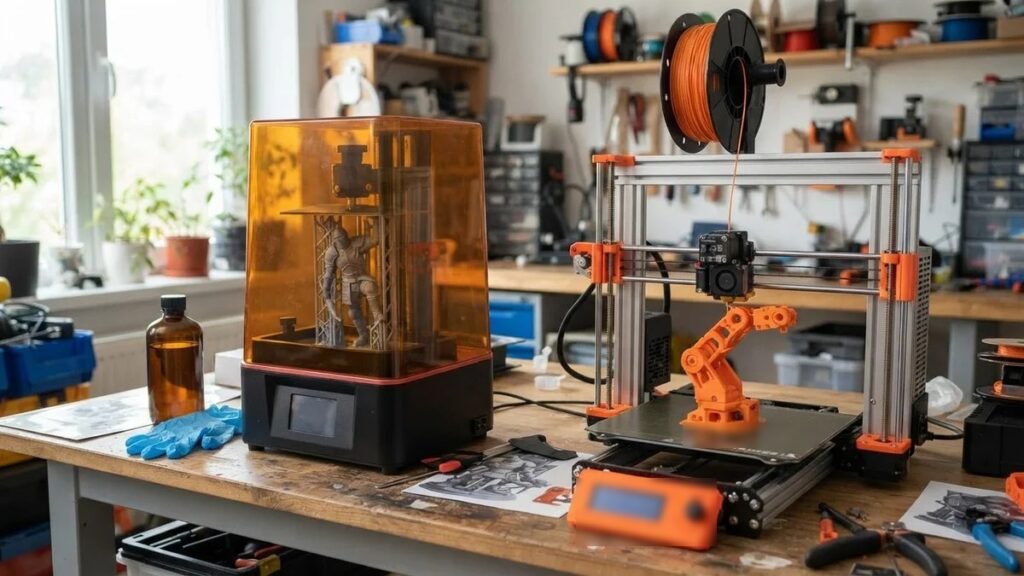
A filament printer pushes a plastic strand through a hot nozzle and lays it down layer by layer, like a very precise piping bag. It is the most common technology at home because it is clean, simple and works with many materials.
Resin printers (MSLA)
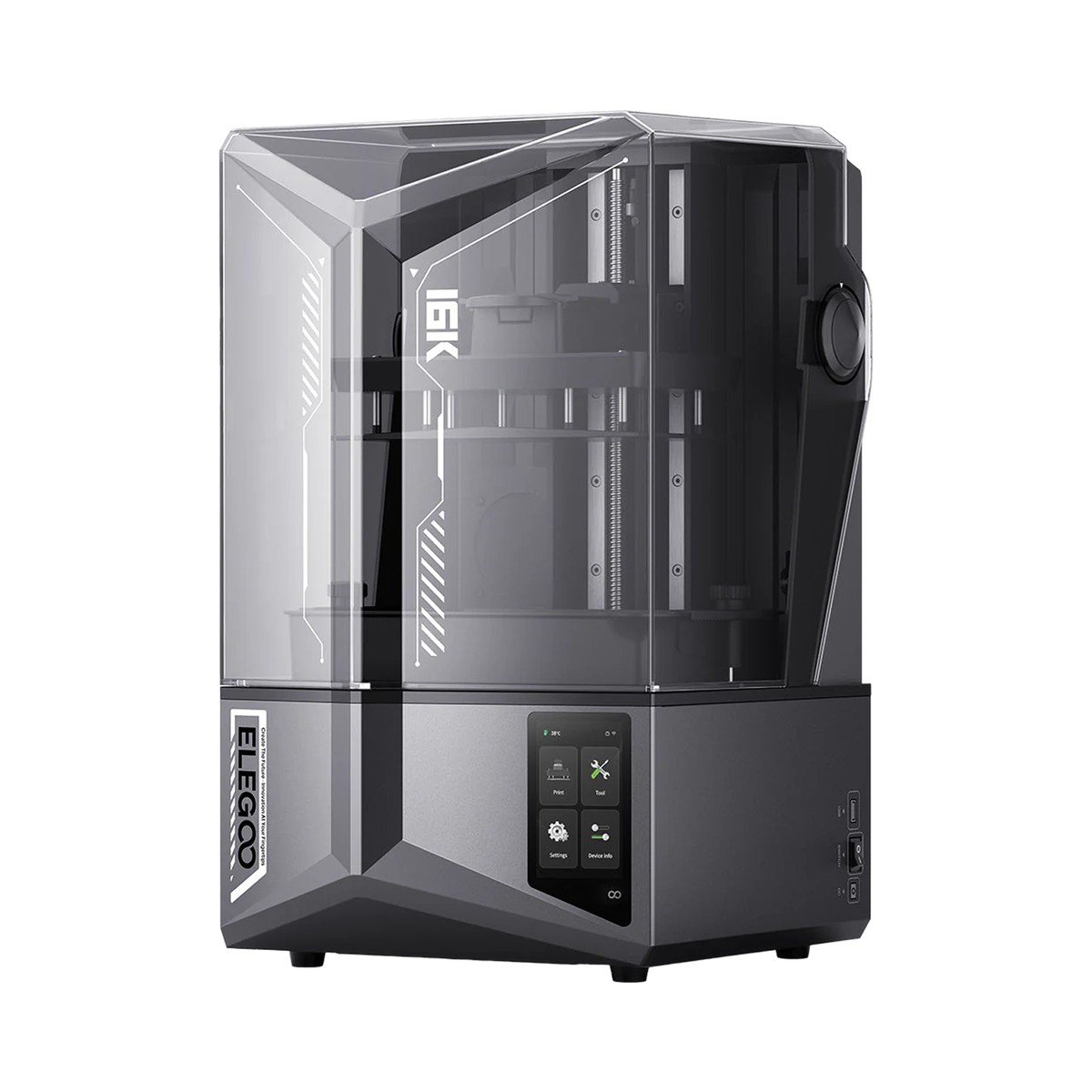
A resin printer has a vat of light-sensitive liquid resin. A screen lets UV light through in the shape of each layer, the resin hardens and the build plate lifts a little at a time. The result is far more detailed parts, but they come out sticky and need washing and curing.
Print quality and detail
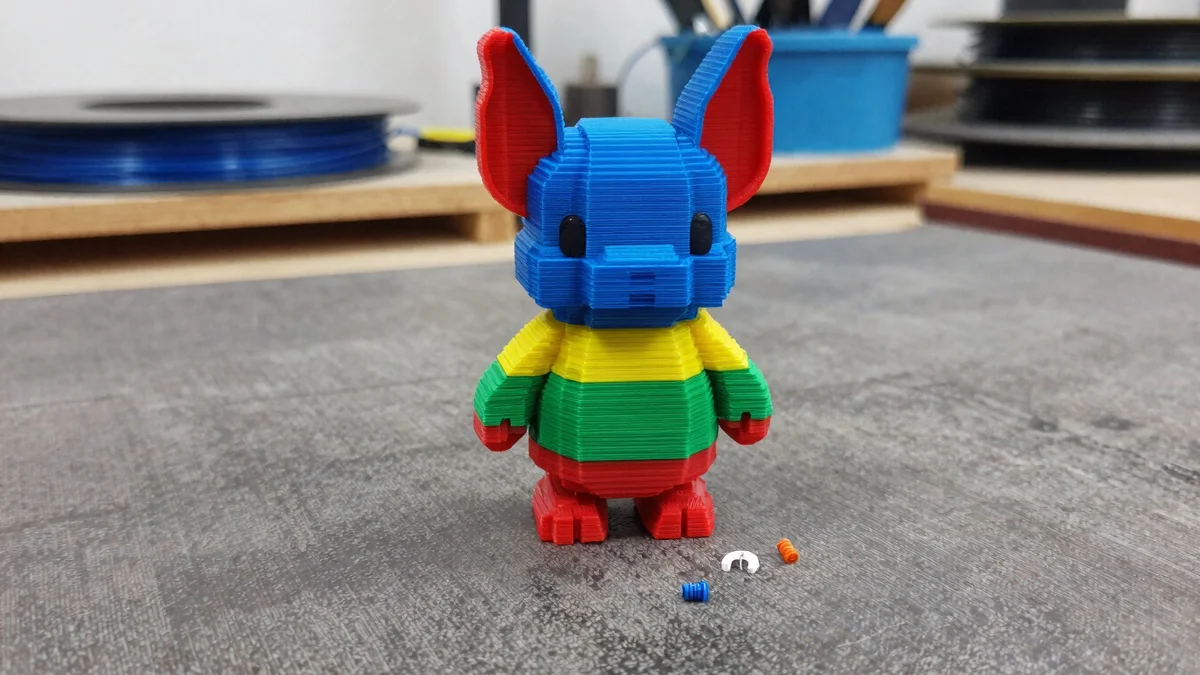
Resin wins clearly here. Its layers are much thinner and horizontal resolution depends on the screen, so faces, textures and tiny engravings come out crisp with almost no sanding.
Filament has improved a lot and a good printer delivers very clean finishes, but layers still show on curves and fine detail. On a 1-inch figure the difference is huge; on a 6-inch bracket it barely matters. If miniatures are your goal, see our guide to the best 3D printer for miniatures.
Part size
Home filament printers usually offer bigger build volumes for less money. Printing a planter, a cosplay helmet in sections or a large box is straightforward.
Resin printers tend to have smaller volumes, and the bigger the part, the more resin it uses and the harder it is to wash and cure. They can print large parts, but it is not their natural territory.
Materials and strength
Filament gives you more functional variety: PLA to start, PETG for tough and outdoor parts, TPU for flexible parts and engineering materials for demanding jobs. We cover them in our 3D printing materials guide.
Standard resin makes rigid but brittle parts. Tough, flexible or ABS-like resins improve this a lot, but they usually cost more.
Safety, smell and mess
This is the difference that matters most at home. Uncured resin is an irritant and can cause skin sensitization with repeated contact, so always handle it with nitrile gloves and eye protection, in a ventilated space.
The process is messier too: parts must be washed in isopropyl alcohol or the cleaner the manufacturer specifies, cured under UV light, and leftover resin and used alcohol disposed of as hazardous waste, never down the drain.
Filament is much simpler: with PLA the smell is low and there are no liquids. Only some materials, such as ABS, call for ventilation or an enclosed printer.
Running costs and maintenance
Entry-level printers cost about the same in both technologies, but running costs differ:
- Filament: you only spend the material in the part and its supports. Common spare parts are nozzles and build plates.
- Resin: on top of resin you need alcohol or washing fluid, gloves and paper towels, a new FEP film for the vat from time to time and, in the long run, a replacement screen.
For most home uses, filament works out cheaper and more predictable over time.
Print time: which is faster?
It depends on what you print. Resin cures a whole layer at once, so time depends mainly on part height, not on how many parts are on the plate. Printing one miniature or ten takes about the same time.
With filament the toolhead has to trace every outline and infill, so time grows with volume and part count. In exchange, today’s filament printers are very fast on medium parts and skip the washing and curing that adds half an hour or more to every resin batch.
Rule of thumb: for many small parts at once, resin is very efficient; for a medium or large part you need today, filament usually wins.
What to print with each: examples
| Project | Best with | Why |
|---|---|---|
| Tabletop game miniatures | Resin | Detailed faces and weapons with no visible layers |
| Organizers and stands | Filament | Stronger and cheaper |
| Jewelry and test rings | Resin | Smooth surfaces and fine detail |
| Household replacement parts | Filament | Tough materials such as PETG |
| Busts and figures to paint | Resin | Primer-ready finish |
| Planters, lamps and decor | Filament | Size and cost per part |
| Cosplay | Filament | Large, lightweight parts |
Where to put it at home
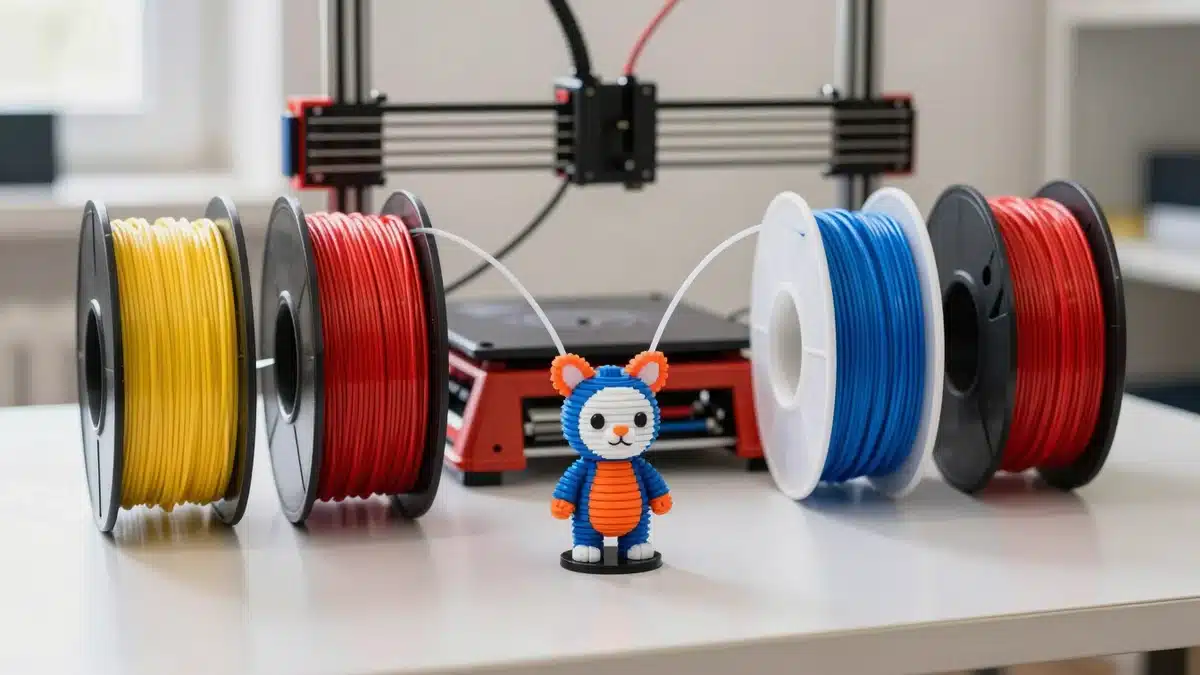
A filament printer running PLA can live in a study, on a desk or on a shelf, with fan noise as the only drawback.
A resin printer needs a ventilated spot at a stable temperature (resin performs worse in the cold), with gloves, washing containers and the curing station within reach. A ventilated utility room, workshop or garage beats a living room or bedroom.
What you need besides the printer
The printer is only part of the setup, and here the gap between the two technologies is wide.
- Filament: a few spools, a spatula, flush cutters and, sooner or later, a filament dryer for PETG and TPU.
- Resin: resin bottles, nitrile gloves, eye protection, isopropyl alcohol or a wash station, a UV curing station, silicone mats, paper towels and a sealed container for waste.
Many resin printers are sold in bundles with a wash and cure station, which is worth considering if you start with resin.
Ease of use
Modern filament printers with automatic calibration are close to plug and play. You can start a print, walk away and come back to a finished part.
Resin asks for more steps on every print: careful supports, pouring resin, printing, washing, curing and cleaning the vat. None of it is hard, but it takes more time and tidiness.
Common mistakes when choosing
- Buying resin for large functional parts: you will use a lot of material and get brittle parts.
- Buying filament expecting miniature-level detail: you will get close, but not to resin quality.
- Putting a resin printer in a bedroom or living room without ventilation.
- Forgetting resin consumables: alcohol, gloves and FEP films add up.
Which one should you choose?
- It is your first printer and you want useful things: filament.
- You play miniature games or paint figures: resin.
- You make jewelry, dental prototypes or very small parts: resin.
- You want cosplay, decor or large parts: filament.
- You live in a small apartment with no ventilated space: filament.
- You want the best of both: many hobbyists end up owning one of each.
See our picks for the best FDM 3D printers and the best resin 3D printers, and if this is your first one, our guide to the best beginner 3D printers.
Frequently asked questions
It depends on the job. Filament is better for useful and large parts and for beginners; resin is better for miniatures and highly detailed parts.
Uncured resin is an irritant and can sensitize skin with repeated contact. Always use nitrile gloves and eye protection and work in a ventilated space.
Yes, but ideally in a ventilated room that is not a bedroom, and away from children and pets.
For most uses, filament: it uses fewer consumables and needs less maintenance. On small parts the material cost difference is small.
A modern filament printer with automatic calibration, because it is cleaner, simpler and more versatile.