

Disclosure: this article contains affiliate links. If you buy through them, Bright Technology may earn a small commission at no extra cost to you. As an Amazon Associate, we earn from qualifying purchases.
DJI Mini 4 Pro vs DJI Air 3 is the classic DJI upgrade question. Both shoot 4K at up to 100 fps, have omnidirectional obstacle sensing, ActiveTrack 360° and DJI O4 transmission. The difference is that the Air 3 adds a 70 mm telephoto camera, longer flights and better wind handling, while the Mini 4 Pro stays under 249 g and fits in a jacket pocket.
Quick answer: choose the DJI Mini 4 Pro if you travel a lot, are a beginner, want a sub-250 g drone or a lower price. Choose the DJI Air 3 if you shoot photo or video often, want the creative freedom of a second telephoto camera, fly in wind or do professional work.
Quick verdict
Buy the DJI Mini 4 Pro if…
- Portability matters most
- You’re new to drones
- You want a sub-250 g drone
- You’d rather spend less
DJI Mini 4 Pro at a glance
- Under 249 g
- Single 48 MP camera
- 4K up to 100 fps
- Up to 34 min flight
- Omnidirectional sensing
- ActiveTrack 360°

Buy the DJI Air 3 if…
- You shoot photo or video often
- You want wide plus 70 mm telephoto
- You often fly in wind
- You do paid work
DJI Air 3 at a glance
- 720 g
- Dual 48 MP cameras (wide + 70 mm)
- 4K up to 100 fps
- Up to 46 min flight
- Omnidirectional sensing
- ActiveTrack 360°
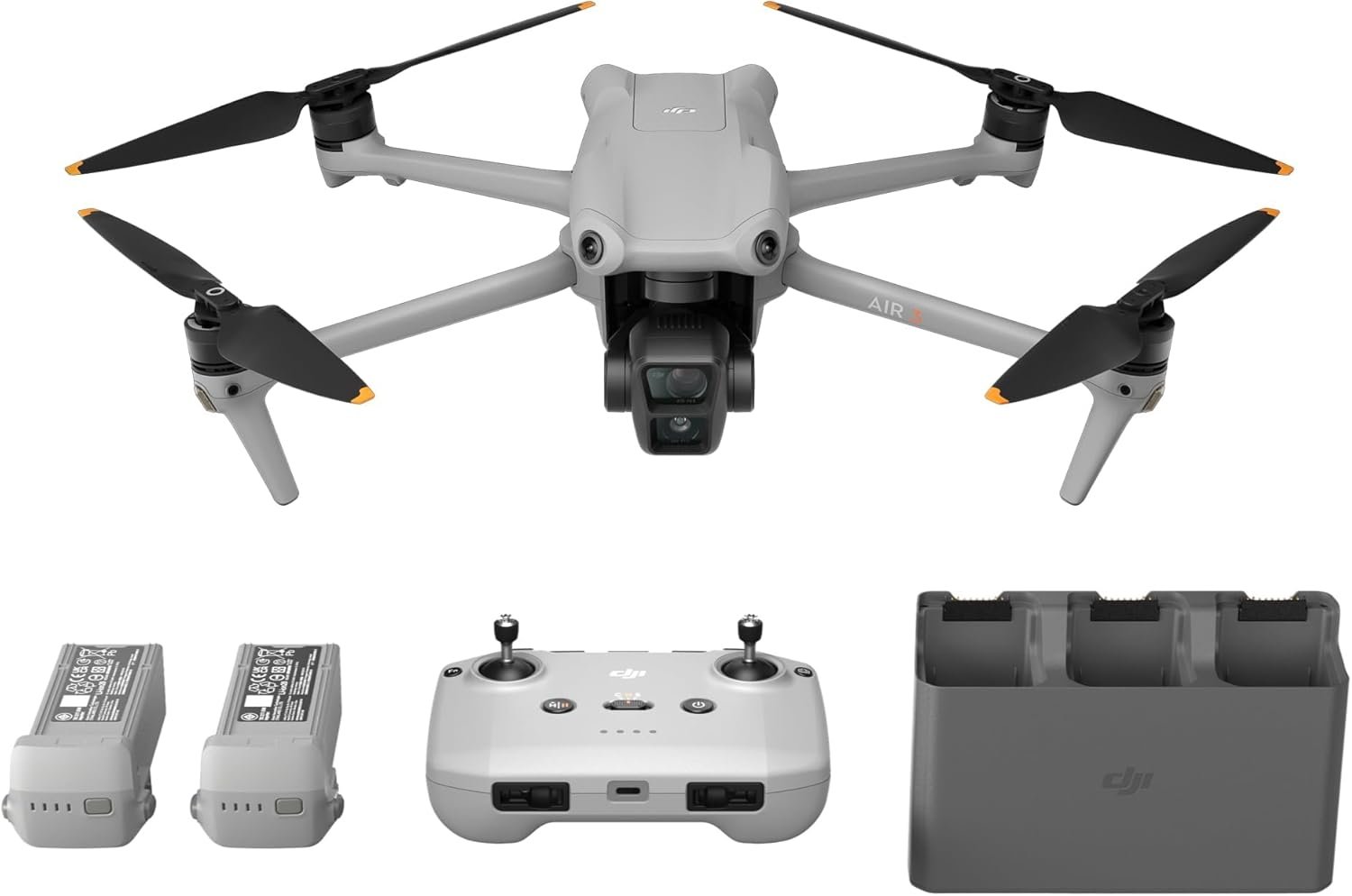
Specs compared
| DJI Mini 4 Pro | DJI Air 3 | |
|---|---|---|
| Weight | Under 249 g | 720 g |
| Cameras | 1 | 2 (wide + 70 mm telephoto) |
| Video | 4K up to 100 fps | 4K up to 100 fps |
| Max flight time | 34 min | 46 min |
| Real flight time | 30–34 min | 35–40 min |
| Obstacle sensing | Omnidirectional | Omnidirectional |
| Wind resistance | Good | Better |
| Price | Lower | Higher |
The three differences that matter
- The Air 3 gives far more creative freedom. The 70 mm telephoto compresses backgrounds and frames subjects without flying closer.
- The Mini 4 Pro is the drone you’ll actually carry. Its size and weight mean it comes along on every trip.
- Both fly superbly. Safety, tracking and transmission are equally excellent.
Head-to-head
| Category | Winner | Why |
|---|---|---|
| Portability | DJI Mini 4 Pro | Under 249 g, much smaller |
| Camera | DJI Air 3 | Second telephoto camera |
| Video | DJI Air 3 | Two focal lengths at 4K/100fps |
| Flight time | DJI Air 3 | 5–6 more minutes in real use |
| Flying experience | DJI Air 3 | More stable in wind |
| Ease of use | DJI Mini 4 Pro | Lighter and less intimidating for beginners |
Which should you buy?
| If you are… | Our pick |
|---|---|
| A traveler | DJI Mini 4 Pro |
| A beginner | DJI Mini 4 Pro |
| A photographer | DJI Air 3 |
| A content creator | DJI Air 3 |
| A professional | DJI Air 3 |
| Trying to save money | DJI Mini 4 Pro |
In the US, the Mini 4 Pro (standard battery) doesn’t need FAA registration for purely recreational flying, while the 720 g Air 3 does. Recreational pilots need the free TRUST test either way. DJI availability in the US can vary because of regulatory restrictions.
Bottom line
If budget weren’t an issue and you wanted one drone for many years, the Air 3 is the more capable choice. Practically speaking, though, the Mini 4 Pro suits most people better: it’s lighter, cheaper and so portable that you’ll fly it more often.
DJI Mini 4 Pro vs Air 3 FAQ
Both are excellent, but the Air 3 has the edge thanks to its second 70 mm telephoto camera, which allows more creative compositions.
The DJI Mini 4 Pro, thanks to its sub-249 g weight and compact size.
The DJI Air 3. Its extra weight and size make it more stable on coasts, mountains and open areas.
Usually the Mini 4 Pro: it’s lighter, less intimidating and keeps all of DJI’s smart assistance at a lower price.
Yes, if you shoot photo or video often. For holidays and casual travel, the Mini 4 Pro is enough.