
Disclosure: this article contains affiliate links. If you buy through them, Bright Technology may earn a small commission at no extra cost to you. As an Amazon Associate, we earn from qualifying purchases.
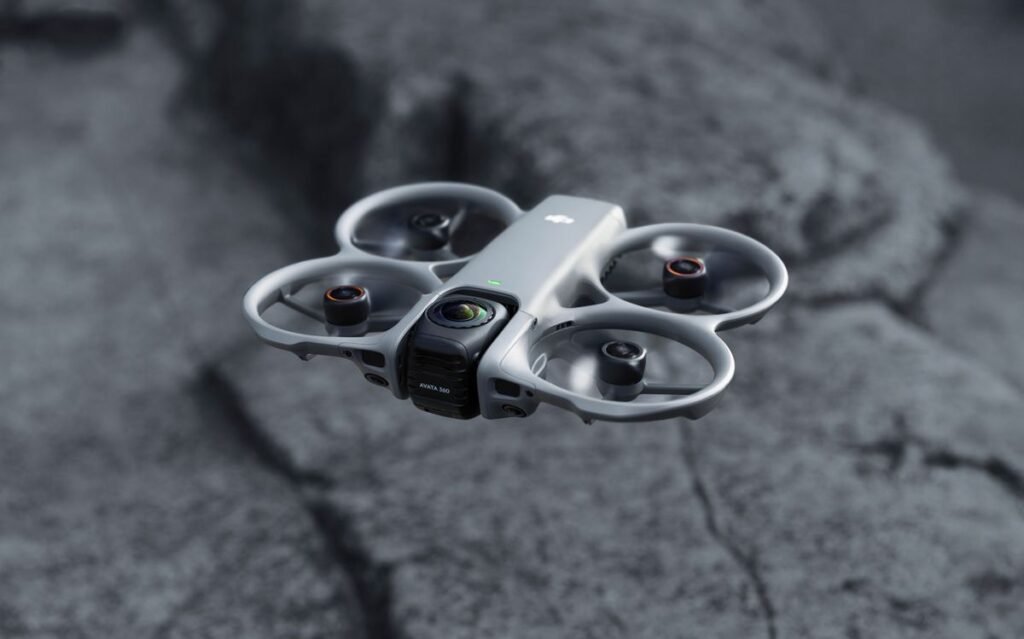
The DJI Avata 360 is DJI’s first drone that records 360-degree video. It combines two 1/1.1-inch sensors, immersive FPV flight with goggles and the option to fly it like a regular drone with a screen controller. Here are its official specs, compatible goggles and controllers, US price and rules, and how it compares with the Avata 2 and 360 cameras.
Quick answer: the DJI Avata 360 is a 455 g cinewhoop that shoots 8K/60fps 360° video. US orders opened in April 2026 from $719. It’s ideal for content creators who want to capture the whole scene and reframe later. If you want pure FPV speed and acrobatics, the lighter Avata 2 is more fun.
| Model | Type | Weight | Max video | Flight time | Goggles |
|---|---|---|---|---|---|
| DJI Avata 360 | 360° FPV drone | 455 g | 8K/60fps 360° | 23 min | Optional (Goggles 3 or N3) |
| DJI Avata 2 | FPV drone | 377 g | 4K/60fps | 23 min | Required |
| Antigravity A1 | 360° FPV drone | 249 g | 8K/30fps 360° | Up to 24 min (39 with large battery) | Included |
What is the DJI Avata 360?
It’s a cinewhoop-style FPV drone that records spherical video with two opposing cameras. In other words, it captures everything around it on every flight, and you choose the framing later, when editing.
DJI announced it on March 26, 2026, with shipping from April depending on the region. Its direct rival is the Antigravity A1, the 360 drone from Insta360’s sister brand. It keeps the ducted propellers and immersive flight of the Avata family, but unlike the Avata 2, it can be flown without goggles using a screen controller.
Key features
Data comes from DJI’s official specifications. We haven’t flown it: this is a buyer’s guide, not a hands-on review.
360 camera: two 1/1.1-inch sensors
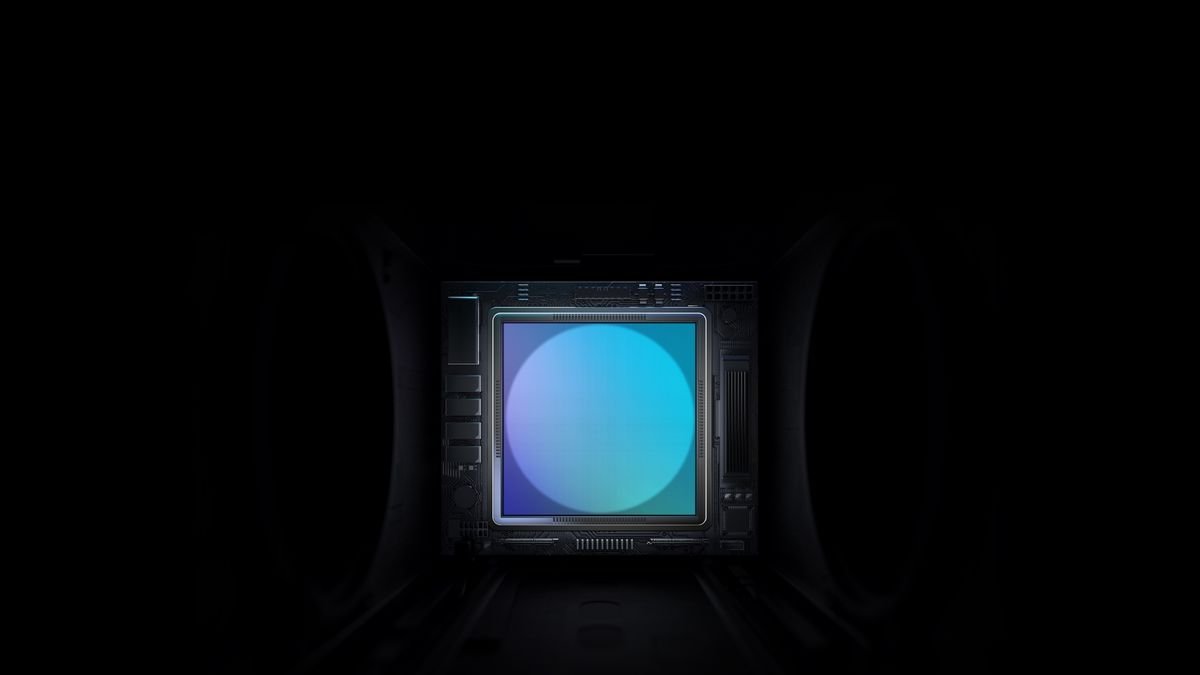
The Avata 360 uses two square 1/1.1-inch CMOS sensors with 64 effective MP each, 2.4 μm pixels and 200° field-of-view lenses at f/1.9. Together they create the spherical image.
- 360 video: up to 8K at 60fps with HDR, and 6K at 60fps.
- 360 photos: 30 MP or 120 MP (15,520 × 7,760 pixels), in JPEG or DNG.
- Color: Normal or D-Log M, with a maximum bitrate of 180 Mbps in H.265.
- Formats: OSV (DJI’s 360 format) and MP4.
In practice, spherical 8K isn’t the same as “flat” 8K. When you reframe to 16:9 you only use part of the sphere, so final sharpness is lower. The same is true of any 360 camera.
Single-lens mode: a classic FPV
The drone has a one-axis mechanical gimbal that rotates the camera block. In single-lens mode it records like a traditional FPV drone: 4K up to 60fps and 2.7K up to 120fps for slow motion, with RockSteady stabilization.
With a standard controller (RC 2, RC-N2 or RC-N3), tilt ranges from -30° to 60°. With goggles and the RC Motion 3 or FPV Remote Controller 3, it extends to ±60°. In 360 video, the virtual gimbal lets you rotate and flip the image ±180°.
Safety: omnidirectional sensing and LiDAR
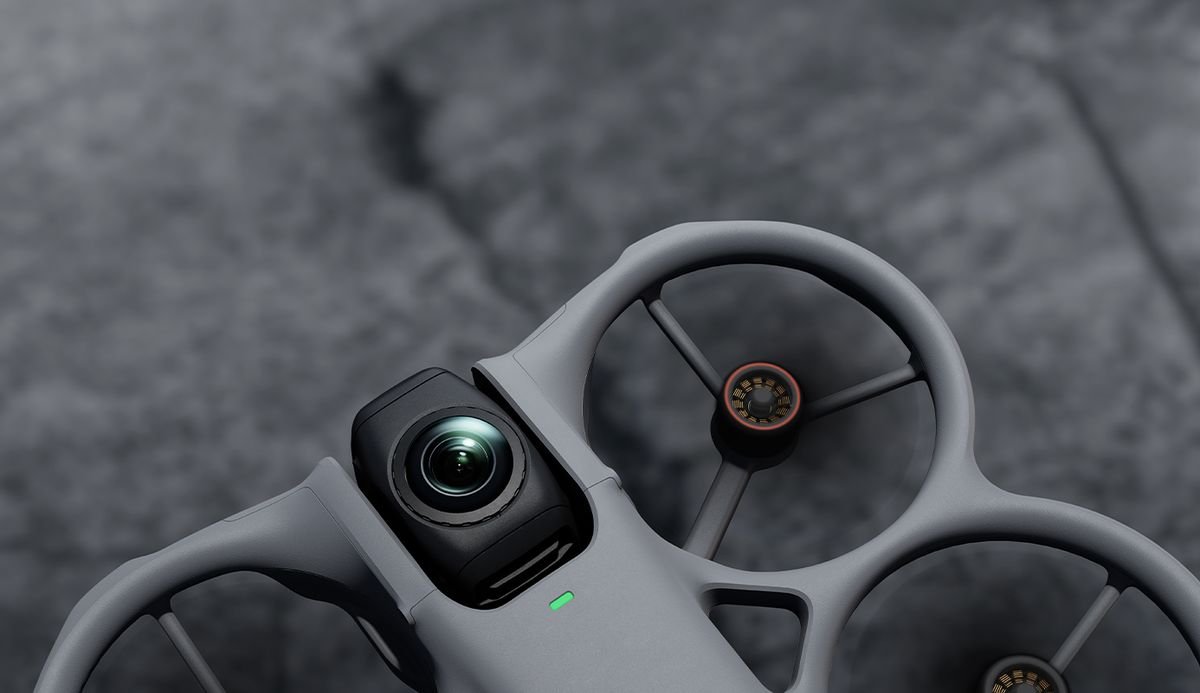
It’s the Avata with the most sensors: omnidirectional vision, forward LiDAR and a downward infrared sensor, and DJI also announces night-time obstacle sensing. One important caveat: all-around sensing only works in 360 mode; in single-lens mode only forward sensing remains. Like all vision systems, it needs textured surfaces and at least 1 lux of light. The front lens is user-replaceable with an optional kit.
Flight time, speed and transmission
- Flight time: about 23 minutes flying forward and 22 hovering (lab figures).
- Battery: 2,700 mAh, 38.67 Wh and 149 g.
- Top speed: 18 m/s (about 40 mph) in Sport, 16 m/s in Normal and 6 m/s in Cine.
- Wind resistance: up to 10.7 m/s (level 5).
- Transmission: DJI O4+, with 1080p live view and up to 20 km range under FCC rules (10 km under CE).
- Storage: 42 GB internal, microSD slot and Wi-Fi 6 downloads at up to 100 MB/s.
Compatible goggles and controllers
The Avata 360 supports two control styles: a screen controller or your phone, without goggles; or FPV flight with goggles, which requires a motion controller or FPV controller.
| Accessory | Compatible | What it’s for |
|---|---|---|
| DJI RC 2 | Yes | Screen controller, flying without goggles |
| DJI RC-N2 and RC-N3 | Yes | Controller without screen, uses your phone |
| DJI Goggles 3 | Yes, with RC Motion 3 or FPV RC 3 | High-end FPV goggles |
| DJI Goggles N3 | Yes, with RC Motion 3 or FPV RC 3 | More affordable FPV goggles |
| RC Motion 3 | Yes | Intuitive motion control with goggles |
| FPV Remote Controller 3 | Yes | Manual mode with goggles |
Goggles can’t be used with the RC 2. If you already own an Avata 2 with Goggles 3 or N3 and the RC Motion 3, you can reuse them and buy just the drone. DJI doesn’t list the Goggles 2, Goggles Integra or the second-generation FPV controller as compatible; check with DJI before buying if you have one of them.
DJI Avata 360 price in the US
US orders opened in April 2026, a few weeks after the global launch, starting at $719 through DJI’s store and Amazon. Combo bundles with goggles weren’t available in the US at launch, so check which bundles are currently offered. Prices and DJI availability in the US can change because of regulatory restrictions, so check before you buy.
Weight and US drone rules
At about 455 g, the Avata 360 is over the FAA’s 250 g threshold. To fly it legally in the US as a recreational pilot you need to:
- Register it with the FAA and mark the registration number on the drone.
- Pass the free TRUST test and carry proof of completion.
- Comply with Remote ID: DJI drones of this class broadcast Remote ID; make sure it’s active and associated with your registration.
- Check airspace with B4UFLY or another approved app, get LAANC authorization near airports and stay at or below 400 ft.
- Fly for money only with a Part 107 certificate.
Watch out with goggles: the FAA requires visual line of sight. If you fly FPV with goggles, you need a visual observer next to you who keeps the drone in sight. Flying with the RC 2 and no goggles, you can keep the drone in sight yourself. In the UK and EU it’s a C1-class drone, which requires operator registration and the A1/A3 online certificate.
Pros and cons
- 8K/60fps 360 video with 10-bit D-Log M
- Two 1/1.1-inch sensors, large for a cinewhoop
- Single-lens mode for classic FPV footage
- Omnidirectional sensing with forward LiDAR
- Can be flown without goggles using the DJI RC 2
- Works with the Avata 2’s Goggles 3, Goggles N3 and RC Motion 3
- User-replaceable front lens
- 455 g: FAA registration required
- Slower than the Avata 2 in manual flight
- Omnidirectional sensing only in 360 mode
- 360 video requires reframing and a powerful computer
- Goggles 2 and Integra not officially listed as compatible
- Goggle bundles are expensive
DJI Avata 360 vs DJI Avata 2
| Feature | DJI Avata 360 | DJI Avata 2 |
|---|---|---|
| Weight | 455 g | 377 g |
| Sensor | 2 × 1/1.1″ (360°) | 1 × 1/1.3″ |
| Max video | 8K/60fps (360°) and 4K/60fps | 4K/60fps and 2.7K/120fps |
| Photos | Up to 120 MP (360°) | 12 MP |
| Obstacle sensing | Omnidirectional + forward LiDAR (360 mode) | Downward and rear |
| Fly without goggles | Yes (RC 2, RC-N2, RC-N3) | No |
| Flight time | About 23 min | About 23 min |
If you already own an Avata 2, your Goggles 3 or N3 and RC Motion 3 work with both.
DJI Avata 360 vs Insta360 360 cameras
Versus an Insta360 X5
A 360 camera like the Insta360 X5 records 8K at 30fps, weighs about 200 g and costs much less. The Avata 360 offers what a handheld camera can’t: flying through spaces or following a car from the air. For travel and vlog 360 video, the X5 is enough.
Versus the Antigravity A1
The Antigravity A1 is its direct rival. It weighs 249 g with the standard battery, records 8K at 30fps in 8-bit and offers up to 24 minutes of flight (39 with the high-capacity battery). It’s always sold with the Vision goggles and a motion controller.
- In favor of the A1: under the 250 g FAA registration threshold for recreational flying, longer flight time with the large battery and goggles included.
- In favor of the Avata 360: 60fps at 8K, 10-bit D-Log M for grading, LiDAR, single-lens mode and the option to fly without goggles. It’s also far cheaper to get in if you already own DJI goggles.
Who is the DJI Avata 360 for?
- Content creators and vloggers: its ideal audience. Shoot once and get multiple framings, vertical for social media and horizontal for YouTube.
- Anyone who wants to try FPV without fear: omnidirectional sensing, the prop guard and the option to fly with the RC 2 make it easier to start than a classic FPV drone.
- Avata 2 owners: if you already have goggles and the RC Motion 3, buying the drone alone is the cheapest way to add 360 video.
It’s not for you if you want speed and acrobatics (a classic FPV or racing drone is faster and lighter), you want the fewest requirements (a sub-250 g drone avoids FAA registration for recreational use), you don’t want to edit (360 video must be reframed and 8K files need a powerful computer) or you only want classic aerial photos (a folding drone with a 3-axis gimbal is more practical).
DJI Avata 360 FAQ
DJI announced it on March 26, 2026. Shipping started in April 2026, with dates varying by region; US orders opened in mid-April.
US orders opened from $719 through DJI and Amazon. Check current bundles and prices, which change often.
Yes. At about 455 g it exceeds the 250 g threshold, so you must register it, mark the registration number on it, comply with Remote ID and pass the TRUST test for recreational flying.
Yes. Unlike the Avata 2, it supports the DJI RC 2, RC-N2 and RC-N3 for flying while looking at a screen. Goggles 3 and N3 only work with the RC Motion 3 or FPV Remote Controller 3.
Yes, if they’re DJI Goggles 3 or Goggles N3, paired with the RC Motion 3 or FPV Remote Controller 3. Goggles 2 and Integra aren’t on the official compatibility list.
It depends. The Avata 360 is better for 360 video, reframing later and flying with more safety sensors. The Avata 2 is lighter, faster in manual mode and more fun for pure FPV.
Keep reading
- DJI Neo 3: Release Date, Price and Everything We Know
- DJI Air 3 Review: Is the Dual-Camera Drone Worth It?
- DJI Mini 4 Pro Review: Is It Still Worth Buying in 2026?
- DJI Avata 2 Review: The Best FPV Drone for Beginners?
Official sources: DJI: Avata 360 launch press release (March 26, 2026) · FAA – Recreational flyers