
Disclosure: this article contains affiliate links. If you buy through them, Bright Technology may earn a small commission at no extra cost to you. As an Amazon Associate, we earn from qualifying purchases.
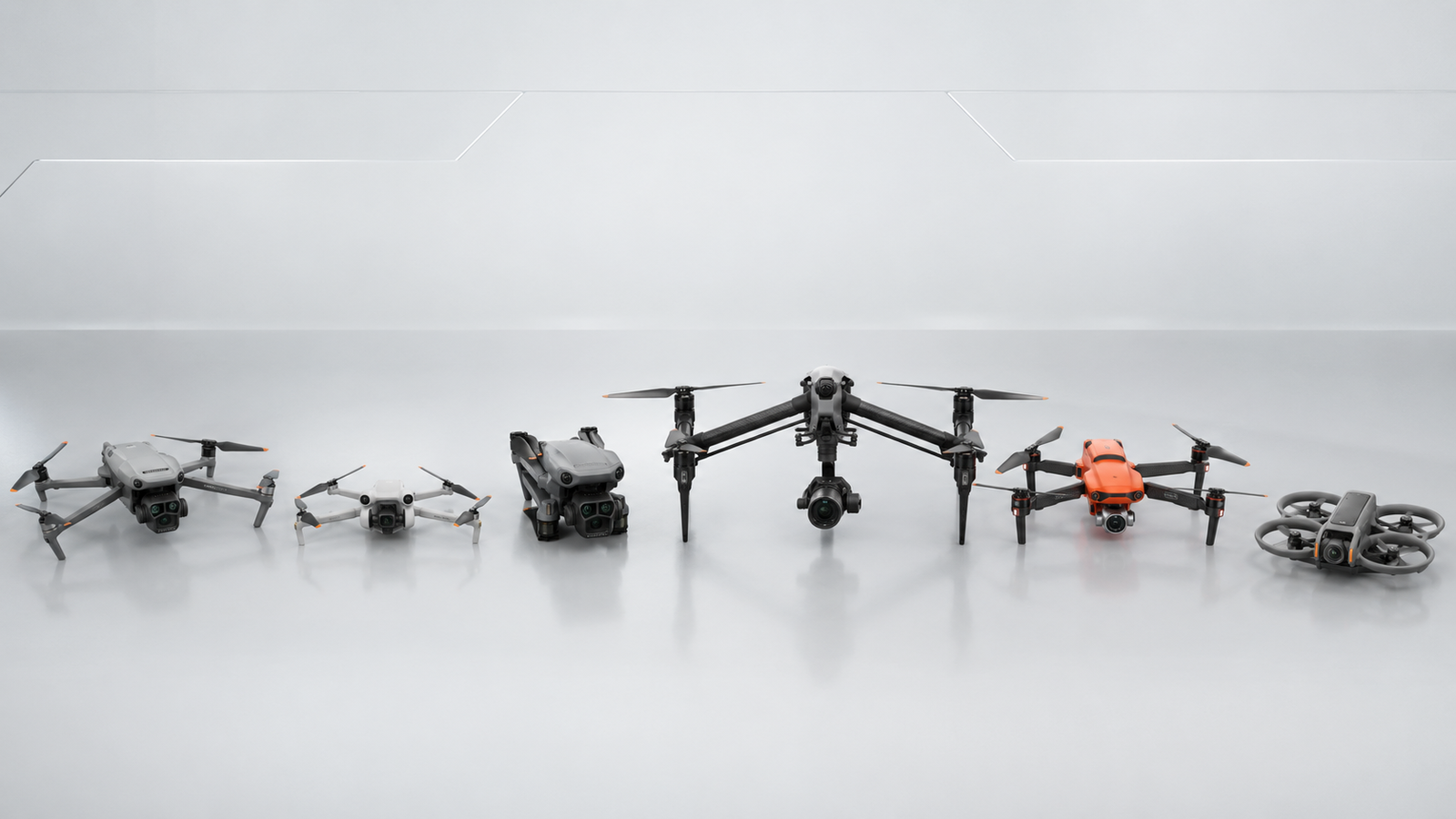
The best professional drones are no longer reserved for big production companies and engineering firms. Today you can shoot cinematic footage, run inspections, build 3D models with photogrammetry or film commercials with a drone that costs far less than a few years ago. The catch is that choosing the right one has become harder, because a real estate photographer, a YouTube creator, a surveying company and an FPV filmmaker all need different tools.
This guide compares the best professional drones you can buy right now, with key specs, strengths, limitations and the type of user each one suits. The goal is not just a list of models but a pick that fits the way you actually work.
- How we chose these professional drones
- Best professional drones compared
- 1. DJI Air 3: the most balanced professional drone
- 2. DJI Mini 4 Pro: best value professional drone
- 3. DJI Mavic 3 Pro: the reference for professional aerial photography
- 4. DJI Inspire 3: the drone for film and large productions
- 5. Autel EVO II Pro: the best professional alternative to DJI
- 6. DJI Avata 2: the best professional FPV drone
- Are there professional drones for agriculture?
- How to choose a professional drone
- Common mistakes when buying a professional drone
- Which professional drone should you buy?
- Professional drones FAQ
- Keep reading
Quick answer: the DJI Air 3 is the best professional drone for most people because of its dual camera, long flight time and safety features. The DJI Mini 4 Pro is the best value, the DJI Mavic 3 Pro is best for aerial photography, the DJI Inspire 3 is best for film and TV, the DJI Avata 2 is best for professional FPV and the Autel EVO II Pro is the best non-DJI alternative.
How we chose these professional drones
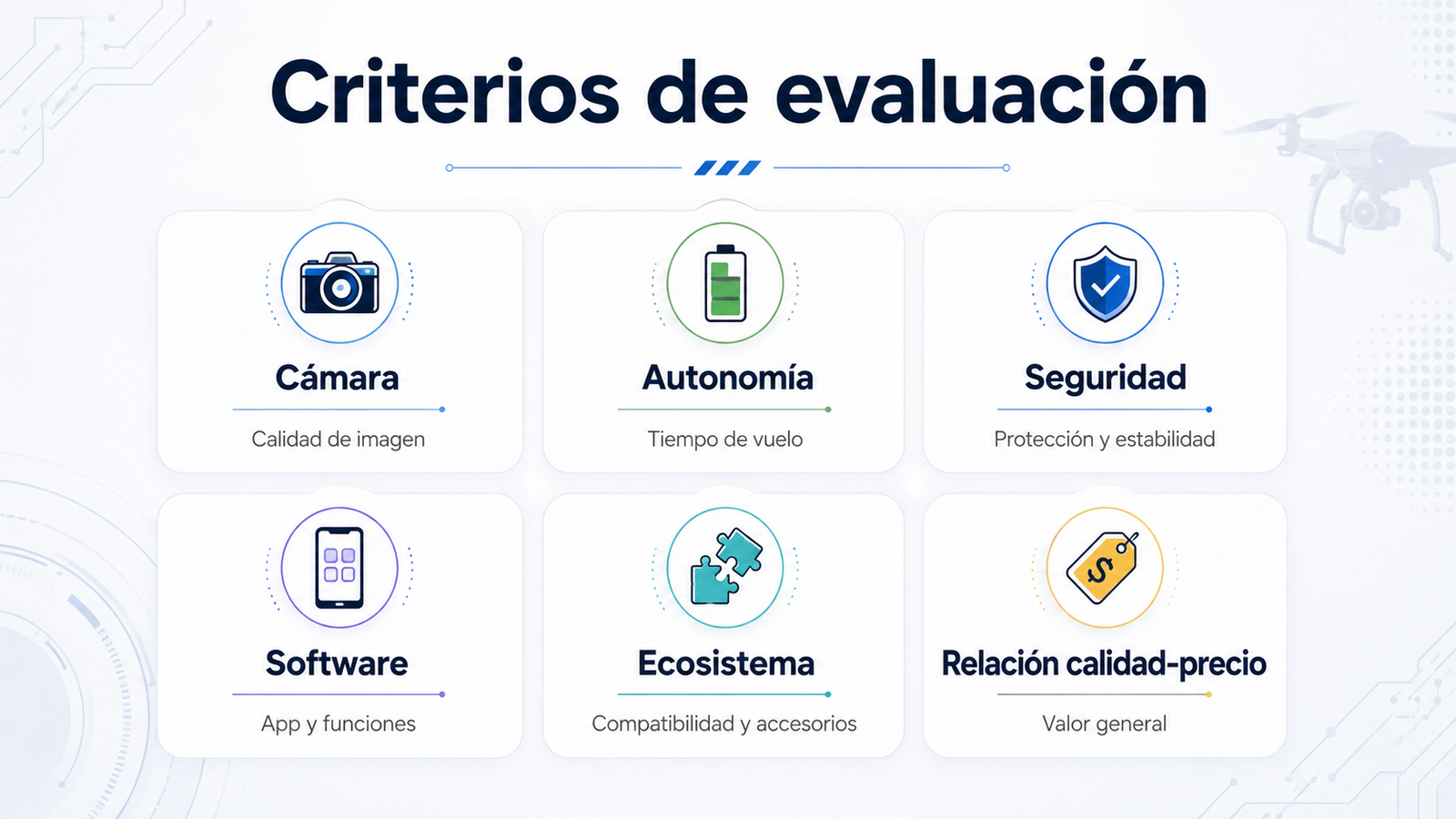
This is a research-based comparison built around what matters for professional use: image quality, reliability over long working days, real-world flight time, safety systems, accessory and battery availability, the manufacturer’s software ecosystem, value for money and popularity among photographers, videographers, surveyors and creators. We favored drones that remain a smart purchase in the medium and long term and left out models that are clearly superseded or hard to find.
Best professional drones compared
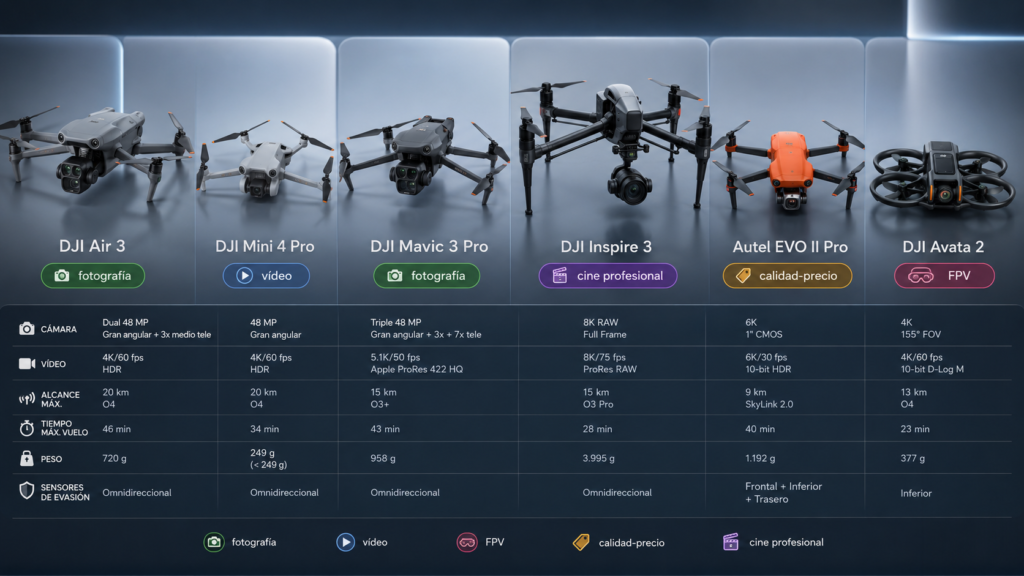
| Drone | Best for | Camera | Flight time | Price |
|---|---|---|---|---|
| DJI Air 3 | Most professional work | Dual 48 MP, 4K up to 100 fps | Up to 46 min | Check price |
| DJI Mini 4 Pro | Best value, under 249 g | 48 MP, 4K HDR | Up to 34 min | Check price |
| DJI Mavic 3 Pro | Aerial photography | Triple camera, Hasselblad 4/3 main | Up to 43 min | Check price |
| DJI Inspire 3 | Film and TV | Full-frame Zenmuse X9, up to 8K | Up to 28 min | Check price |
| Autel EVO II Pro | Non-DJI alternative | 1-inch sensor, 6K | Up to 40 min | Check price |
| DJI Avata 2 | Dynamic FPV video | 4K HDR ultra-wide | Up to 23 min | Check price |
1. DJI Air 3: the most balanced professional drone
If you can only buy one drone for professional work, the DJI Air 3 is the safest recommendation. It brings features once reserved for much pricier aircraft, and its real strength is balance: portability, flight time, safety, easy piloting and creative range in one package. That is why it is a favorite with photographers, videographers, real estate agencies, creators and companies that need one drone for almost any scene. For more detail, read our DJI Air 3 review.
Key specs
- Dual camera: wide-angle plus telephoto
- Video up to 4K at 100 fps
- Omnidirectional obstacle sensing
- ActiveTrack 360°
- Up to 46 minutes of flight
- DJI O4 transmission
- Smart Return To Home
- Waypoint Flight
Design and flying experience
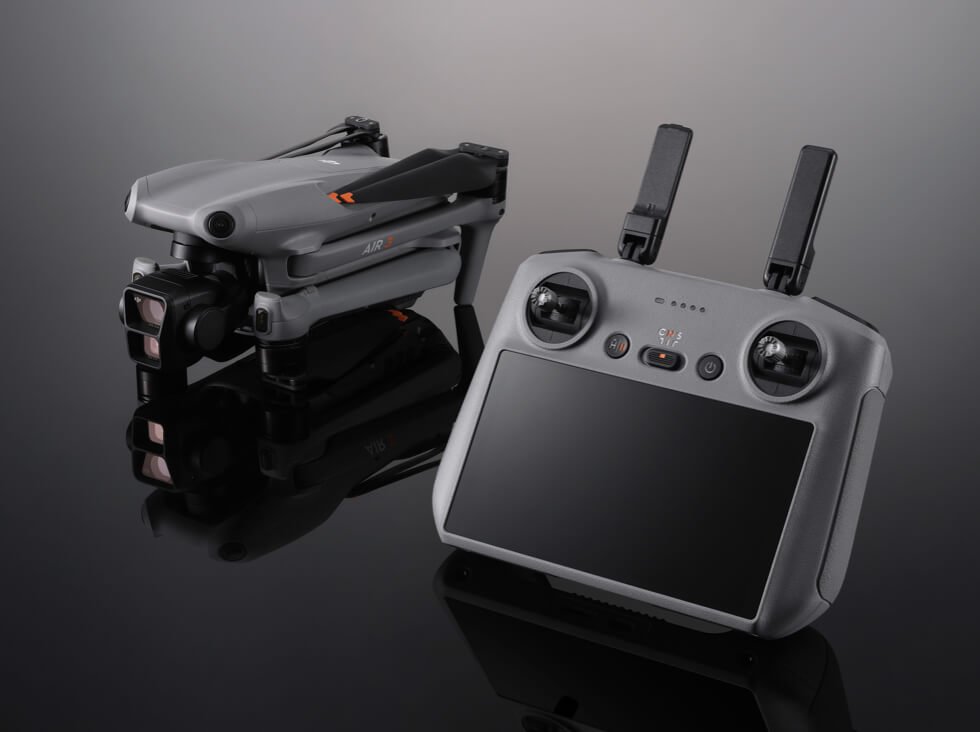
The folding design is easy to carry and feels more solid than earlier Air generations. It is not as compact as the Mini series, but still simple to pack for outdoor work. GPS positioning, omnidirectional sensors and DJI O4 transmission keep flight very stable even at long distances, so you can focus on composing the shot instead of piloting.
Camera and video quality
The Air 3 pairs a wide-angle lens with a 70 mm medium telephoto, both with 48 MP sensors, so you can change perspective without moving closer to the subject and without losing quality. Photos show excellent detail, natural color and enough dynamic range to recover highlights and shadows in Lightroom or Capture One.
Video goes up to 4K at 100 fps for smooth slow motion, with D-Log M and HLG profiles for color grading. That covers advertising, corporate video, YouTube, real estate, tourism, events and light technical inspections.
Smart modes and safety
The Air 3 offers ActiveTrack 360°, Spotlight, Point of Interest, Waypoint Flight, Cruise Control, MasterShots, QuickShots, Hyperlapse and Smart Return To Home. The standout is omnidirectional obstacle sensing, which monitors the surroundings continuously.
- Very versatile dual camera with wide-angle and telephoto
- Excellent 4K photo and video quality
- Up to 46 minutes of flight
- Omnidirectional obstacle sensing
- Latest-generation ActiveTrack 360°
- Great balance of size and performance
- Costs more than the Mini series
- Photo quality is below the Mavic 3 Pro
- Needs a slightly larger bag
- Extreme cinema work still calls for the Inspire 3
2. DJI Mini 4 Pro: best value professional drone
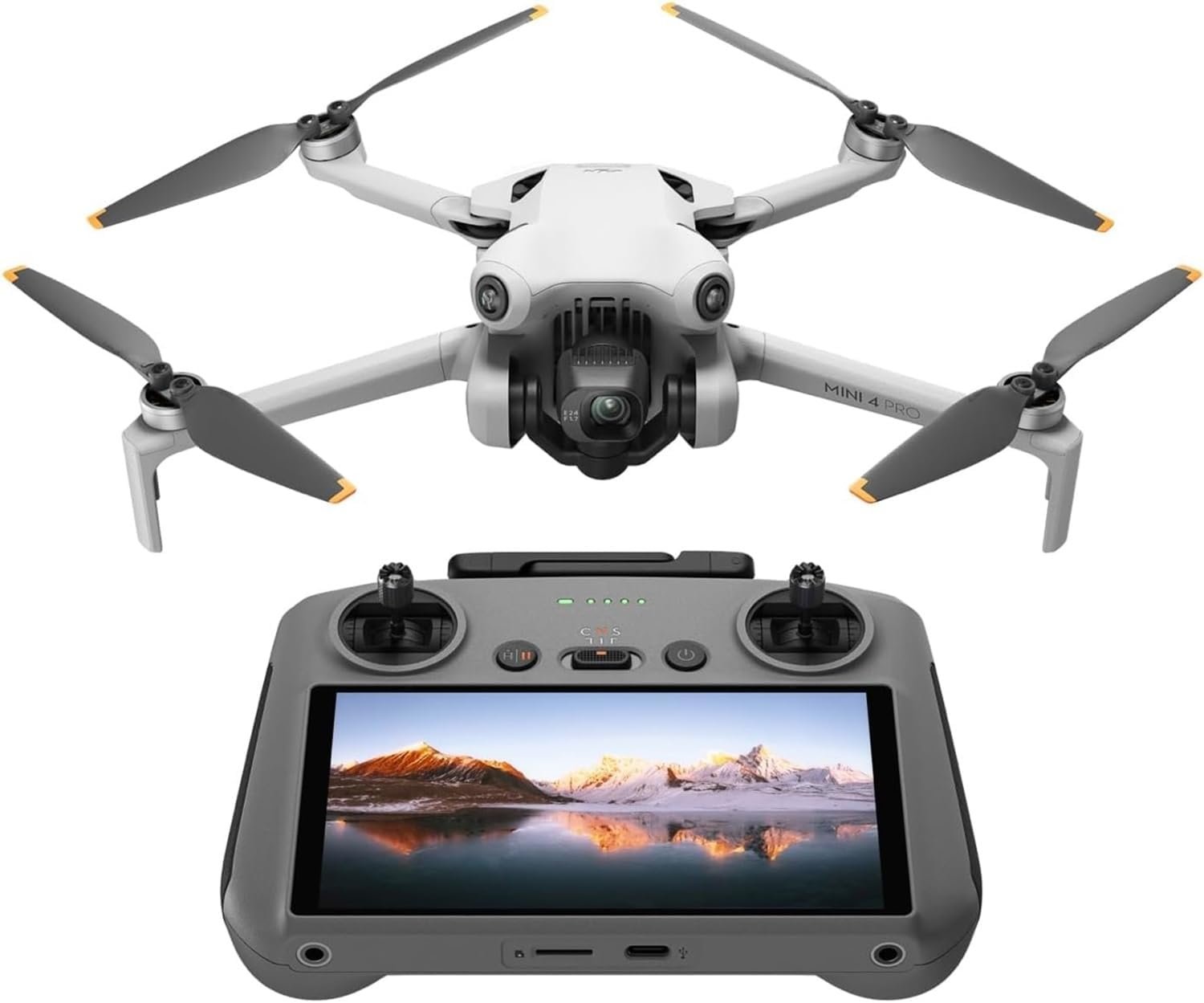
The Mini 4 Pro breaks the barrier between entry-level and professional drones. A weight under 249 g, strong image quality, obstacle sensors and smart modes make it a primary work tool for photographers, creators and small businesses, and a light option for aerial photography that can travel anywhere. Our DJI Mini 4 Pro review goes deeper.
Key specs
- 4K HDR camera
- 48 MP sensor
- Under 249 g
- Up to 34 minutes of flight
- ActiveTrack 360°
- Omnidirectional obstacle sensing
- Native vertical video
- DJI O4 transmission
Design and flying experience
Although it belongs to the Mini family, it feels close to higher-class drones. The compact size makes it easy to travel with and carry all day, yet it holds position precisely, moves smoothly and inspires confidence even for pilots with little experience.
Camera and video quality
The 48 MP sensor records 4K HDR video and takes detailed photos with balanced color, good dynamic range and enough sharpness to edit in Lightroom or Photoshop. It suits real estate, tourism, landscapes, digital marketing, social media and events.
HDR handles highlights and shadows better at sunrise and sunset, and native vertical recording is a big advantage for Instagram, TikTok and YouTube Shorts.
Smart modes and safety
DJI packed in almost every smart function from its higher-end models: ActiveTrack 360°, Spotlight, MasterShots, Hyperlapse, QuickShots, Waypoint Flight, Cruise Control and Smart Return To Home. Omnidirectional sensing and DJI O4 transmission, with better signal stability and lower latency than earlier generations, keep it safe for beginners and professionals alike.
- Excellent photo and video quality
- Weighs under 249 g
- Very easy to carry
- Omnidirectional obstacle sensing
- Vertical recording for social media
- Complete smart modes
- Outstanding performance for the price
- No dual camera like the Air 3
- Sensor is smaller than the Mavic 3 Pro’s
- Not aimed at large film productions
- Original DJI accessories add to the final cost
3. DJI Mavic 3 Pro: the reference for professional aerial photography
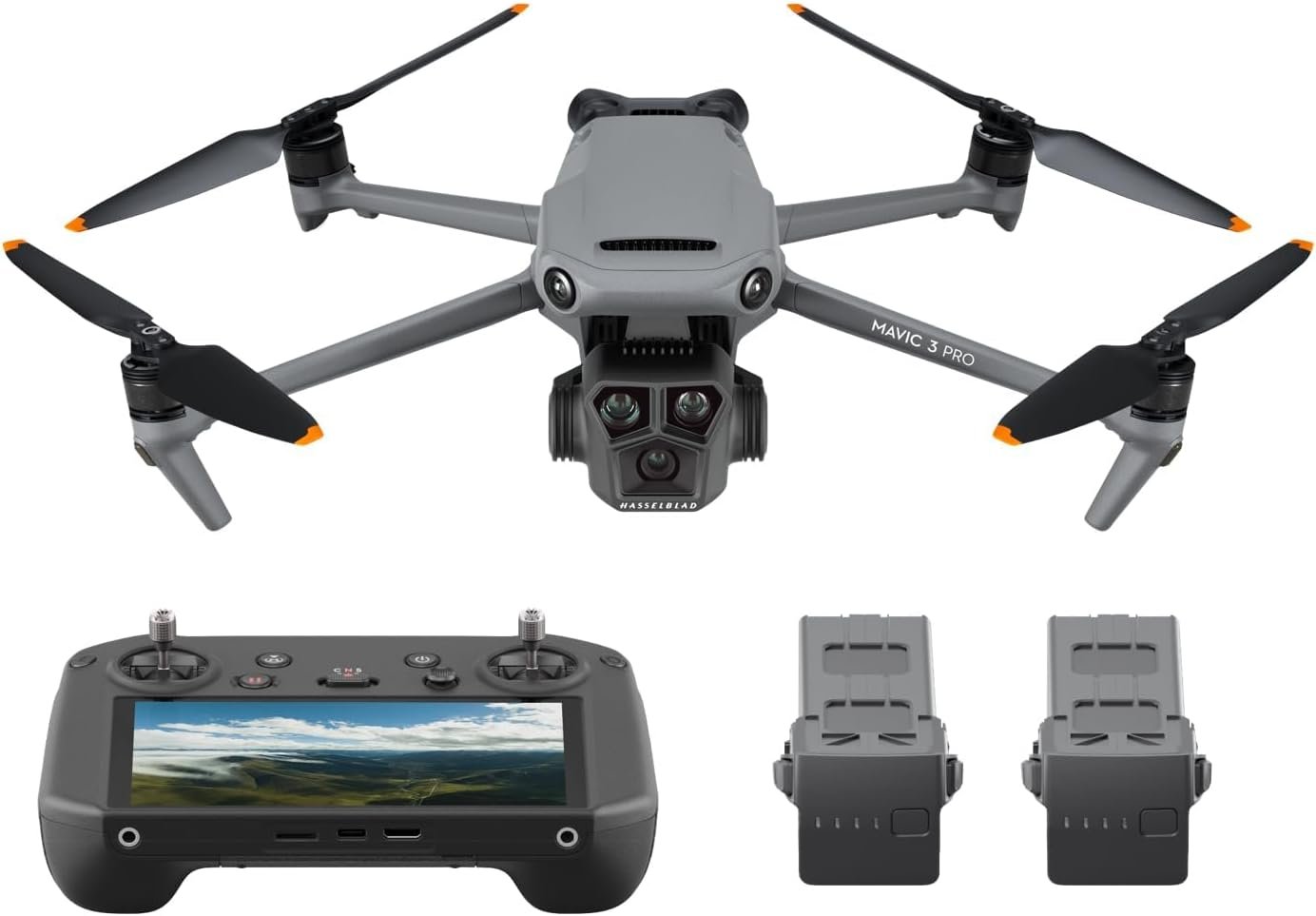
For high-end aerial photography, the Mavic 3 Pro keeps showing up as the reference in studios and production companies. It is built for professionals who need maximum image quality, wide optical versatility and a tool for demanding commercial projects, not for people starting out. Its triple-camera system, a Hasselblad main camera plus two telephoto lenses, is what sets it apart.
Key specs
- Triple camera with Hasselblad main camera
- Four Thirds sensor
- Medium and long telephoto
- Video up to 5.1K
- Up to 43 minutes of flight
- Omnidirectional obstacle sensing
- ActiveTrack 5.0
- DJI O3+ transmission
Design and flying experience
The build is excellent and the materials feel premium. It is bigger than a Mini 4 Pro or Air 3 but still compact enough to move between locations. Stability is outstanding and the controls are precise, which allows the very smooth movements audiovisual and photography work demands.
Camera and video quality
The Hasselblad main camera has a 4/3 CMOS sensor, far larger than the one in most consumer drones. That means more light, higher dynamic range and strong performance at sunrise, sunset and in tricky lighting. Two telephoto lenses let you change the visual narrative without moving the drone, from wide establishing shots to aerial portraits, architecture and nature footage.
It also records 5.1K video and supports professional color profiles such as D-Log M, giving you footage ready for advanced editing and grading.
Smart modes and safety
It includes nearly all of DJI’s professional flight technology: ActiveTrack 5.0, MasterShots, Hyperlapse, Waypoint Flight, Cruise Control, Smart Return To Home and omnidirectional sensing. APAS 5.0 can detect obstacles and plot an alternative route automatically when possible, which helps on complex flights, and the stable transmission keeps a clean image at long distances.
Who should buy it?
Professional photographers, production companies, advertising agencies, and high-end tourism, architecture and documentary work. We would not recommend it as a first drone. It is for pilots who already know the drone workflow and need a major step up in quality.
- Extremely versatile triple camera
- Large Hasselblad sensor
- Excellent photo quality
- 5.1K video
- Long flight time
- Omnidirectional obstacle sensing
- High price
- Larger than the Air and Mini series
- Needs experience to exploit its full potential
- Not for occasional users
4. DJI Inspire 3: the drone for film and large productions
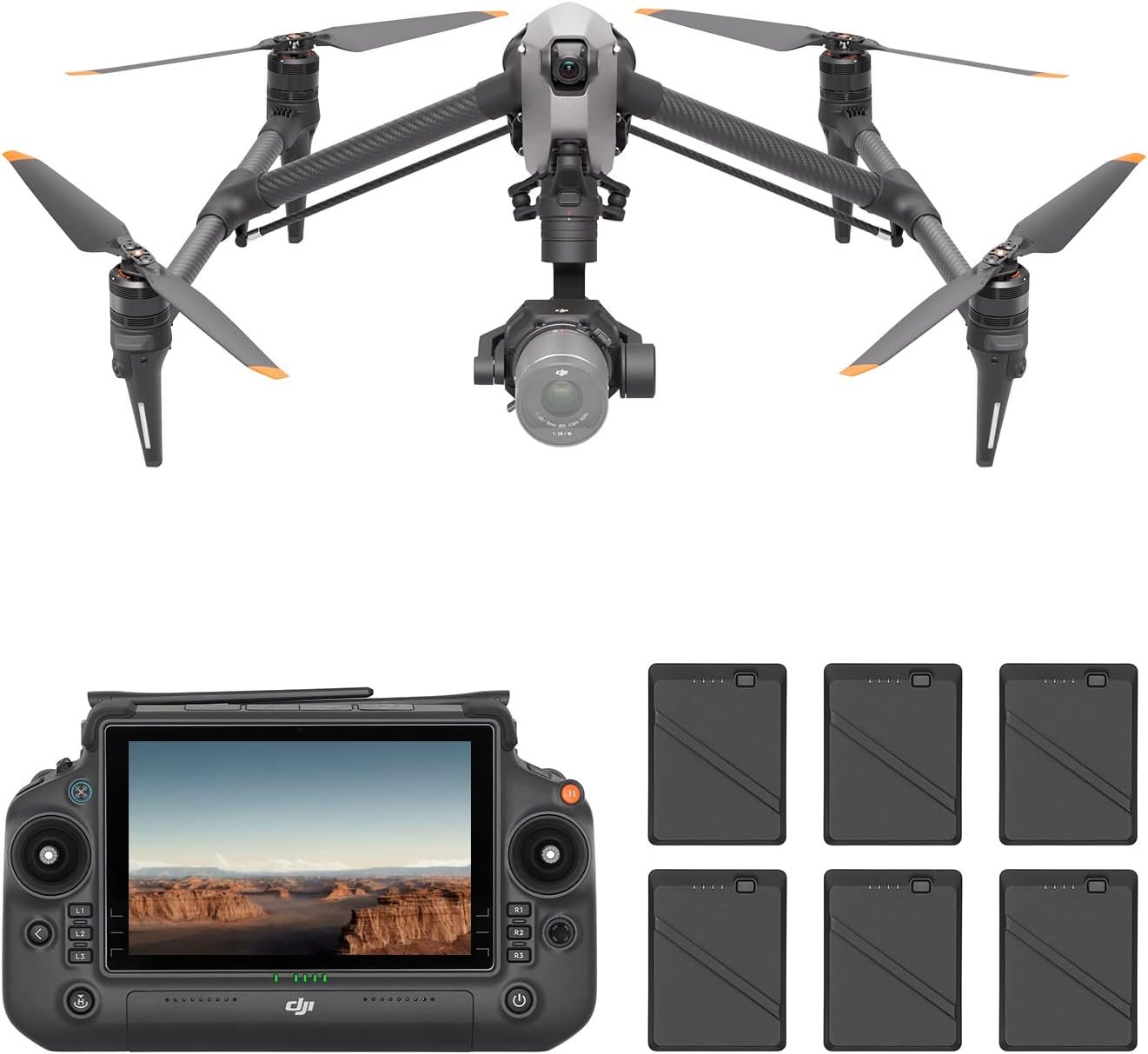
The Inspire 3 is a different category. While the rest of this guide targets photographers, creators and small businesses, it is designed for film, television, international advertising and projects where image quality allows no compromise. Its price and size place it far from hobbyists.
Key specs
- Zenmuse X9 full-frame camera
- Up to 8K CinemaDNG and Apple ProRes RAW
- Dual operator (pilot plus camera operator)
- Up to 28 minutes of flight
- Built-in RTK
- Omnidirectional sensing
- High-precision positioning
- Top speed above 90 km/h
Design and flying experience
The Inspire 3 does not try to be portable. Its structure is much sturdier than the other models here, built for long shooting days. A signature feature is the retractable landing gear, which gives the camera a clear view during pans. It also supports a dual-operator setup: one person flies while another handles only the camera, which improves precision and creativity.
Camera and video quality
The Zenmuse X9 is a full-frame system built for high-end cinema, recording 8K CinemaDNG and Apple ProRes RAW, formats common in film, TV and international advertising. The gap with a conventional drone is huge: extraordinary dynamic range, much greater color depth and the flexibility for advanced grading, visual effects and post-production. Interchangeable lenses let cinematographers match the optics to each scene.
Professional features
Built-in RTK gives high-precision positioning, and the Inspire 3 can repeat exactly the same route at different times of day or even weeks later, which is essential when a production needs identical camera moves. Other features include Waypoint Pro, ActiveTrack Pro, advanced obstacle detection and dedicated cinematic modes.
Who should buy it?
Production companies, film, television and advertising crews, and documentary and large-event producers. It makes no sense for recreational use or small occasional jobs. For companies that genuinely need this level of performance, the price is justified.
- Top-tier cinematic image quality
- Up to 8K CinemaDNG and ProRes RAW
- Full-frame camera with interchangeable lenses
- Built-in RTK for maximum precision
- Dual-operator setup
- One of the most advanced professional drones in the world
- Very high price
- Large size and low portability
- Requires professional experience
- Higher maintenance costs
5. Autel EVO II Pro: the best professional alternative to DJI
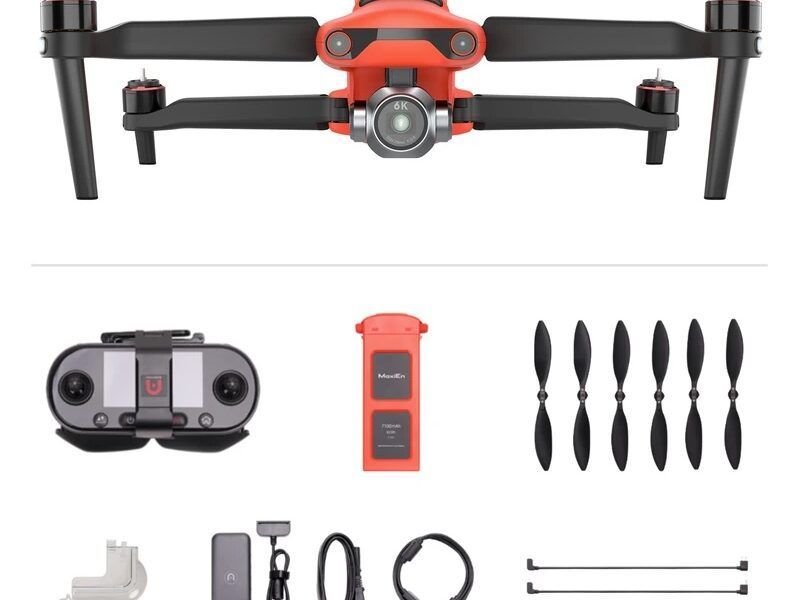
DJI clearly dominates the professional market, but Autel Robotics has built a very competitive product. The EVO II Pro is the main alternative for professionals who want a high-performance aircraft outside the DJI ecosystem. It stands out for excellent image quality, long flight time and increasingly complete software, and for some companies it is attractive because of corporate policies, privacy considerations or compatibility with certain work environments.
Key specs
- 1-inch sensor
- Video up to 6K
- 20 MP photos
- Up to 40 minutes of flight
- 360° obstacle detection
- Smart flight modes
- Brushless motors
- Long-range transmission
Design and flying experience
Build quality feels as robust as DJI’s professional models, and the folding structure makes it easy to carry between job sites. In flight it is very stable, and GPS keeps the drone still for long-exposure photos or delicate video. Autel’s app has improved, though it is not as refined as DJI Fly.
Camera and video quality
The 1-inch sensor records 6K video and delivers very high quality for photography and video production, with excellent detail, solid behavior in well-lit scenes and plenty of editing latitude. For aerial photography, architecture, inspections and real estate marketing, the results are genuinely competitive.
Smart modes and safety
Features include Dynamic Track, Orbit Mode, Waypoint Mission, automatic Return To Home, GPS-assisted flight and 360° obstacle detection, which automate repetitive maneuvers and give more consistent results. Slow-speed stability is one of its best qualities, which matters near infrastructure, buildings or hard-to-reach areas.
- Excellent 6K image quality
- Very good flight time
- 360° obstacle sensors
- Robust construction
- Great alternative to the DJI ecosystem
- Well suited to inspections and aerial photography
- Software less refined than DJI Fly
- Fewer accessories available
- Smaller user community
- High price compared with alternatives
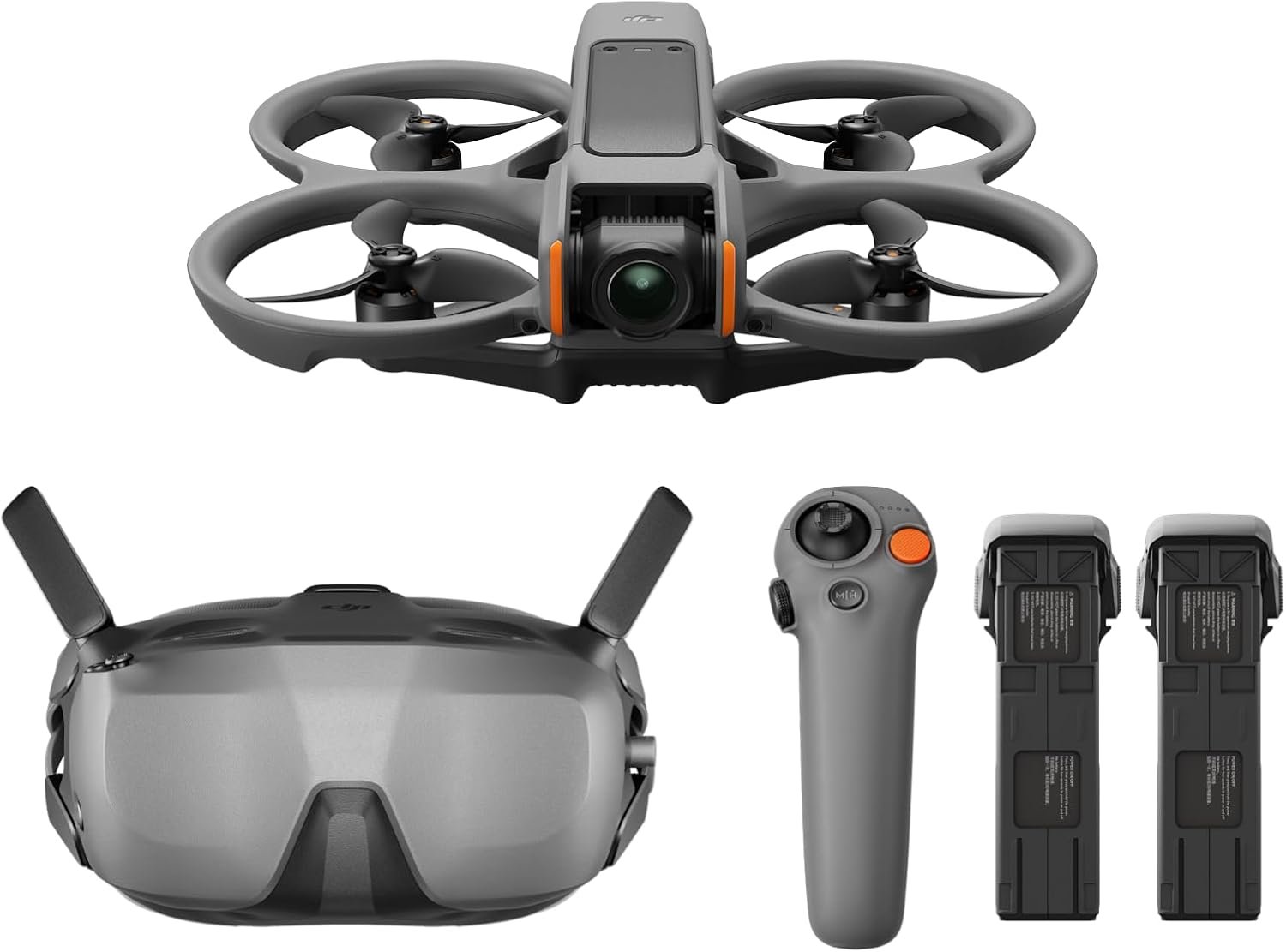
6. DJI Avata 2: the best professional FPV drone
FPV drones have changed the way videos are shot. They let you fly through tight spaces, follow vehicles at speed and create immersive sequences a conventional drone cannot match. The Avata 2 is one of the most complete and accessible options for anyone entering FPV without giving up professional features. It is not meant for traditional aerial photography, which is why it is common in sports, advertising, tourism, music videos and social media. To learn the basics first, read what an FPV drone is.
Key specs
- 4K HDR ultra-wide camera
- Integrated propeller guards
- Up to 23 minutes of flight
- RockSteady and HorizonSteady stabilization
- Works with DJI Goggles 3
- Motion Controller 3 or FPV remote
- DJI O4 transmission
Design and flying experience
The compact body has integrated propeller guards, which add safety around people, buildings or indoors and let you attempt riskier moves. With DJI Goggles 3 and the Motion Controller 3 the immersion is striking, as if the pilot were riding inside the drone.
Camera and video quality
The Avata 2 records 4K HDR video with detailed, well-rendered color. RockSteady and HorizonSteady keep footage stable even during aggressive maneuvers, so you get smooth sequences without leaning on external stabilization in post. It works well for extreme sports, cars and motorcycles, tourism and hotels, real estate and music videos.
Smart modes and safety
DJI has made FPV much simpler: emergency braking, automatic Return To Home, Normal, Sport and Manual modes, HDR recording and DJI O4 transmission. These aids let pilots with little experience enjoy FPV with far more safety than traditional hand-built FPV drones.
Who should buy it?
Production companies, ad agencies, YouTube creators, tourism companies, premium real estate, and sports, automotive and event videographers. It is not the drone for mapping, surveying or traditional aerial photography, and it does not replace a competition FPV rig.
- Very immersive FPV experience
- Excellent 4K HDR video
- Much easier to learn than other FPV drones
- Strong stabilization
- Integrated propeller guards
- Complete DJI ecosystem
- Not for traditional aerial photography
- Shorter flight time than other pro drones
- Manual mode takes practice
- Does not replace a racing FPV drone
Are there professional drones for agriculture?
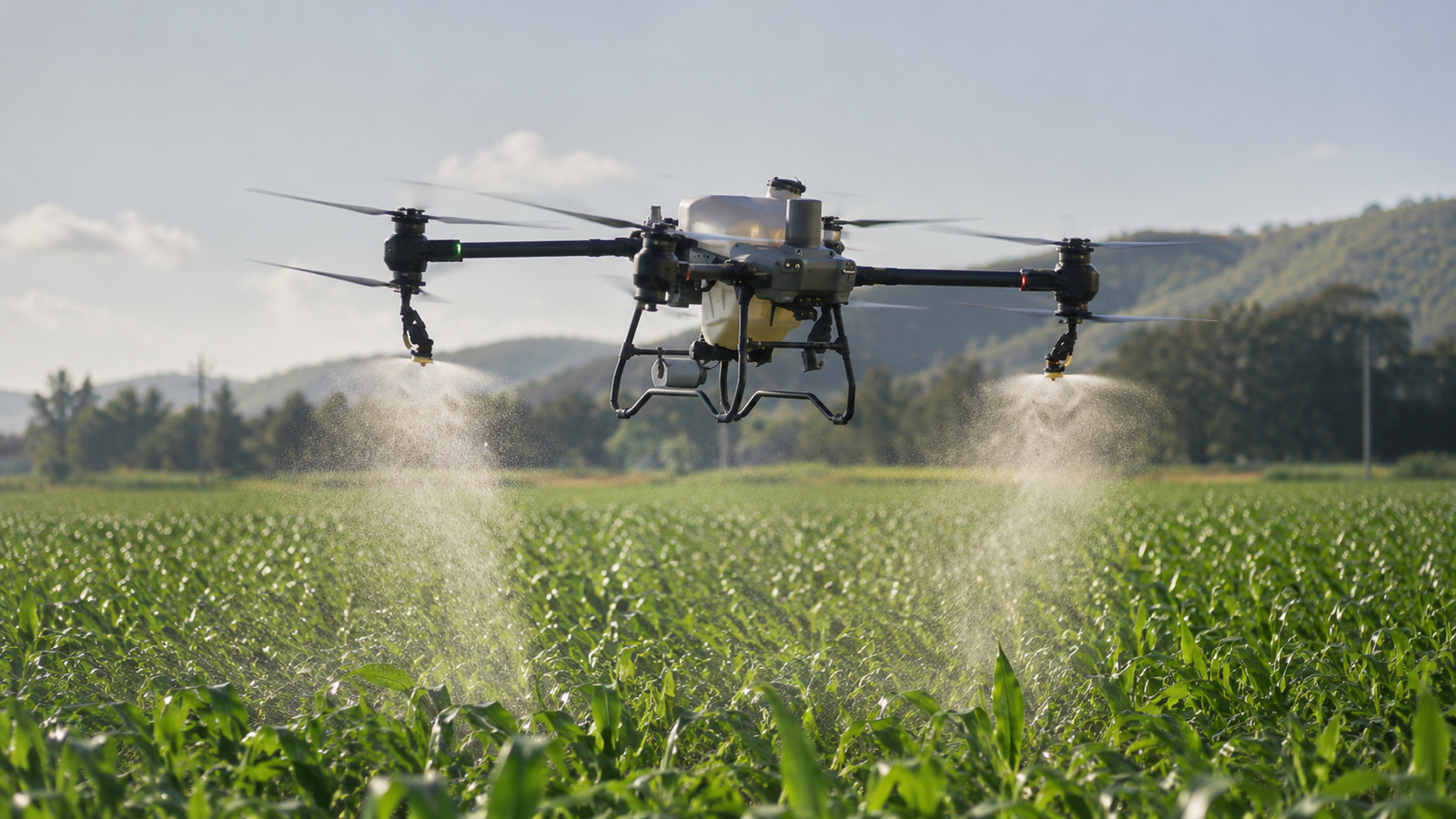
Yes. Precision agriculture is one of the fastest-growing uses of professional drones. Typical applications include crop spraying, targeted fertilizer application, plant health monitoring with multispectral cameras, early detection of pests and disease, yield mapping and irrigation management. The DJI Agras line, with models such as the Agras T25 and T50, is a global reference for covering large areas precisely. These machines are very different from the drones above: their price, size and functions are aimed only at farming, and they require specific training and compliance with agricultural spraying rules.
How to choose a professional drone
Camera quality
The camera is still the most important factor. A social media creator does not need the same sensor as a film production company. For aerial photography or advertising, a model with more dynamic range and better color profiles is worth the investment. For a broader look at camera options, see our guide to the best camera drones.
Flight time
More flight time makes each work day more efficient. A model like the DJI Air 3 can stay up for around 46 minutes, which means fewer landings and battery swaps.
Obstacle sensors
When you work near buildings, trees or infrastructure, omnidirectional sensors are a big plus for both safety and peace of mind.
Manufacturer ecosystem
The drone itself is only part of the picture. Also consider:
- Battery availability.
- Propellers and spare parts.
- Technical service and repairs.
- Firmware updates.
- Mobile apps.
That is a big reason DJI remains the sector reference. Be aware that DJI availability in the US can vary because of regulatory restrictions, so check stock and support before you buy.
US rules for commercial drone work
In the US, flying for work generally requires an FAA Part 107 Remote Pilot Certificate, and drones that weigh 0.55 lb (250 g) or more must be registered with the FAA. Most drones also need to broadcast Remote ID, and you should check airspace with tools such as B4UFLY or LAANC before you fly. If you are not ready for a professional aircraft yet, our list of the best drones for beginners is a good place to learn first.
Common mistakes when buying a professional drone
- Buying more technology than you need. An Air 3 or Mini 4 Pro often gives the end client the same result as an Inspire 3.
- Choosing on price alone. Weigh reliability, support and accessory availability too.
- Ignoring the software. The app and ecosystem sometimes matter as much as the camera.
- Not planning for growth. If your business will expand, invest in gear that will last several years.
Which professional drone should you buy?
Choosing a professional drone goes well beyond comparing specs, so think about the work you will do before you invest. For most people the DJI Air 3 is the best all-rounder, the Mavic 3 Pro is best for aerial photography, the Inspire 3 is the reference for film and large productions, the Mini 4 Pro is the best value, the Avata 2 is the best for cinematic FPV and the Autel EVO II Pro is the solid alternative to DJI. All of them are excellent. For more shooting technique, see our guide to drone photography and video.
Professional drones FAQ
For most professional users, the DJI Air 3. Its mix of image quality, dual camera, flight time, obstacle sensing and ease of use makes it one of the most balanced drones on the market.
For aerial photography, the DJI Mavic 3 Pro, thanks to its triple-camera system and Hasselblad sensor. For large cinematic productions, the DJI Inspire 3 plays in a higher category with its full-frame camera and 8K recording.
The DJI Mini 4 Pro. It offers excellent image quality, omnidirectional obstacle sensing and a weight under 249 g, with features once found only on far more expensive drones.
Yes, as long as the drone will be part of your business. Real estate, video production, inspection, tourism, architecture and surveying increasingly use drones. Estimate the return on investment before you buy.
Professional drones usually have better sensors and cameras, advanced safety systems, longer flight time and a fuller ecosystem of accessories, batteries, software and support.
Most photographers and videographers use DJI models such as the Air 3, Mavic 3 Pro and Mini 4 Pro, film crews use the Inspire 3, and some teams choose the Autel EVO II Pro to stay outside the DJI ecosystem.
The DJI Mavic 3 Pro. If you want something lighter and cheaper, the DJI Mini 4 Pro also gives excellent results.
For advertising, tourism or content creation, the DJI Air 3. For cinema, the DJI Inspire 3. For dynamic, sports-style shots, the DJI Avata 2.
DJI leads the professional market with the Mini, Air, Mavic, Avata and Inspire lines. Autel Robotics is the most serious alternative, with the EVO II Pro.
Yes. Commercial flights generally require an FAA Part 107 Remote Pilot Certificate, and drones weighing 250 g or more must be registered with the FAA.