
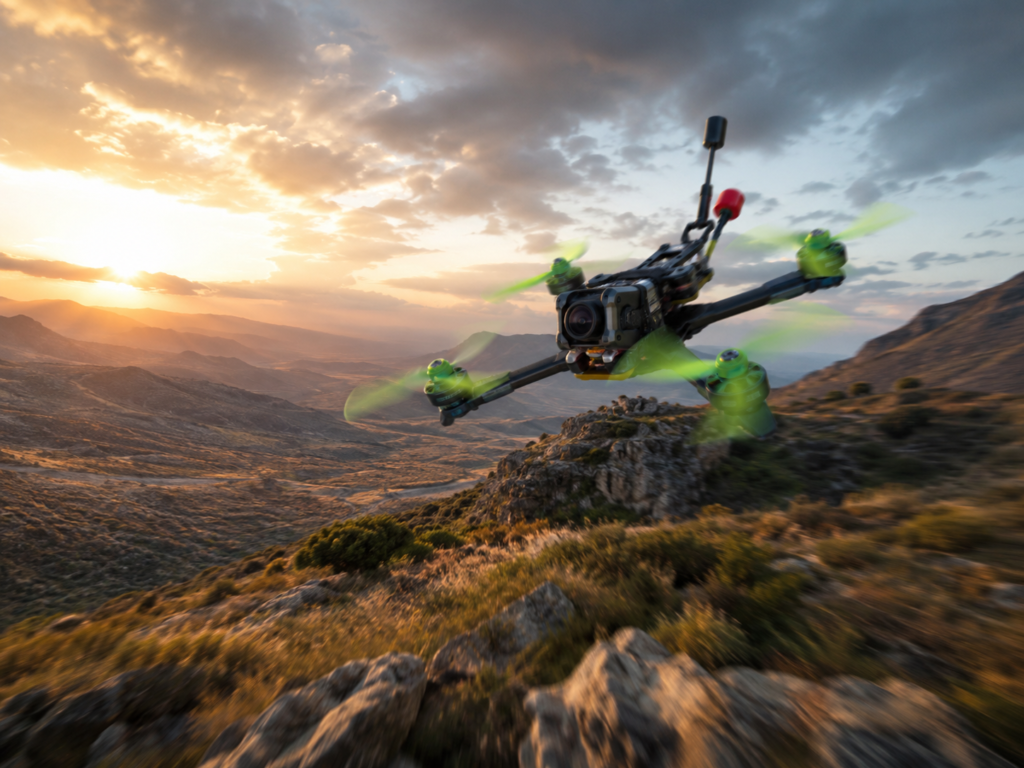
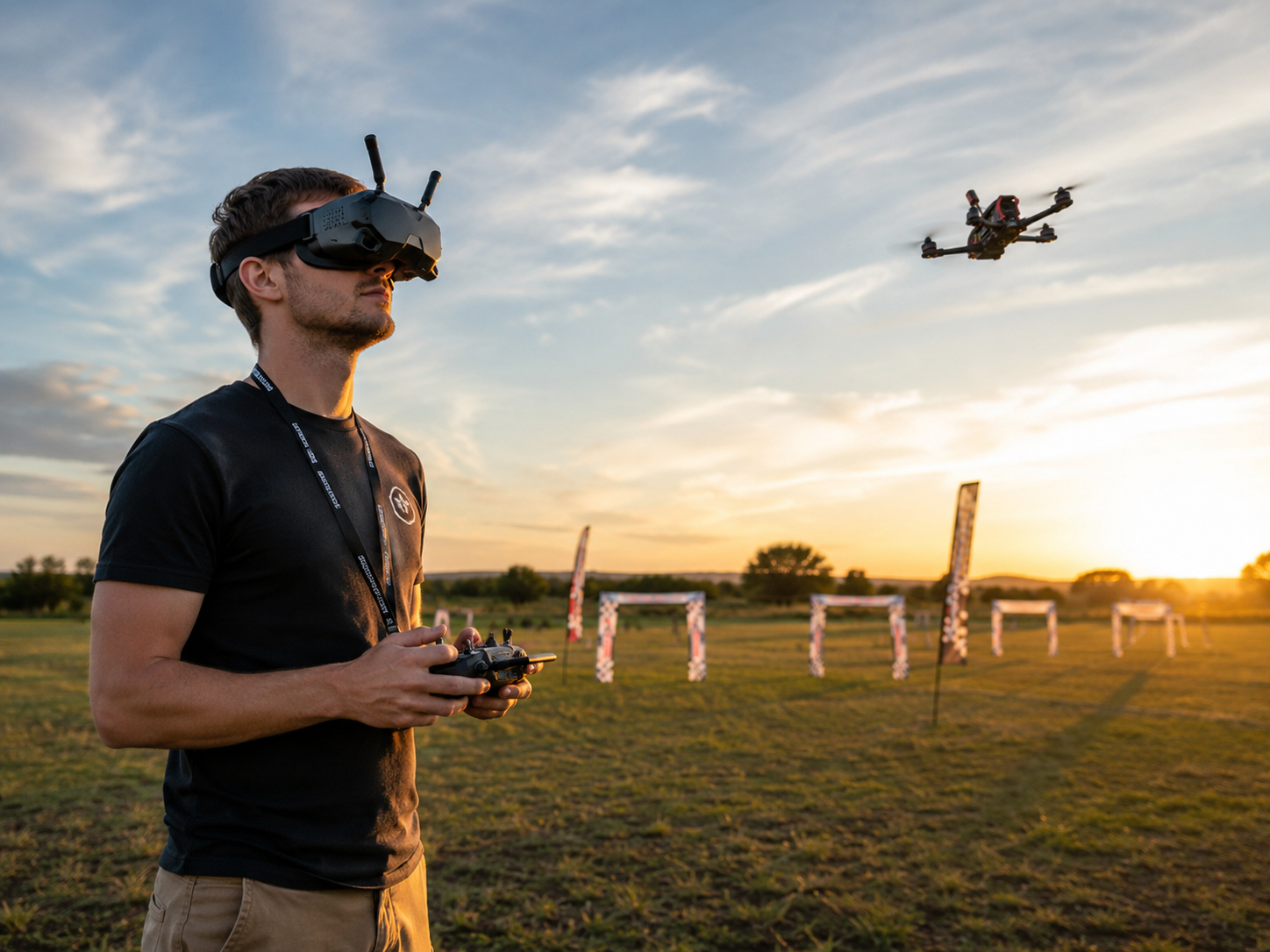
What is an FPV drone? It’s a drone you fly by watching a live video feed from its onboard camera, usually through goggles. FPV stands for first-person view: instead of watching the drone from the ground or on a phone screen, you see exactly what it sees, as if you were sitting in the cockpit.
That immersion is why FPV has exploded in popularity. It offers a stronger sense of speed, more precise control, spectacular footage and a flying experience no regular camera drone can match. Here’s how FPV drones work, how they differ from traditional drones and what you need to get started.
Quick answer: an FPV drone streams low-latency video from its camera to goggles worn by the pilot, who flies it from the drone’s point of view. FPV drones prioritize speed, agility and manual control, and come in three main styles: freestyle, racing and cinematic cinewhoops.
What does FPV mean on a drone?
FPV means first-person view. The pilot receives the camera’s image in real time and flies from the aircraft’s perspective rather than watching it from outside. Many pilots describe it as a completely different experience from flying a normal drone.
What is an FPV drone?
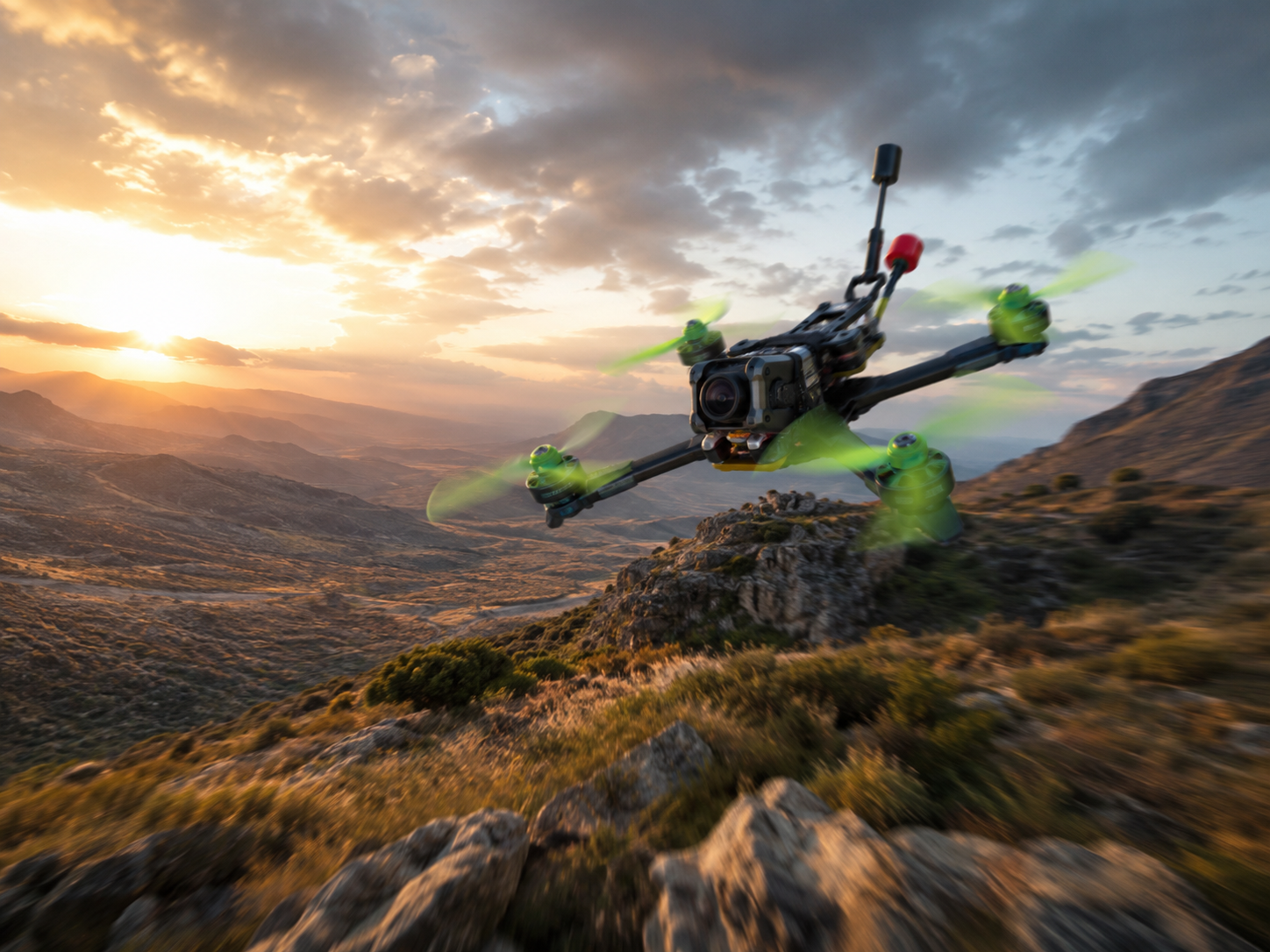
An FPV drone is an aircraft equipped with a real-time video transmission system that sends the camera’s image straight to goggles or a compatible screen. Compared with typical camera drones, FPV models are built for speed, agility, maneuverability and immersion, which makes them popular for freestyle, racing, dynamic cinematic shots and advanced recreational flying.
Today you’ll find everything from beginner-friendly FPV kits to professional rigs used on high-end film and ad productions.
Why FPV drones are different
The difference isn’t just the camera; it’s the flying philosophy. A traditional drone uses lots of automatic assistance to stay stable. Many FPV setups give you far more direct control, which means more freedom of movement, more aggressive maneuvers, more dynamic flight and a feeling of total control.
How an FPV system works
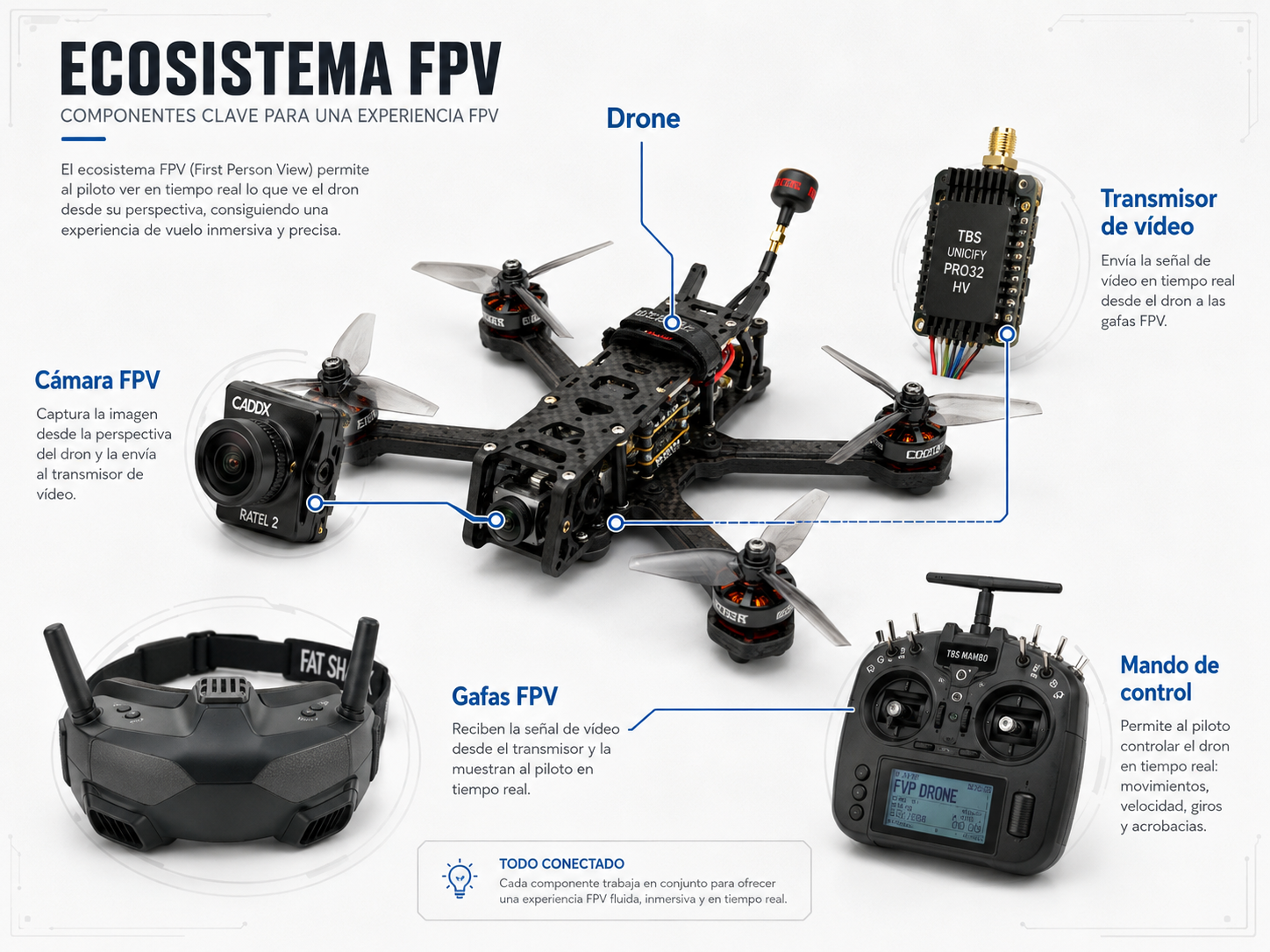
All the components work together to get the image from the drone to your eyes with as little delay (latency) as possible:
- FPV camera: captures a fast, clear view of the surroundings in flight.
- Video transmitter (VTX): sends the camera signal to the pilot. Its quality determines how smooth the feed is.
- FPV goggles: receive the video and display it in real time; they create the immersive feeling.
- Radio controller: sends your stick inputs to the drone; a precise radio makes flying much more enjoyable.
- Receiver: on the drone, it picks up your control commands; in the goggles, a video receiver shows the feed.
FPV drone vs regular drone
Both share motors, propellers, batteries and flight controllers, but the experience is completely different. Regular drones are designed for aerial photography, stable video, ease of use and assisted flight. FPV drones prioritize immersion, speed, agility, manual control and advanced maneuvers.
Many FPV pilots fly in Acro (rate) mode, which removes most self-leveling and lets you directly control the drone’s angle and rotation. It offers huge freedom, but it takes practice.
| Feature | Regular drone | FPV drone |
|---|---|---|
| Flying experience | Watched from outside | Immersive, from the cockpit |
| Speed | Moderate | Very high |
| Ease of learning | High | Medium |
| Stable footage | Excellent | Varies |
| Acrobatics | Limited | Very advanced |
| Main use | Photo and video | Freestyle, racing and FPV cinematography |
Types of FPV drones
Freestyle FPV drones
Built for acrobatics and creative flying: flips, rolls, inverted moves, technical lines and dynamic footage. Freedom of movement matters more than top speed.
Racing FPV drones
Optimized for very high speed to race through gates and obstacles on a course. Expect light frames, very powerful motors, instant response and ultra-low latency.
Cinematic FPV drones (cinewhoops)
Ducted drones designed for smooth, close, spectacular shots. Production companies use them for events, sports, advertising and film.
Analog vs digital FPV
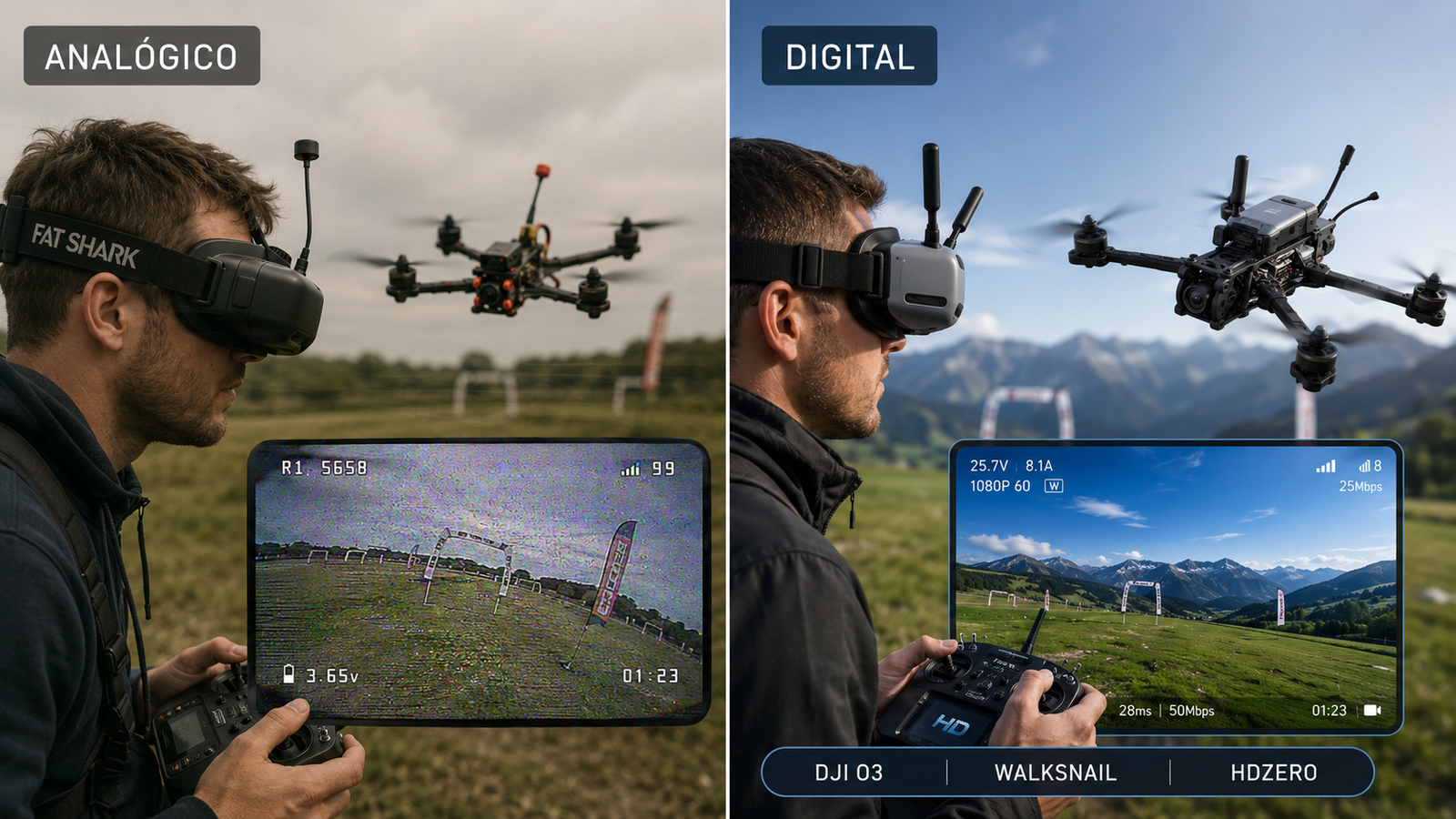
Analog FPV dominated for years. It’s cheaper, widely compatible and has very low latency, but image quality is lower.
Digital FPV systems such as DJI’s O-series, Walksnail and HDZero deliver HD video, much clearer images and, on some systems, onboard recording. That’s why most new pilots now start with digital.
Pros and cons of FPV drones
Pros
- Immersion: seeing exactly what the drone sees transforms flying.
- Spectacular footage: moves that regular drones simply can’t do, now common in film and advertising.
- Direct control: a more natural, precise connection with the aircraft.
- Active community: a huge global community for learning, setups and tips.
Cons
- Steeper learning curve than regular drones.
- Higher crash risk while learning, due to speed and manual control.
- Higher upfront cost: besides the drone, you’ll need goggles, a radio, spare batteries and a charger.
What you need to start flying FPV
- An FPV drone: a beginner model or a more advanced setup.
- FPV goggles: essential for the immersive experience.
- A radio controller to fly the drone.
- Several batteries to get enough practice time.
- An FPV simulator: practicing on a simulator first builds reflexes and saves a lot of crashes.
In the US, flying with goggles also means you need a visual observer next to you who keeps the drone in sight, under FAA rules.
FPV drones for beginners
When you’re starting out, avoid complicated setups. The best beginner FPV drones offer simple setup, modern digital video, easy maintenance and good spare-part availability. The goal isn’t the most powerful drone; it’s a platform that helps you learn and progress step by step.
Bottom line
FPV drones offer one of the most exciting experiences in the drone world. First-person view gives you a unique sense of immersion, and while FPV takes more practice than regular drones, it rewards you with control, speed and footage that’s hard to match. With modern digital systems and ready-to-fly kits, it’s never been easier to start.
FPV drone FAQ
FPV stands for first-person view. The pilot sees a live feed from the drone’s camera, usually through goggles, for an immersive flying experience.
A drone with a real-time video transmission system that lets you fly from the camera’s point of view. FPV flying focuses on immersion and manual control.
The FPV camera sends its image to a video transmitter, which streams it almost instantly to the pilot’s goggles, while a radio controller sends commands back to the drone.
They take more practice than regular drones, especially in Acro mode where most automatic stabilization is off. Many pilots learn on a simulator first.
Yes. Goggles (or a compatible screen) receive the video feed and create the first-person experience.
Analog is cheaper with very low latency; digital systems such as DJI, Walksnail and HDZero offer much better image quality and are the usual choice for new pilots today.