
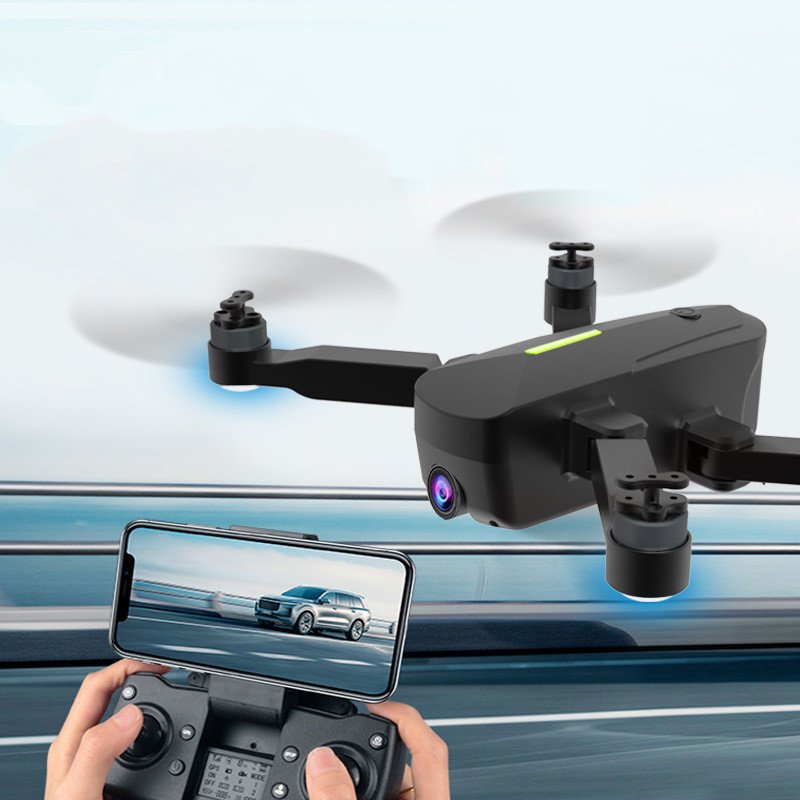
A GPS drone with 4K camera is the step up from toy drones: satellite positioning keeps it steadier outdoors, and the 4K sensor gives you aerial video you can actually edit and share. This guide covers a foldable model with brushless motors, 18 to 22 minutes of flight per battery and up to 1,000 meters of range, and explains who it is for, how to fly it and which rules apply in the US, the UK and the EU.
- Specs at a glance
- What GPS actually does on a drone
- The 4K camera: what to expect
- Brushless motors: why they matter
- Flight time, batteries and charging
- Range and altitude
- Foldable and easy to carry
- What's in the box
- Your first flight, step by step
- Common beginner mistakes
- Drone rules in the US, the UK and the EU
- Who this drone is for, and who should skip it
- Shipping to the US and the EU
- FAQ
- Keep reading
- Official sources
Quick answer: this is a compact (210-250 g), foldable GPS drone with a 4K camera and brushless motors. It flies 18-22 minutes per battery, reaches up to 1,000 m in open areas and is altitude-limited to 120 m. It is a good first camera drone for travel and hiking. If you need a 3-axis gimbal or 30+ minute flights, look at a higher-end model.
Specs at a glance
| Feature | Spec |
|---|---|
| Camera | 4K |
| Positioning | GPS |
| Motors | Brushless |
| Flight time | 18-22 minutes per battery |
| Charging time | About 120 minutes |
| Drone battery | 7.4 V, 1,500 mAh |
| Controller battery | 3.7 V, 350 mAh |
| Range | Up to 1,000 m (3,280 ft) with no obstacles or interference |
| Max altitude | 120 m (394 ft), limited |
| Folded size | 12.8 x 10 x 5.5 cm (5 x 3.9 x 2.2 in) |
| Weight | 210-250 g (7.4-8.8 oz) |
| Color | Gray |
Tracked shipping to the US and the EU · checkout in Spanish. US orders: €21.95 shipping, import duties included.
What GPS actually does on a drone
GPS lets the drone know where it is. Instead of drifting with every breeze like a toy quadcopter, a GPS drone can hold its position much better outdoors, which makes framing a shot far easier for beginners.
There is one habit to learn: before takeoff, wait until the drone has locked onto enough satellites. Do it in an open space, away from tall buildings and trees. Taking off before the GPS lock is the most common reason new pilots feel the drone “wanders”.
Indoors, GPS does not help
GPS signals are weak or absent indoors, so the drone behaves like a regular quadcopter inside a house or gym. This model is meant to be flown outside, in open areas.
The 4K camera: what to expect
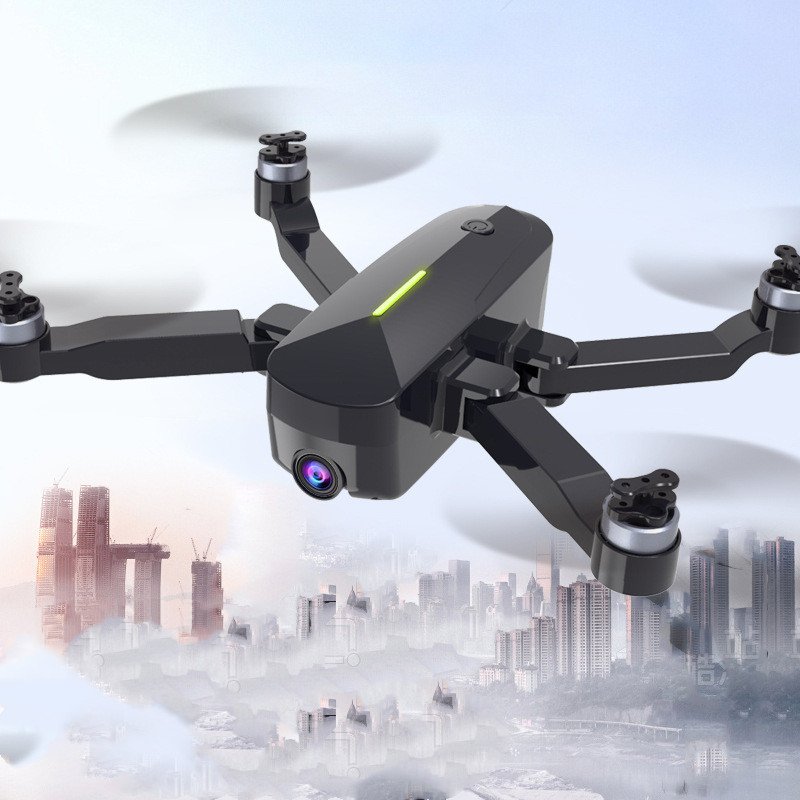
The 4K camera is the main reason to pick this drone over a cheaper toy. It is sharp enough for travel clips, beach and mountain footage, property shots or a bike ride filmed from above.
The camera is fixed to the nose: there is no mechanical 3-axis gimbal. That means footage looks best when you fly slowly and smoothly on calm days. Gentle moves, such as rising straight up, flying forward in a line or turning slowly, give cleaner results than sharp turns.
Tips for better 4K footage
- Fly in the first or last hour of sunlight for softer light.
- Keep the sun behind you to avoid flare on the lens.
- Move slowly: half stick gives smoother video than full stick.
- Record a few seconds before and after each move, so you have room to cut when editing.
Brushless motors: why they matter
Brushless motors are what you find on serious drones. They have less friction, run cooler and last longer than the brushed motors used in most toy drones. In practice, you get a more confident response when there is a light breeze and fewer worn-out motors after a few months of flying.
Flight time, batteries and charging
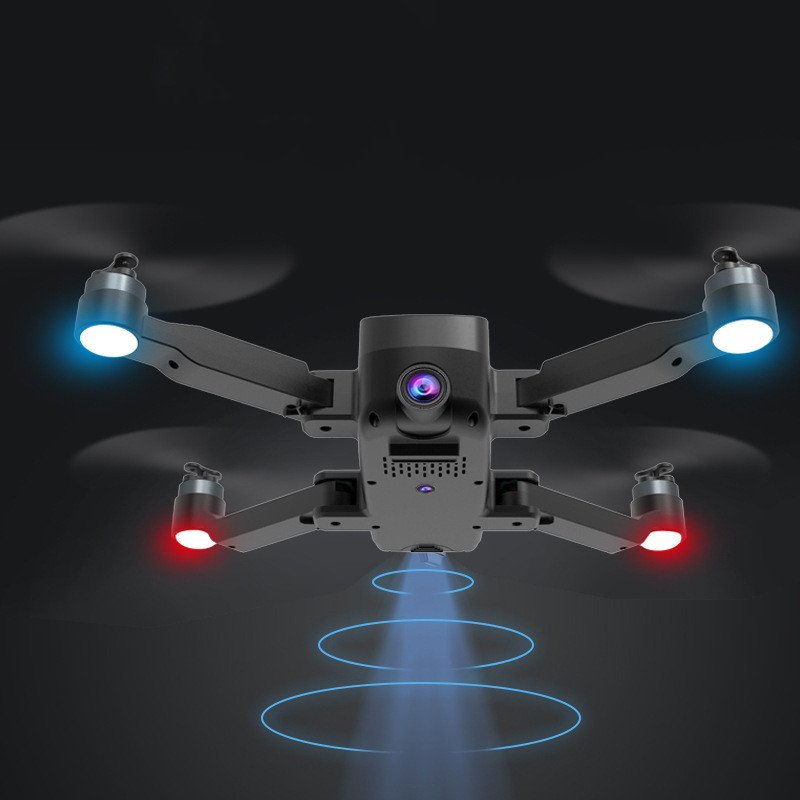
Each 7.4 V, 1,500 mAh battery gives 18 to 22 minutes of flight, depending on wind and how aggressively you fly. A full charge takes about 120 minutes. For a full afternoon of shooting, plan two or three short flights and use the breaks to review your clips.
Battery care basics
- Let the battery cool down before recharging it.
- Do not leave it charging unattended or overnight.
- For storage longer than a couple of weeks, keep it partly charged, not full or empty.
- Bring it home if it gets hot, swollen or damaged, and stop using it.
Range and altitude
The supplier rates the range at up to 1,000 meters (about 3,280 feet) in open areas without interference, and the altitude is capped at 120 meters (about 394 feet). That cap matches the usual legal limit in Europe and is very close to the 400-foot limit in the US.
Keep in mind that the law in most countries requires you to keep the drone within your visual line of sight. With a small drone like this, that usually means a few hundred meters at most, well short of the maximum range.
Foldable and easy to carry
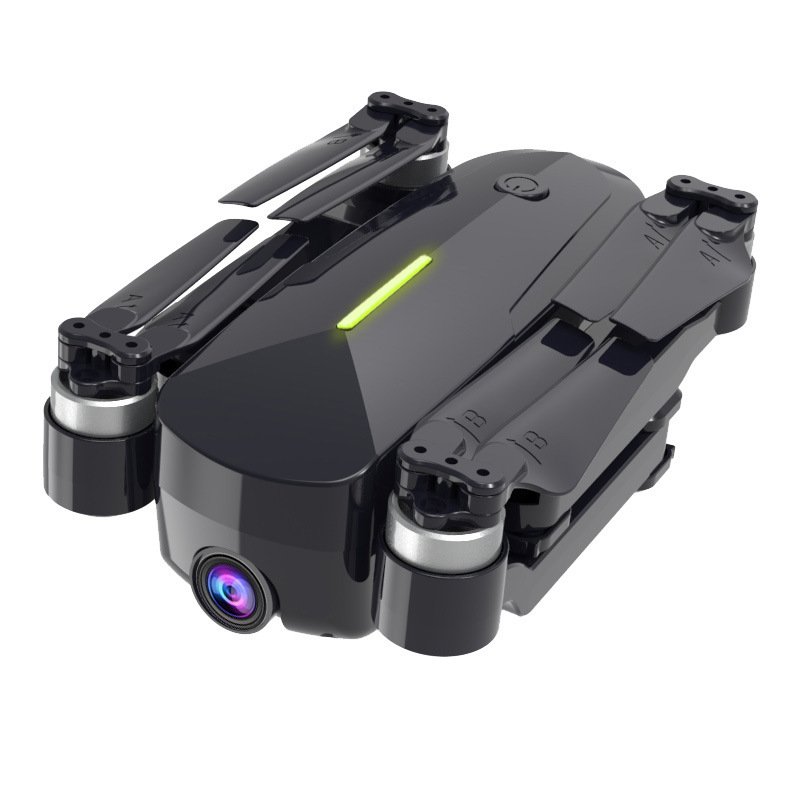
The arms fold against the body, so the drone ends up roughly the size of a thick wallet: 12.8 x 10 x 5.5 cm (5 x 3.9 x 2.2 in). It ships with a carry case that protects the arms and propellers in a backpack or suitcase.
What’s in the box
- Foldable drone with 4K camera and GPS.
- Remote controller (3.7 V, 350 mAh battery).
- One 7.4 V, 1,500 mAh flight battery.
- Carry case.
Your first flight, step by step
- Charge the flight battery and the controller fully.
- Pick a wide open field, away from people, roads and airports.
- Unfold the arms and check that every propeller is firmly in place.
- Wait for the GPS lock before takeoff.
- Take off and hover at 2-3 meters for a minute to get used to the controls.
- Practice slow forward flight and gentle turns before trying video moves.
- Land with at least 20% battery left.
Common beginner mistakes
- Flying in wind: small drones are pushed around easily. Check the forecast and skip gusty days.
- Skipping the GPS lock: the drone will drift more and may not hold its position.
- Flying too far: once the drone is a dot in the sky, you cannot tell which way it faces.
- Ignoring local rules: parks, beaches and cities often have their own restrictions.
Drone rules in the US, the UK and the EU
Rules depend on where you fly, and they change over time, so always check the official source before your first flight. In general terms:
- United States: recreational pilots must pass the free TRUST test and follow FAA safety rules, such as flying below 400 feet and within visual line of sight. Registration with the FAA depends on the takeoff weight and on how you fly. Check the FAA drone page.
- United Kingdom: drones with a camera usually need an Operator ID, and pilots may need a Flyer ID. See the UK CAA drone rules.
- European Union: camera drones normally require operator registration in the country where you live, a 120 m height limit and visual line of sight. See EASA.
If you are new to this, our guide on how to fly a drone covers the basics step by step.
Who this drone is for, and who should skip it
A good fit if you want your first camera drone for travel and hiking, you are moving up from a toy drone, or you want a small drone with GPS and brushless motors that fits in a daypack.
Skip it if you need gimbal-stabilized professional video, more than 30 minutes per battery or advanced tracking modes. Our list of the best camera drones covers higher-end options.
Shipping to the US and the EU
The drone ships from our store with tracking. Orders to the contiguous US cost €21.95 for shipping, import duties are included and delivery takes about 5-10 business days. EU orders cost €4.95 for shipping and take about 7-12 business days. We do not ship to Alaska, Hawaii or US territories. Checkout is in Spanish, and prices are in euros.
The €179.95 price includes Spanish VAT. For US addresses, VAT is removed at checkout, so the product total is lower than the price on the page.
Tracked shipping to the US and the EU · checkout in Spanish. US orders: €21.95 shipping, import duties included.
FAQ
Each battery gives 18 to 22 minutes of flight, depending on wind and flying style. A full charge takes about 120 minutes.
No. The 4K camera is fixed, so footage looks best when you fly slowly on calm days.
Yes. Shipping to the contiguous US costs €21.95, includes import duties and takes about 5-10 business days. We do not ship to Alaska, Hawaii or US territories.
It depends on your country. In the US, recreational pilots must pass the TRUST test and check FAA registration rules; in the UK and the EU, camera drones usually require operator registration.
Up to 1,000 meters in open areas without interference, with altitude capped at 120 meters. By law you must keep it within visual line of sight.
Keep reading
- Best drones under 250g
- Best drones for beginners
- Drone photography and video tips
- Best drone accessories