
Disclosure: this article contains affiliate links. If you buy through them, Bright Technology may earn a small commission at no extra cost to you. As an Amazon Associate, we earn from qualifying purchases.
The best drones under 250g give you the easiest route into flying: they weigh less than a large phone, fit in a jacket pocket and face the lightest rules in the UK, Europe and the US. In this guide we compare the six most interesting sub-250g models of 2026, from the most capable to the simplest, and explain what you still need to do before take-off.
- Sub-250g drones compared
- 1. DJI Mini 5 Pro: best image quality
- 2. DJI Mini 4 Pro: high quality for less
- 3. DJI Lito X1: the balanced beginner drone
- 4. DJI Flip: safest around people
- 5. DJI Neo 2: the smallest for follow shots
- 6. Potensic Atom 2: the non-DJI alternative
- Sub-250g drone rules in the UK and the US
- Common mistakes when choosing a lightweight drone
- Which drone under 250g should you choose?
- Frequently asked questions
- Keep reading
- Official sources
Quick answer: the DJI Mini 5 Pro is the best drone under 250g if image quality comes first, thanks to its 1-inch sensor. The DJI Lito X1 is the balanced pick for beginners who want a good camera and LiDAR, the DJI Flip is the safest around people, and the DJI Neo 2 is the smallest for hands-free follow shots.
Sub-250g drones compared
This table brings together the key figures for each model from the manufacturers’ specifications. Weights are with the standard battery.
| Model | Weight | Sensor | Max video | Flight time | Obstacle sensing | Best for |
|---|---|---|---|---|---|---|
| DJI Mini 5 Pro | 249.9 g | 1-inch, 50 MP | 4K at 120 fps | 36 min | Omnidirectional + forward LiDAR | Best image quality |
| DJI Mini 4 Pro | 249 g | 1/1.3-inch, 48 MP | 4K at 100 fps | 34 min | Omnidirectional | Quality for less |
| DJI Lito X1 | 249 g | 1/1.3-inch, 48 MP | 4K at 100 fps | 36 min | Omnidirectional + forward LiDAR | Beginners |
| DJI Flip | Under 249 g | 1/1.3-inch, 48 MP | 4K at 100 fps | 31 min | Forward 3D infrared | Flying near people |
| DJI Neo 2 | 151 g | 1/2-inch, 12 MP | 4K at 100 fps | 19 min | Omnidirectional + forward LiDAR | Follow shots and selfies |
| Potensic Atom 2 | 249 g | 1/2-inch, 48 MP | 4K at 30 fps HDR | 35 min | No data | A non-DJI option |
Weight is not the whole story. At this size the real differences come from sensor size, which drives low-light image quality, and obstacle sensing, which decides how relaxed you can be flying between trees.
1. DJI Mini 5 Pro: best image quality
The DJI Mini 5 Pro has the best camera you can get under 250g right now. It is the first Mini with a 1-inch, 50 MP sensor, a size previously found only on noticeably heavier drones.
It records 4K at up to 120 fps, flies for up to 36 minutes and pairs omnidirectional sensing with a forward-facing LiDAR that helps in low light. Video transmission reaches 10 km under CE rules.
With the standard battery it weighs 249.9 g, just under the threshold; a higher-capacity battery takes it over 250 g and changes the rules. We compare it with its predecessor in DJI Mini 5 Pro vs Mini 4 Pro.
- Largest sensor at this weight
- 4K at 120 fps for slow motion
- Forward LiDAR plus omnidirectional sensing
- 36-minute flight time
- Most expensive on this list
- Goes over 250 g with the Plus battery
2. DJI Mini 4 Pro: high quality for less
The DJI Mini 4 Pro is still a very sensible buy. It weighs 249 g, uses a 1/1.3-inch 48 MP sensor, shoots 4K at up to 100 fps and has omnidirectional obstacle sensing.
Next to the Mini 5 Pro it gives up some low-light quality and has no LiDAR, but it usually sells for less than its successor. If you mostly fly in daylight, the gap is small. Read our full DJI Mini 4 Pro review.
- Very good image from a 1/1.3-inch sensor
- Omnidirectional sensing
- Plenty of compatible batteries and accessories
- No LiDAR
- Weaker than the Mini 5 Pro at night
3. DJI Lito X1: the balanced beginner drone
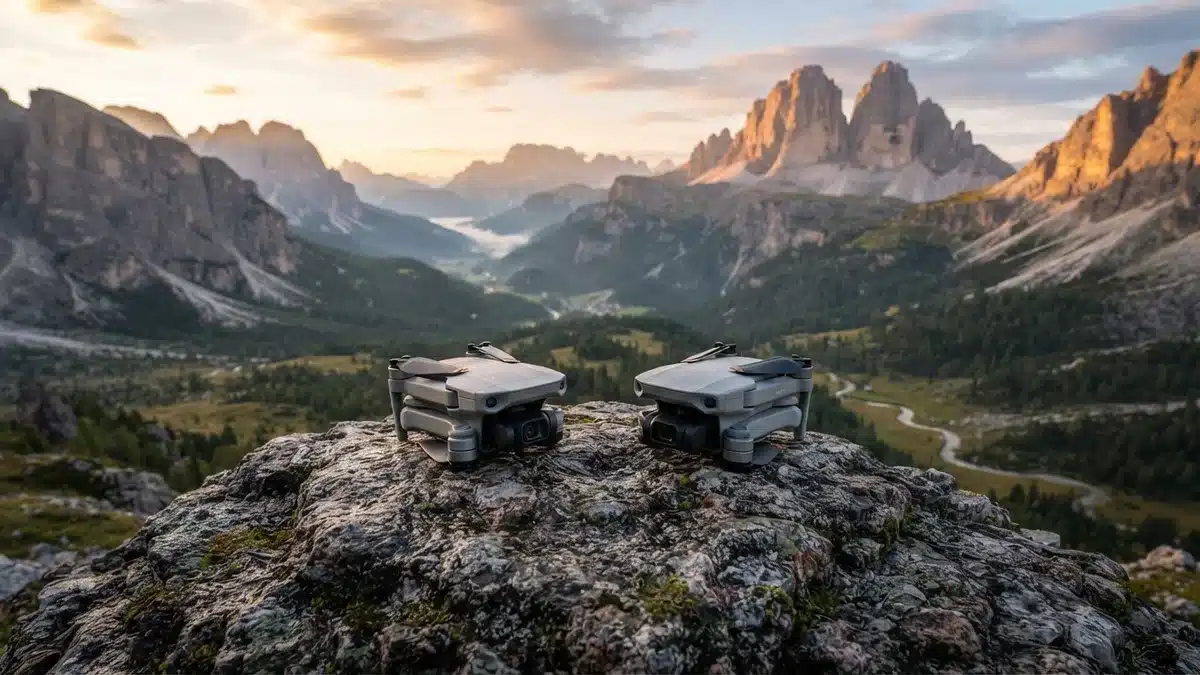
The DJI Lito X1 arrived in April 2026 as DJI’s new entry-level line for beginners. It weighs 249 g and offers a 1/1.3-inch 48 MP sensor, 4K at up to 100 fps, 36 minutes of flight and 8 km of CE transmission range.
Its big strength is safety: omnidirectional sensing plus a forward LiDAR, which is unusual on a drone aimed at first-time pilots. It also has 42 GB of internal storage and the D-Log M colour profile.
There is a simpler DJI Lito 1 with the same weight but a 1/2-inch sensor, no LiDAR and no internal storage. It only makes sense on a very tight budget. Neither Lito model has launched officially in the US.
- Forward LiDAR and omnidirectional sensing
- 36-minute flight time
- 42 GB of internal storage
- 1/1.3-inch sensor
- New line with fewer third-party accessories
- The Plus battery takes it over 250 g
- Not officially sold in the US
4. DJI Flip: safest around people
The DJI Flip has a different design: full-surround propeller guards built into the frame that fold over the body. That makes it the most reassuring choice near people or in tight spaces.
It weighs under 249 g, uses a 1/1.3-inch sensor, records 4K at up to 100 fps and flies for up to 31 minutes. Obstacle sensing is forward-facing 3D infrared, so there is no full coverage at the sides or rear.
- Built-in propeller guards
- 1/1.3-inch sensor
- Palm take-off and automatic shots
- Bulkier than a folded Mini
- Forward-only obstacle sensing
5. DJI Neo 2: the smallest for follow shots
The DJI Neo 2 weighs just 151 g and is built to film you: it launches from your hand, follows you and captures automatic shots without needing a controller. It records 4K at up to 100 fps with a 1/2-inch sensor.
Compared with the first Neo it adds omnidirectional sensing and a forward LiDAR, a key upgrade for a drone that flies itself behind you. Flight time is short at 19 minutes, so spare batteries are worth it. For the original model, see our DJI Neo review.
- Only 151 g
- Follow mode and automatic shots without a controller
- Omnidirectional sensing and LiDAR
- 19-minute flight time
- Small sensor for landscapes
- Limited range without the optional transceiver
6. Potensic Atom 2: the non-DJI alternative
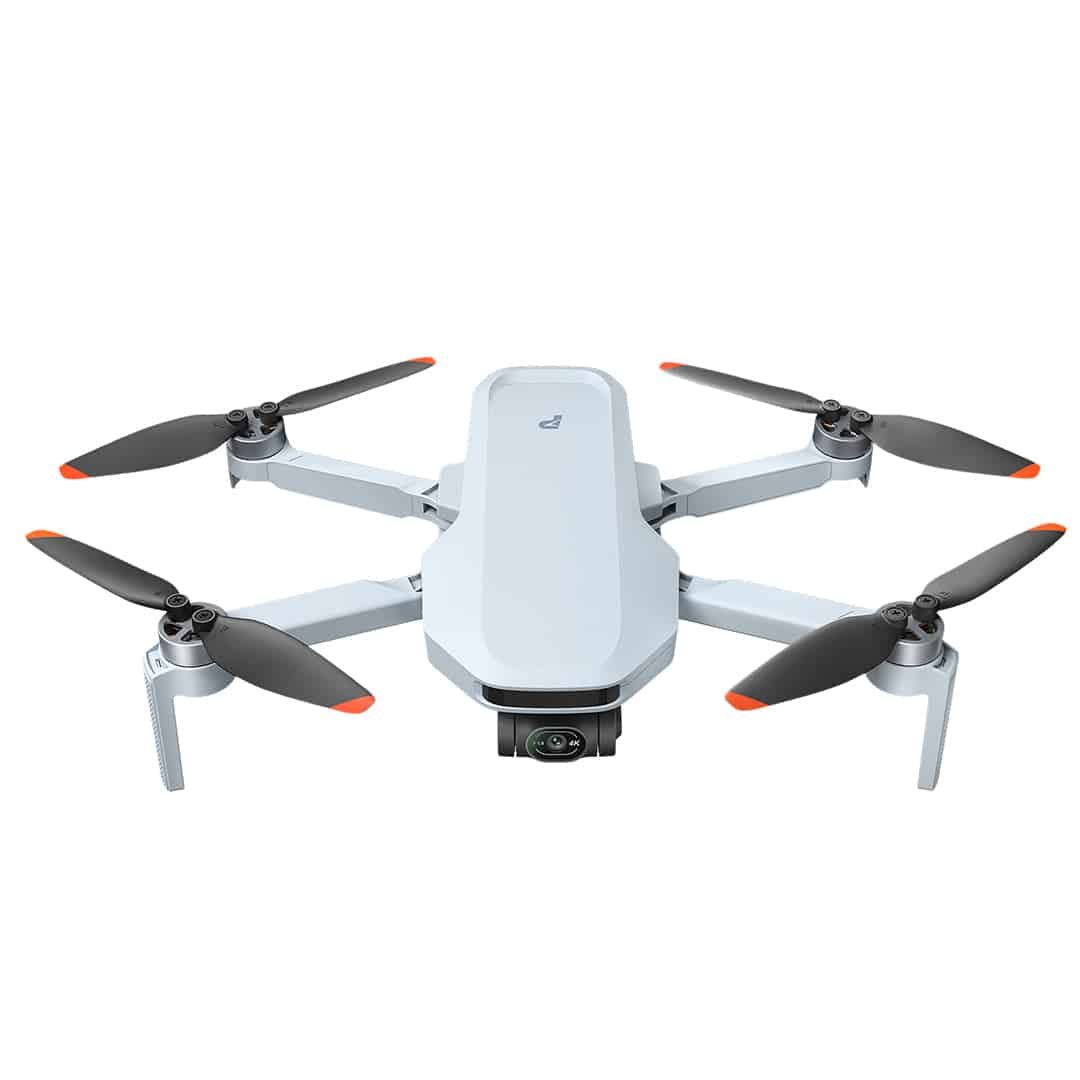
- Weight: 249 g
- Sensor: 1/2-inch, 48 MP
- Video: 4K at 30 fps HDR
- Flight time: 35 min
- Range: up to 10 km
The Potensic Atom 2 is the pick if you would rather not rely on DJI. It weighs 249 g, has a 1/2-inch 48 MP sensor, records 4K at 30 fps and claims 35 minutes of flight and 10 km of range.
It falls behind on video, with no high-frame-rate 4K, and the maker does not detail an obstacle-sensing system, but it handles travel photos well. See how its predecessor fared in our Potensic Atom review.
- A solid DJI alternative
- 35-minute flight time
- Up to 10 km range
- 4K only at 30 fps
- No detailed obstacle sensing
Sub-250g drone rules in the UK and the US
Being under 250g makes life easier, but it does not mean no rules at all.
United Kingdom
- Since 1 January 2026, anyone flying a drone of 100 g or more needs a free Flyer ID from the CAA.
- If the drone weighs 100 g or more and has a camera, you also need an Operator ID and must label the drone with it.
- Sub-250g drones fly in the A1 subcategory: you may fly over uninvolved people, but never over crowds.
- Flying at night requires a green flashing light, and its weight counts towards the total.
United States
- Recreational flyers do not need to register a drone under 250 g with the FAA.
- You must still pass the free TRUST test and carry proof of passing.
- Stay at or below 400 feet in uncontrolled airspace and get authorisation for controlled airspace.
- Flying commercially under Part 107 requires registration whatever the weight.
Common mistakes when choosing a lightweight drone
- Buying the big battery without checking the weight: with Plus batteries many of these drones go over 250 g.
- Assuming no ID is needed: in the UK, a camera drone of 100 g or more needs an Operator ID.
- Ignoring the wind: very light drones get pushed around in strong gusts, so check the forecast first.
- Comparing megapixels only: sensor size matters more for real image quality.
Which drone under 250g should you choose?
- You want the best possible image: DJI Mini 5 Pro.
- You want high quality for less: DJI Mini 4 Pro.
- It is your first drone and safety matters: DJI Lito X1.
- You will fly near people or indoors: DJI Flip.
- You want to film yourself doing sport or travelling: DJI Neo 2.
- You would rather avoid DJI: Potensic Atom 2.
Frequently asked questions
In the UK, a drone of 100 g or more needs a Flyer ID, and an Operator ID too if it has a camera. In the US, recreational flyers do not need to register a drone under 250 g, but must pass the TRUST test.
The DJI Mini 5 Pro for image quality. For a first drone, the DJI Lito X1 offers a very good balance of camera, flight time and safety.
No. Higher-capacity batteries push these drones over 250 g, and stricter requirements then apply.
Sub-250g drones fly in the A1 subcategory in the UK and EU, which allows flying over uninvolved people but never over crowds. In the US, recreational flyers should avoid flying over people.
The Lito series launched in April 2026 without an official US release. It is sold in the UK and Europe.