
Disclosure: this article contains affiliate links. If you buy through them, Bright Technology may earn a small commission at no extra cost to you. As an Amazon Associate, we earn from qualifying purchases.
The best camera drones have changed dramatically in just a few years. Image quality that once belonged to film crews and specialist companies is now within reach of photographers, content creators, real estate agents and hobbyists who want a completely different point of view.
Not every drone performs the same, though. Some excel at photos, others at cinematic video, and others at social media, sports or travel clips. Looking only at megapixels is a mistake: sensor size, stabilization, color profiles, dynamic range and focal lengths make a bigger difference to the final image. This guide explains who each model is for and how it stacks up against its rivals.
- How we chose these camera drones
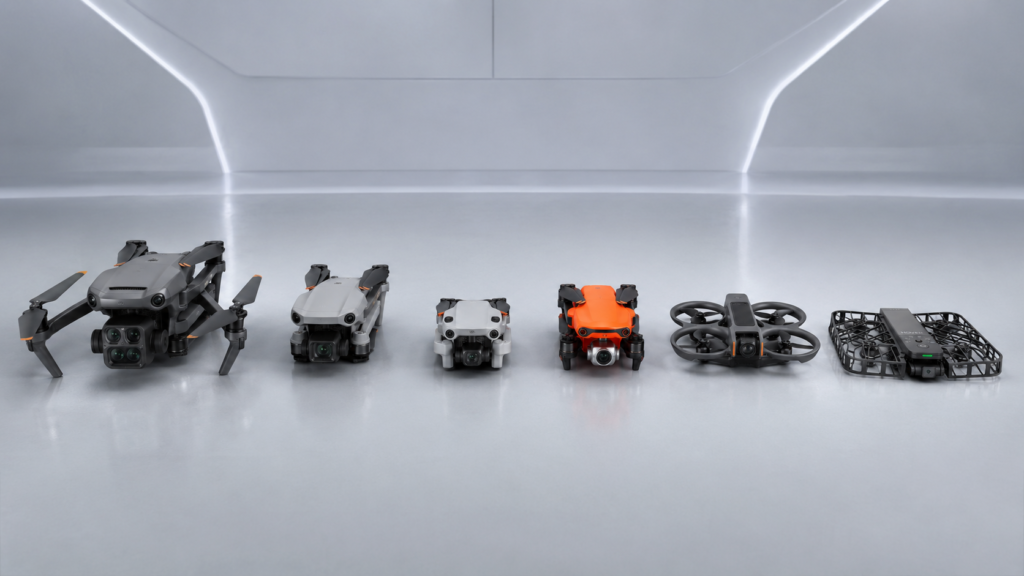
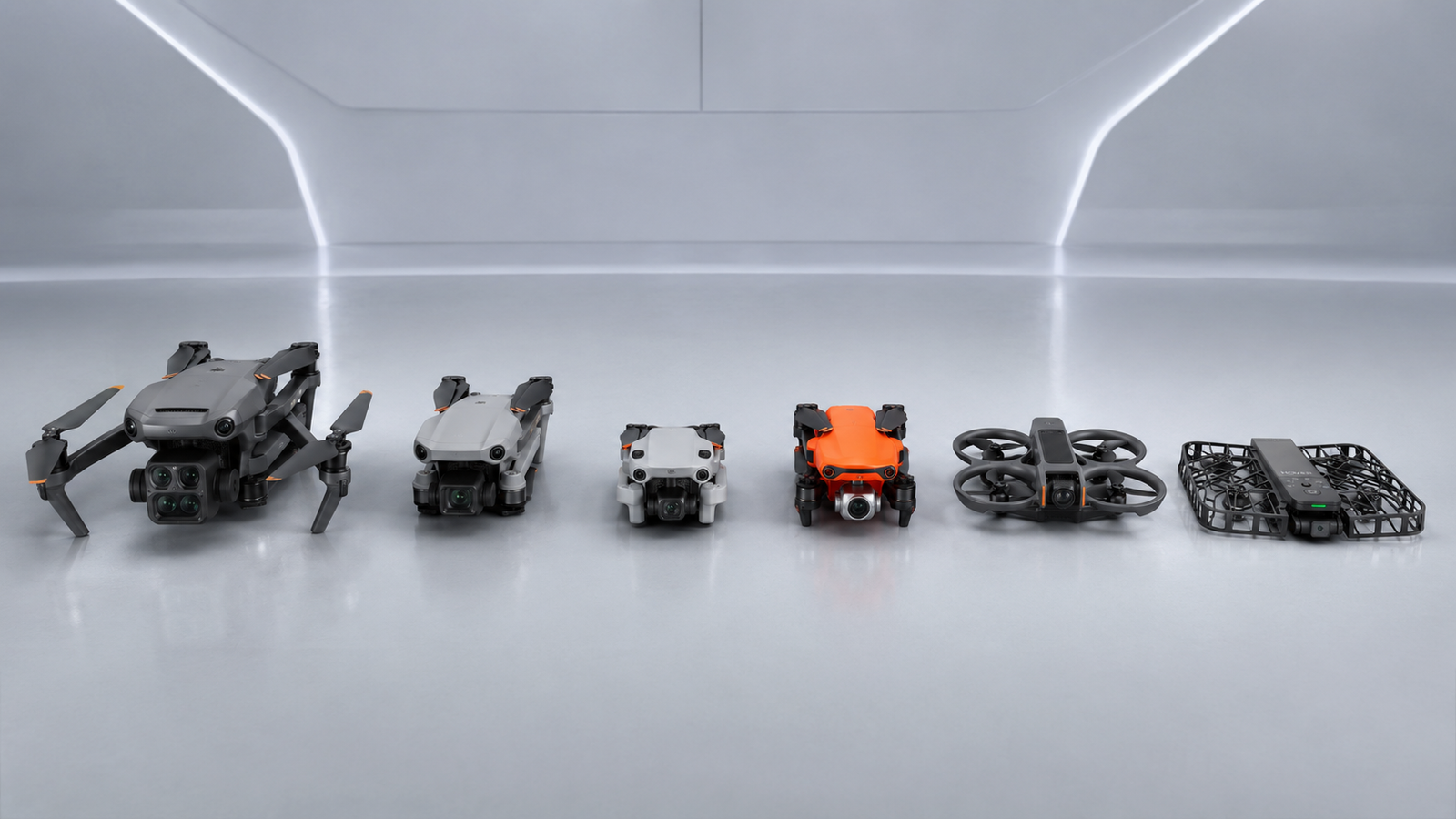
- Best camera drones compared
- 1. DJI Mavic 3 Pro: the drone with the best camera
- 2. DJI Air 3: the best balance of camera, price and features
- 3. DJI Mini 4 Pro: the best camera in an ultralight drone
- 4. Autel EVO II Pro: the best alternative to DJI
- 5. DJI Avata 2: the best camera drone for FPV video
- 6. HoverAir X1: the easiest camera drone for content creation
- How to choose a camera drone
- Common mistakes when buying a camera drone
- Which camera drone should you buy?
- Camera drone FAQ
- Keep reading
Quick answer: the DJI Mavic 3 Pro has the best camera system, with a Hasselblad Four Thirds main camera plus two telephotos. The DJI Air 3 is the best balance of image quality, flight time and price, the DJI Mini 4 Pro is the best sub-250 g travel camera drone, the Autel EVO II Pro is the strongest non-DJI option, the DJI Avata 2 is best for FPV video and the HoverAir X1 is the easiest for hands-free social clips.
How we chose these camera drones
This is a research-based comparison that looks well beyond megapixels. We weighed photo quality, video quality, sensor size, stabilization, dynamic range, HDR and professional color profiles, camera versatility, value, ease of use, the manufacturer’s ecosystem and what photographers and creators say about each model. The result works for hobbyists and for people who shoot for a living.
Best camera drones compared
| Drone | Camera | Highlight | Flight time | Price |
|---|---|---|---|---|
| DJI Mavic 3 Pro | Triple camera, Hasselblad 4/3 main | Best photo quality | Up to 43 min | Check price |
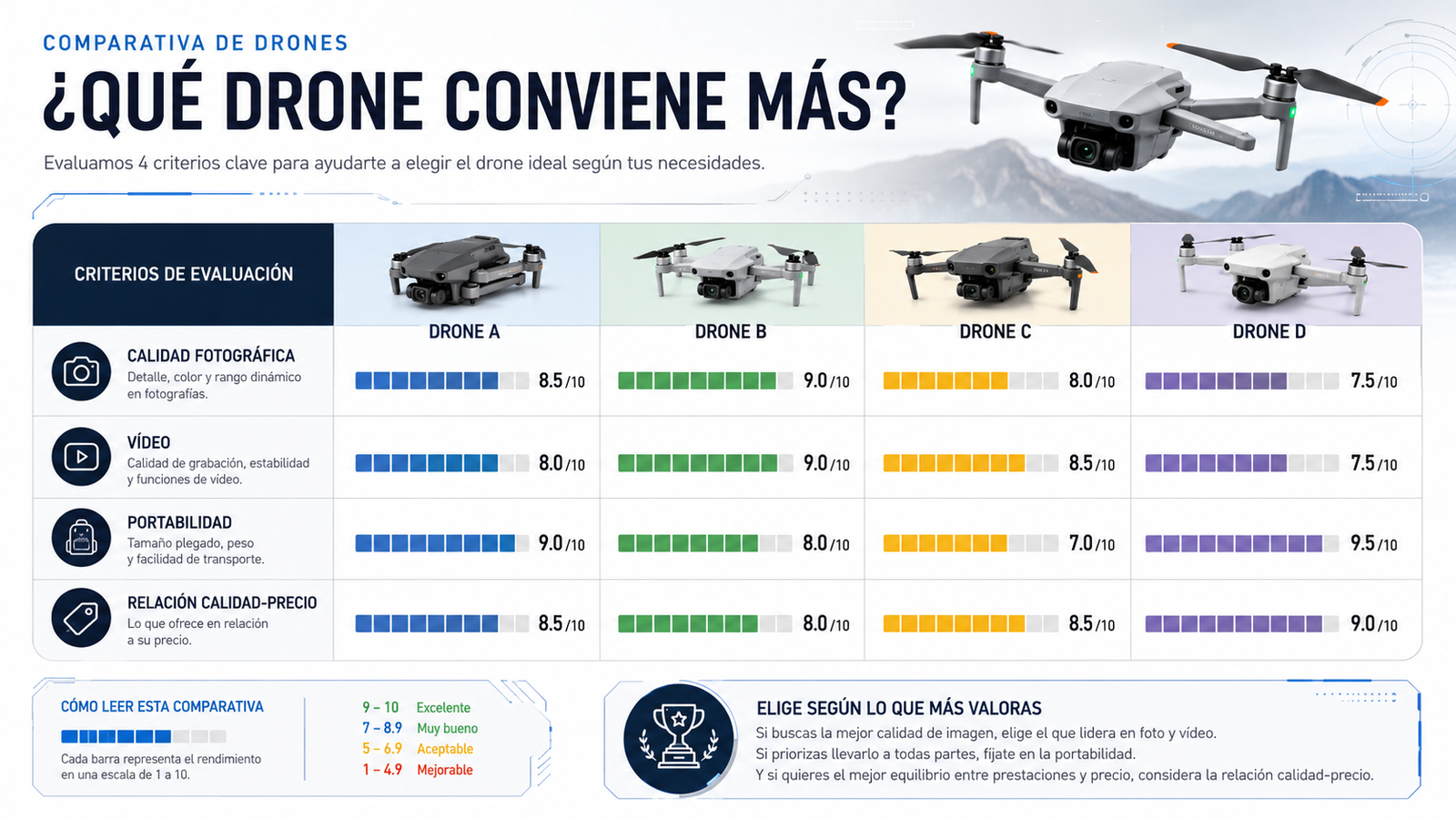
| DJI Air 3 | Dual 48 MP (wide + medium tele) | Best balance of quality and price | Up to 46 min | Check price |
| DJI Mini 4 Pro | 48 MP, 4K HDR | Best camera in an ultralight drone | Up to 34 min | Check price |
| Autel EVO II Pro | 1-inch sensor, 6K video | Great alternative to DJI | Up to 40 min | Check price |
| DJI Avata 2 | 4K HDR | Spectacular FPV video | Up to 23 min | Check price |
| HoverAir X1 | 2.7K stabilized | Easiest for social media | About 11 min | Check price |
1. DJI Mavic 3 Pro: the drone with the best camera
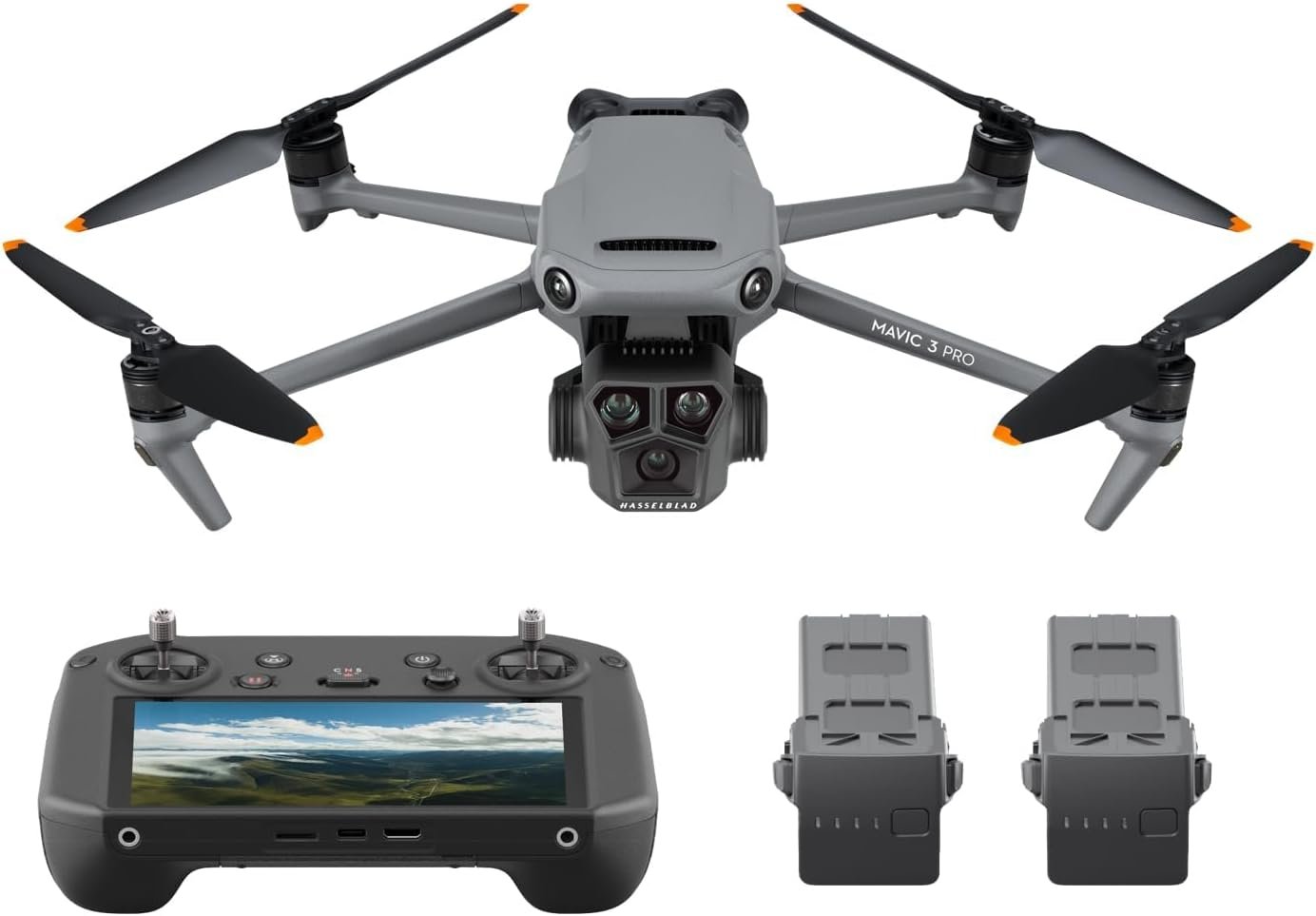
When it comes purely to image quality, the Mavic 3 Pro still sets the bar among consumer drones. Professional photographers, advertising agencies and production companies use it as a main tool for aerial imagery. Its triple-camera system, developed with Hasselblad, handles almost any photographic situation with a flexibility few drones can match, and it delivers extraordinary detail, very natural color and outstanding dynamic range.
Key specs
- Triple camera with Hasselblad main camera
- Four Thirds CMOS main sensor
- Video up to 5.1K
- Medium and long telephoto lenses
- Up to 43 minutes of flight
- Omnidirectional obstacle sensing
- ActiveTrack 5.0
Camera and video quality
Most drones have a single lens. The Mavic 3 Pro has three: a Hasselblad main camera with a 4/3 CMOS sensor plus two telephotos, so you can work at different focal lengths without losing quality. That helps when you cannot move the drone closer to the subject or want a more cinematic composition. Photos show:
- Extraordinary detail and excellent color.
- Wide dynamic range and very low noise.
- Plenty of latitude for editing.
Dynamic range is where it shines. At sunrise, sunset or in high-contrast scenes it keeps far more information in shadows and highlights, which you will appreciate in Lightroom, Photoshop, DaVinci Resolve or Capture One. Video goes up to 5.1K with professional profiles such as D-Log M, so it works for advertising, documentaries, tourism, architecture, real estate and YouTube.
Shooting modes and features
Beyond the sensor, DJI includes ActiveTrack 5.0, MasterShots, Hyperlapse, Waypoint Flight, FocusTrack, Cruise Control, QuickTransfer, smart vertical cropping, D-Log M and HLG. Combining the different lenses with ActiveTrack lets you follow vehicles, people or boats from several perspectives without compromising quality, and focus speed and sharpness hold up even during fairly quick moves.
Design and who it is for
The folding design keeps it relatively compact for a professional aircraft, and flight is very stable and precise, ideal for the slow moves that landscape, architecture and cinematic shots need. It suits professional photographers, production companies, architecture, tourism, advertising and documentary work, and premium content creators. If your income depends on image quality, you will struggle to find a more complete drone before stepping up to the Inspire 3. For more pro options, see our guide to the best professional drones.
- Best photo quality in this guide
- Very versatile triple camera
- Excellent dynamic range
- 5.1K video
- Great editing latitude
- Long flight time
- Expensive
- Larger than the Mini series
- Needs some experience to use fully
- Overkill for occasional users
2. DJI Air 3: the best balance of camera, price and features
Not everyone needs the complexity or the price of the Mavic 3 Pro. For many photographers, creators and businesses, the DJI Air 3 offers an almost perfect balance of image quality, flight time, ease of use and cost. It delivers photo and video quality surprisingly close to much pricier models in a compact body, so it is one of the most common picks for a high-quality camera drone. See our DJI Air 3 review for more.
Key specs
- Dual 48 MP cameras
- Wide-angle + medium telephoto
- 4K up to 100 fps
- D-Log M and HLG
- Up to 46 minutes of flight
- ActiveTrack 360°
- Omnidirectional obstacle sensing
Camera and video quality
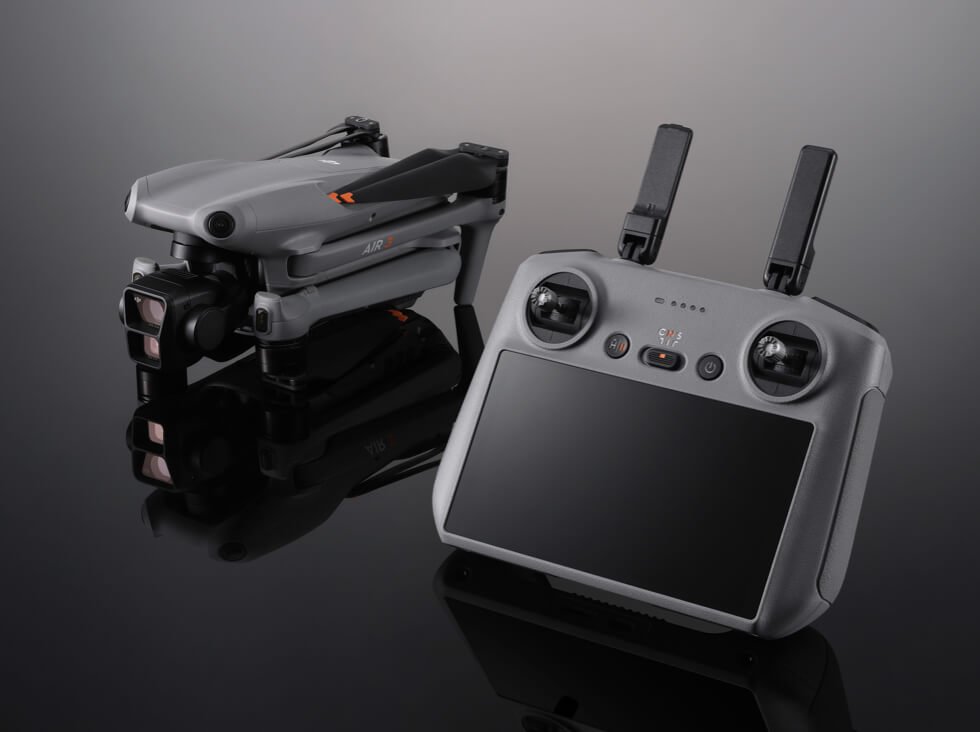
Its dual camera, a wide-angle lens plus a medium telephoto, both 48 MP, gives far more versatility than most drones in its price range. Photos are detailed, with natural color and a good balance between highlights and shadows. The sensor is not as large as the Mavic 3 Pro’s Hasselblad, but the result satisfies most photographers, real estate agencies, tourism businesses and creators.
Video is where it surprises. It records 4K at up to 100 fps for fluid slow motion, with D-Log M and HLG color profiles for easier grading and a more cinematic finish. Switching quickly between both cameras in flight lets you build shots that are impossible with a single lens, which suits aerial photography, corporate video, advertising, tourism, social media, YouTube, real estate and events.
Shooting modes and features
The Air 3 includes ActiveTrack 360°, FocusTrack, MasterShots, Hyperlapse, Waypoint Flight, QuickShots, Cruise Control and QuickTransfer. ActiveTrack 360° automatically follows people, vehicles or boats while you concentrate on framing, and stabilization holds footage smooth even in moderate wind.
Design and who it is for
The folding design is well built and only slightly larger than a Mini 4 Pro, so it is still easy to travel with. DJI O4 transmission keeps the connection stable even in complex scenarios. It is a great fit for photographers, creators, real estate and tourism businesses, and anyone who wants a single drone for both photo and video.
- Very versatile dual camera
- Excellent photo and video quality
- Up to 46 minutes of flight
- 4K at 100 fps
- Very good stabilization
- Omnidirectional obstacle sensing
- Great value for money
- Does not reach Mavic 3 Pro photo quality
- Larger than the Mini series
- Costs more than the Mini 4 Pro
- No Four Thirds sensor
3. DJI Mini 4 Pro: the best camera in an ultralight drone
Not long ago it seemed impossible for a drone under 249 g to compete with much larger models. The Mini 4 Pro changed that view. Its camera produces surprisingly good photos and video, which makes it a favorite of travel photographers, creators and professionals who want a light kit without giving up high-level results. In the US, that weight means no FAA registration for purely recreational flying, though you still need to pass the free TRUST test. Read our DJI Mini 4 Pro review for a deeper look.
Key specs
- 48 MP camera
- 4K HDR video
- Under 249 g
- Native vertical shooting
- ActiveTrack 360°
- Up to 34 minutes of flight
- Omnidirectional obstacle sensing
Camera and video quality
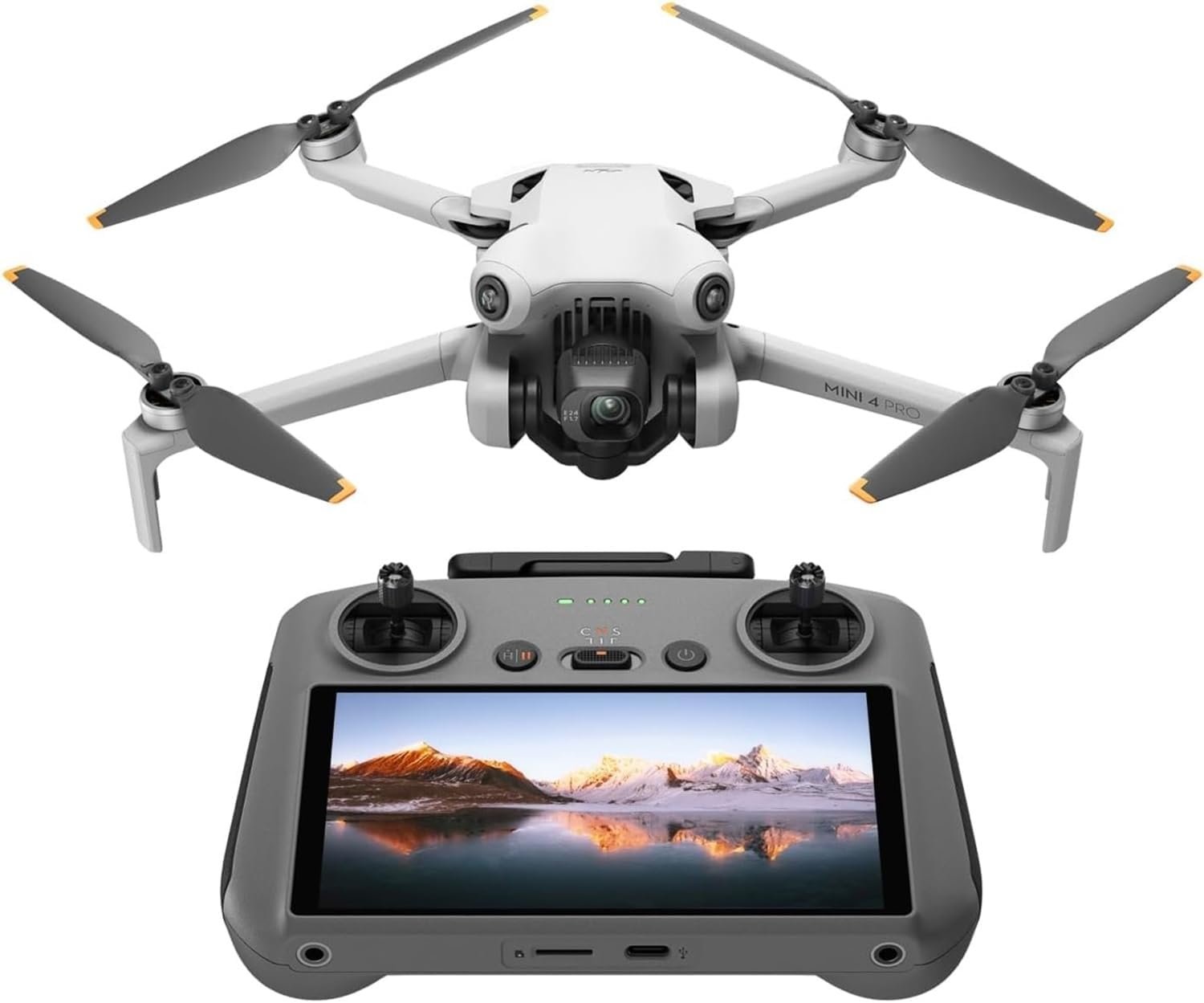
The 48 MP sensor records 4K HDR video with sharp images, natural color and excellent dynamic range for a drone this size. Photos hold up well when edited in Lightroom or Photoshop, which is more than enough for many travel photographers, real estate agents and creators. Video is very fluid thanks to the three-axis mechanical gimbal, and HDR profiles improve the final look.
One of DJI’s smartest additions is native vertical recording. It avoids cropping later and produces content optimized for Instagram Reels, TikTok and YouTube Shorts at much higher quality than a digital crop.
Shooting modes and features
It packs in nearly every function of much pricier drones: ActiveTrack 360°, MasterShots, Hyperlapse, QuickShots, Cruise Control, FocusTrack, D-Log M, HLG and Smart Return To Home. These make it easy to get professional shots without being an expert pilot.
Design and who it is for
It fits in almost any backpack or even a small bag. Obstacle sensors, precise GPS and stabilization make it easy to fly even for people with little experience. It is ideal for travel photographers, YouTubers, Instagram and TikTok creators, real estate and anyone for whom portability is a priority. It does not reach the Mavic 3 Pro for extreme professional photography.
- Excellent photo quality for its size
- High-quality 4K HDR video
- Weighs under 249 g
- Very easy to carry
- Native vertical video
- Omnidirectional obstacle sensing
- No dual camera like the Air 3
- Smaller sensor than the Mavic 3 Pro
- Less suited to very demanding cinema work
- Pricey compared with entry-level drones
4. Autel EVO II Pro: the best alternative to DJI
DJI dominates the market, but Autel has built a truly competitive product. Thanks to its large sensor, 6K recording and excellent flight time, the EVO II Pro is the main option for anyone who wants a professional camera drone without depending on the DJI ecosystem. Autel has also improved its software noticeably, narrowing the historic gap with DJI.
Key specs
- 1-inch sensor
- 6K video
- 20 MP photos
- Up to 40 minutes of flight
- 360° obstacle detection
- Intelligent flight modes
Camera and video quality
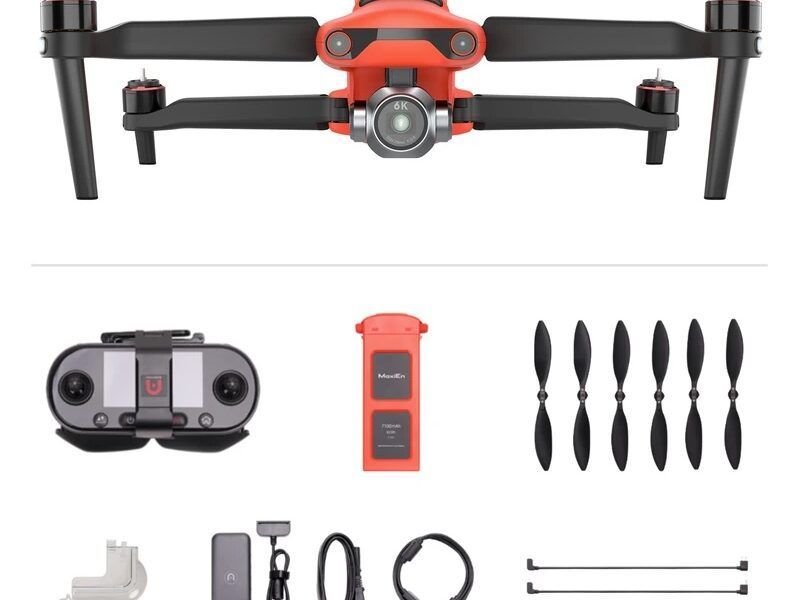
The 1-inch sensor captures more light, giving more detail, better dynamic range and more solid results in tricky scenes. Recording in 6K leaves plenty of room to crop or stabilize in editing without losing much quality. Photos have natural color and good sharpness for landscapes, architecture and real estate, and the large sensor keeps noise in check at dawn and dusk. It suits aerial photography, architecture, technical inspections, real estate marketing, video production and engineering firms.
Shooting modes and features
You get Dynamic Track, Orbit Mode, Waypoint Mission, Return To Home, automatic photo modes, 360° obstacle detection, 6K recording and RAW photos. Automation is not at DJI’s level, but it covers what most professionals need, and waypoint planning is especially handy for repeating the exact same route at different times.
Design and who it is for
It feels robust, folds for transport and flies stably thanks to GPS and obstacle detection. The controls are precise, and the app has matured a lot. It is ideal for professional photographers, architecture, engineering, surveying and inspection companies, and anyone looking for an alternative to DJI. It shows serious options exist outside DJI, even if the DJI ecosystem is still a step ahead in software.
- Excellent 1-inch sensor
- 6K video
- Very good flight time
- Great photo quality
- 360° obstacle detection
- Strong DJI alternative
- Software less polished than DJI Fly
- Fewer accessories available
- Smaller user community
- High price
5. DJI Avata 2: the best camera drone for FPV video
If you want immersive, fast-moving footage instead of classic aerial stills, the Avata 2 is the camera drone to look at. It pairs a 4K HDR ultra-wide camera with integrated propeller guards, so you can fly close to people, buildings and obstacles with more confidence than with a standard drone. It is a very approachable way into FPV flying. To learn the basics first, read what an FPV drone is.
Key specs
- 4K HDR ultra-wide camera
- Integrated propeller guards
- Up to 23 minutes of flight
- RockSteady and HorizonSteady stabilization
- Works with DJI Goggles 3
- Motion Controller 3 or FPV remote
- DJI O4 transmission
Camera, video and who it is for
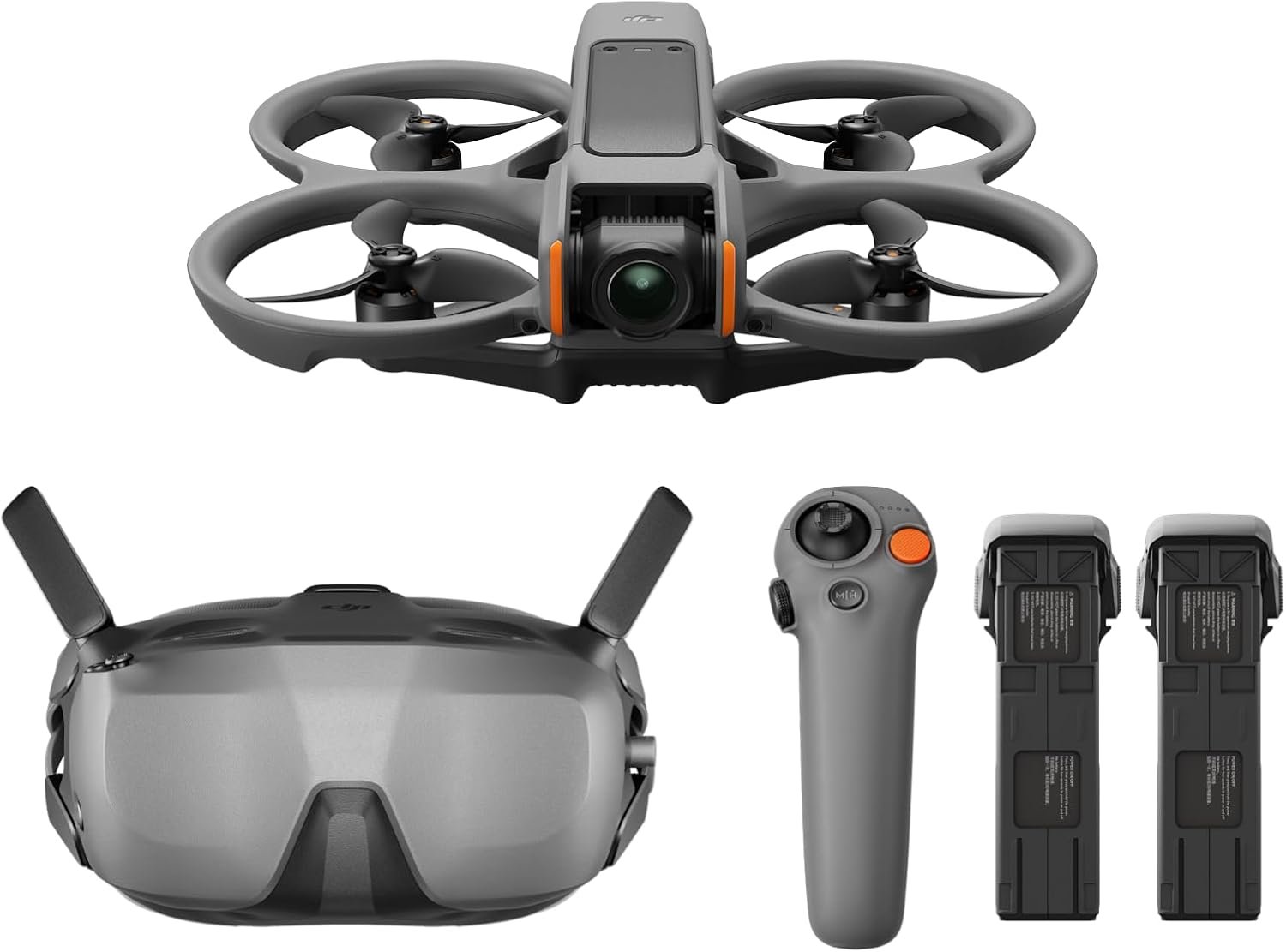
Video is 4K HDR, and RockSteady and HorizonSteady keep it smooth even in aggressive maneuvers. It excels at extreme sports, cars and motorcycles, tourism, hotels, real estate and music videos. It is not meant for traditional aerial photography, and flight time is shorter than the other drones here, but few models give such a sense of speed and closeness.
- Very immersive FPV experience
- Excellent 4K HDR video
- Much easier to learn than other FPV drones
- Strong stabilization
- Integrated propeller guards
- Not for traditional aerial photography
- Shorter flight time
- Manual mode takes practice
6. HoverAir X1: the easiest camera drone for content creation
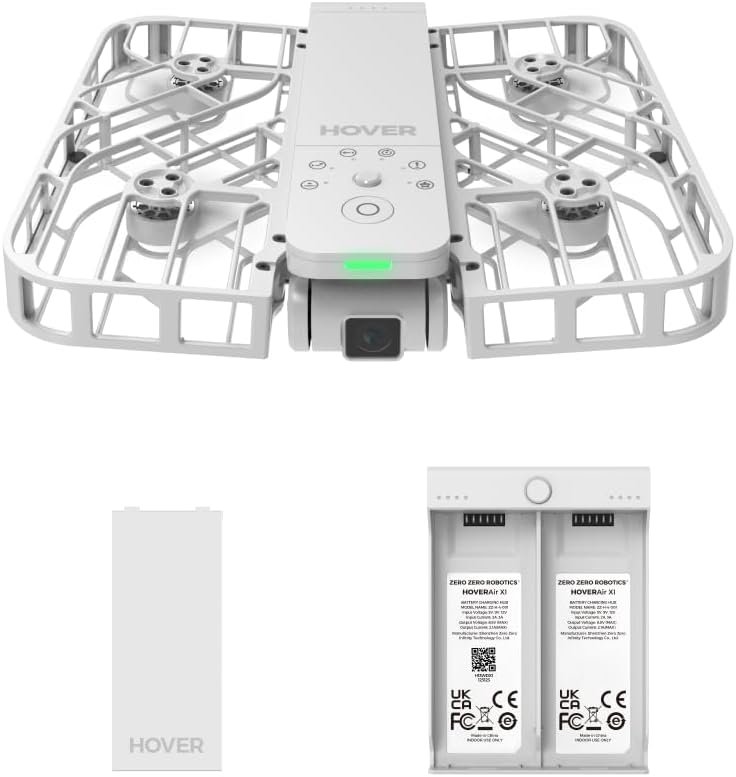
Not everyone wants a complex drone or needs to learn to pilot. A new category of drones has appeared that creates content almost automatically, and the HoverAir X1 is the best example. Instead of a traditional controller, you press a button and it starts following you, recording automatic shots or sequences designed for social media. That is why it is popular with travelers, athletes and creators.
Key specs
- Stabilized 2.7K camera
- About 125 g
- Automatic follow modes
- Full propeller guards
- Palm takeoff and landing
- App control
Camera, modes and who it is for
It launches from the palm of your hand and follows you with no traditional controller, and the full propeller guards make it comfortable to use near people. The 2.7K camera will not match the DJI Air 3 or Mavic 3 Pro, but it is smooth and sharp enough for Instagram, TikTok, YouTube Shorts, Reels, travel, hiking, running and cycling. Automatic modes include smart follow, Orbit, Zoom Out, Bird’s Eye, Dolly Track and Hover.
It is a great fit for travelers, creators, hikers, runners, cyclists and people who have never flown a drone. We would not recommend it for professional photography or demanding commercial work. If you want the best possible image quality, there are better options, but for an easy, fun way to record everyday content there are few alternatives.
- Extremely easy to use
- Palm takeoff
- Very effective automatic follow
- Very light and portable
- Perfect for social media
- No previous experience needed
- Image quality below DJI
- Limited flight time
- Not for professional photography
- Few manual settings
How to choose a camera drone
Picking a camera drone goes well beyond counting megapixels. These are the factors that shape the final image:
- Sensor size: the biggest factor in image quality. A large sensor captures more light, improves dynamic range and reduces noise in low light. That is why the Mavic 3 Pro leads in professional photography.
- Video resolution: 4K is the sensible minimum today. It also lets you crop in editing without losing much resolution. The Air 3, Mini 4 Pro and Avata 2 all qualify.
- Stabilization: a three-axis mechanical gimbal is essential. A great camera loses much of its value if the footage shakes.
- Color profiles: if you will edit your videos, look for D-Log M, HLG or RAW for more flexibility in color correction.
- Portability: if you travel often, a model like the Mini 4 Pro may be the best choice.
- Flight time: more time in the air means more freedom to repeat shots. The Air 3 stands out here.
If you are just starting out, a simpler model may serve you better, and our list of the best drones for beginners is the place to start. Once you have a drone, our guide to drone photography and video covers composition, camera moves and editing.
Common mistakes when buying a camera drone
- Buying on megapixels alone. A larger sensor often beats a smaller one with many more megapixels.
- Ignoring stabilization. It matters as much as the camera itself.
- Overlooking the software. The app, smart modes and editing workflow are part of the experience.
- Buying something too complex. If you have never flown a drone, a simpler model will probably give better results than an overly professional one.
In the US, DJI availability can vary because of ongoing regulatory restrictions, so check current stock and support before buying.
Which camera drone should you buy?
There is no single best camera drone, because it all depends on how you will use it. The DJI Mavic 3 Pro has the best photo quality, the DJI Air 3 the best balance of camera, features and price, the DJI Mini 4 Pro the best camera in an ultralight drone, the Autel EVO II Pro is the best alternative to DJI, the DJI Avata 2 is the best for FPV video and the HoverAir X1 is the simplest for social media. Any of them can deliver spectacular results. For a wider overview of the topic, see our guide to everything about drones.
Camera drone FAQ
Right now the DJI Mavic 3 Pro is the reference, thanks to its triple-camera system with a Hasselblad Four Thirds main camera and extraordinary image quality.
The DJI Air 3 offers an excellent balance of photo quality, video, flight time and price.
The DJI Mini 4 Pro is probably the best choice for travel thanks to its weight under 249 g, excellent camera and easy portability.
For maximum ease of use, the HoverAir X1. If you also want much better image quality, the DJI Mini 4 Pro offers a fantastic balance, including native vertical video.
Yes. 4K is the minimum resolution worth buying if you want footage that holds up for years or that you plan to edit and crop.
The DJI Mavic 3 Pro for the best photo quality. The DJI Air 3 is a more affordable pick with dual cameras, and the DJI Mini 4 Pro is the lightest.
Usually yes. A larger sensor captures more light, improves dynamic range and reduces noise, so it often produces better images than a smaller sensor with more megapixels.
A simpler model usually gives better results than an overly professional one. The HoverAir X1 is the easiest, and the DJI Mini 4 Pro is an excellent step up.
Drones weighing 250 g or more generally need FAA registration, and recreational flyers must pass the free TRUST test. The Mini 4 Pro stays under 249 g, so registration is not required for recreational flying.