
- Drones de Carreras
- Qué son los drones de carreras
- Por qué los drones de carreras son tan rápidos
- Cómo funcionan los drones de carreras
- Diferencia entre un drone FPV y un drone de carreras
- Cómo empezar en las carreras de drones
- Qué necesitas para competir con drones
- Ventajas de las carreras de drones
- Desafíos de las carreras FPV
- El futuro de las carreras de drones
- Sigue aprendiendo sobre drones
- FAq's:Preguntas frecuentes sobre drones de carreras
Drones de Carreras
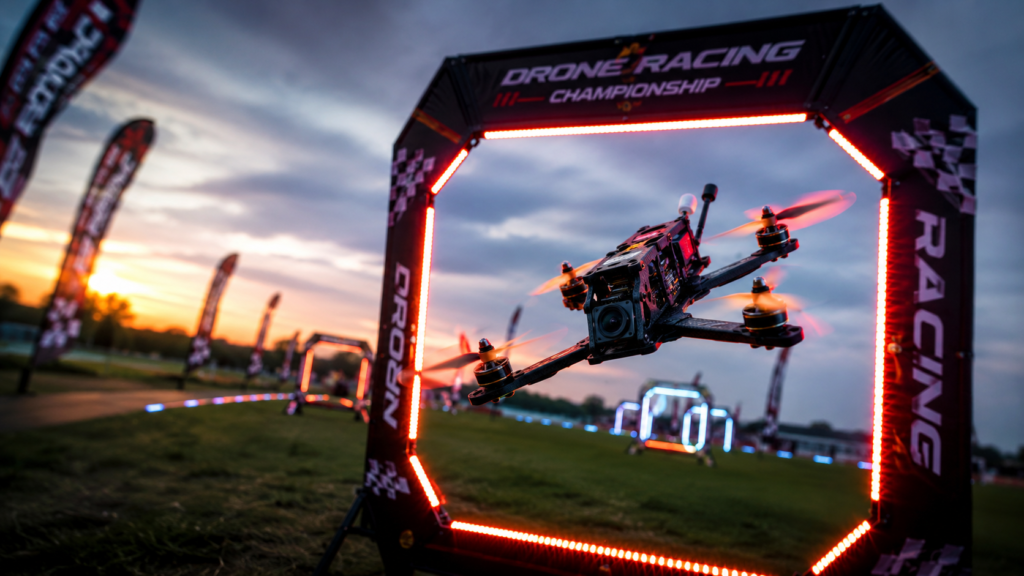
Los drones de carreras representan una de las modalidades más espectaculares y emocionantes dentro del mundo de los drones.
A diferencia de los drones convencionales, cuyo objetivo suele centrarse en la fotografía aérea o la grabación de vídeo, los drones FPV de carreras están diseñados para alcanzar velocidades muy elevadas y realizar maniobras extremadamente precisas.
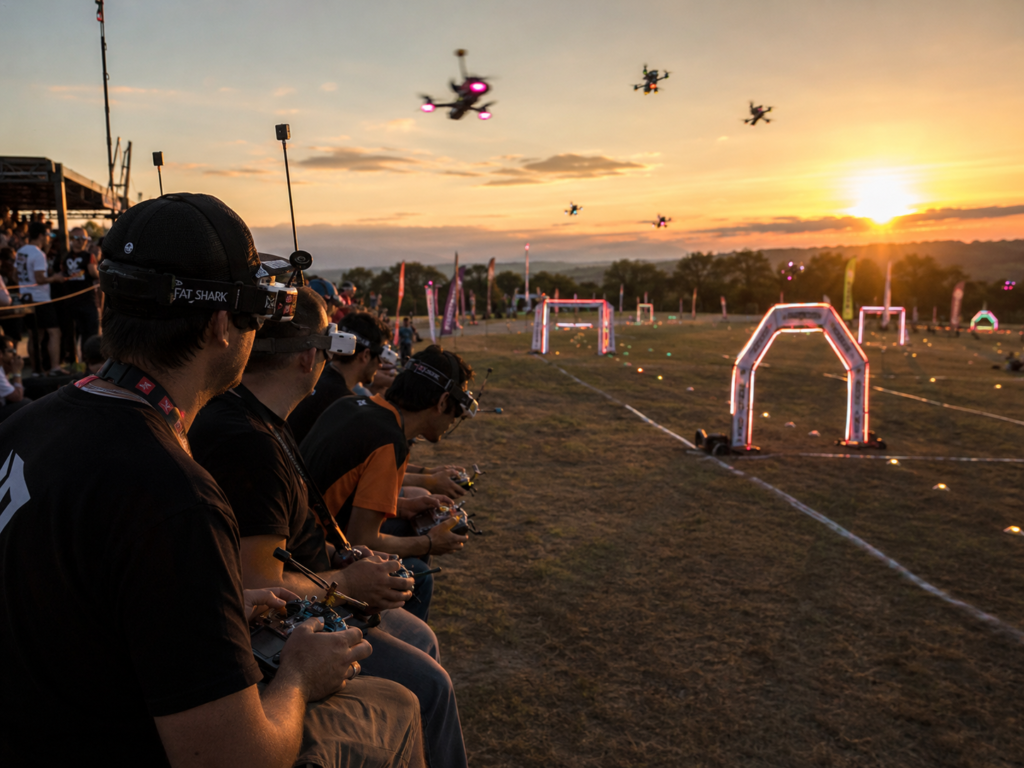
En esta disciplina, conocida internacionalmente como drone racing, los pilotos compiten recorriendo circuitos llenos de obstáculos, puertas y cambios de dirección a gran velocidad.
Todo ello utilizando sistemas FPV (First Person View) que permiten ver el recorrido desde la perspectiva de la propia aeronave.
Durante los últimos años, las carreras de drones han experimentado un crecimiento enorme gracias a la popularidad de las competiciones FPV y a organizaciones como la Drone Racing League (DRL).
Por este motivo cada vez más personas buscan información sobre:
- qué son los drones de carreras
- cómo funcionan los drones de carreras
- cómo empezar en las carreras de drones
- qué necesito para competir con drones
En esta guía descubrirás todo lo necesario para comprender esta modalidad y dar tus primeros pasos dentro del apasionante mundo del FPV Racing.
Qué son los drones de carreras
Un drone de carreras es una aeronave diseñada específicamente para competir en circuitos FPV.
Su principal objetivo es ofrecer:
- Máxima velocidad.
- Respuesta inmediata.
- Gran aceleración.
- Precisión de control.
A diferencia de muchos drones comerciales, estos equipos sacrifican funciones como:
- Modos automáticos.
- Sensores avanzados.
- Sistemas de asistencia.
A cambio obtienen una capacidad de maniobra extraordinaria.
Los pilotos controlan el drone utilizando gafas FPV y una emisora de radio, reaccionando en tiempo real a cada curva y obstáculo del circuito.
Por qué los drones de carreras son tan rápidos
La velocidad es uno de los aspectos que más llama la atención dentro del drone racing.
Muchos modelos son capaces de superar ampliamente los 100 km/h.
Algunas configuraciones avanzadas incluso pueden alcanzar velocidades muy superiores.
Esto es posible gracias a:
- Chasis ultraligeros.
- Motores de alto rendimiento.
- Hélices optimizadas.
- Electrónica especializada.
Todo el diseño está orientado a maximizar la relación entre potencia y peso.
Por eso los drones rápidos FPV ofrecen sensaciones muy diferentes a las de cualquier drone recreativo convencional.
Cómo funcionan los drones de carreras
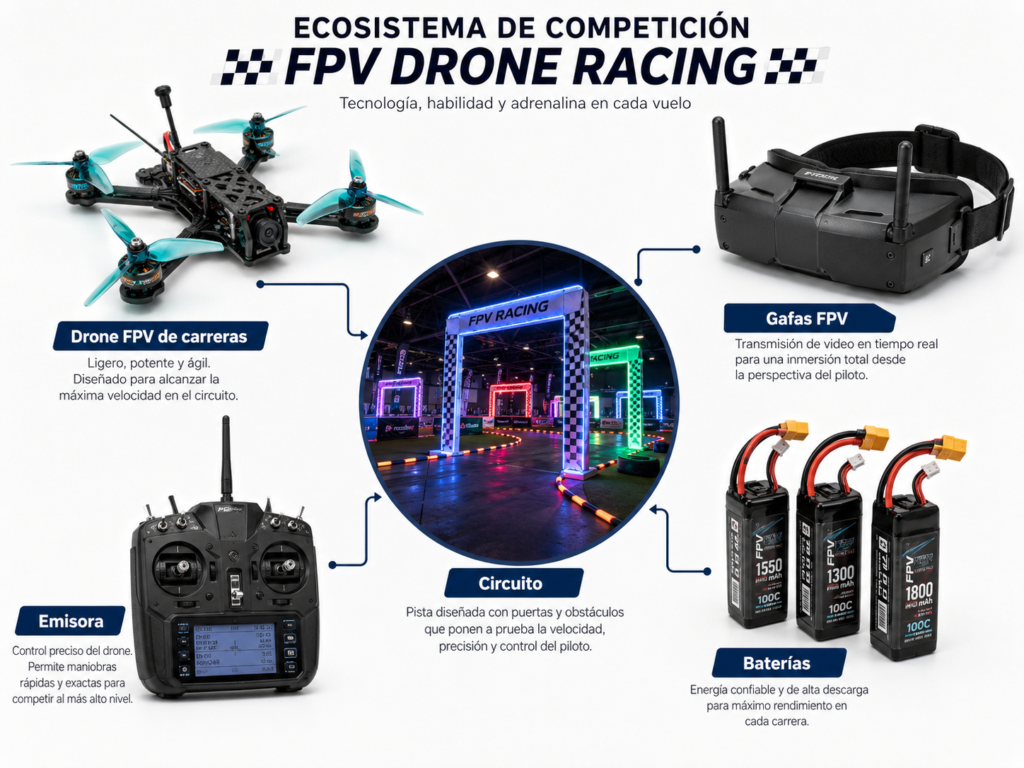
Aunque comparten la base tecnológica de otros drones FPV, los modelos de competición están optimizados para obtener el máximo rendimiento.
Sus componentes principales son:
Chasis
El bastidor debe ser ligero pero resistente.
La fibra de carbono es el material más utilizado debido a su excelente equilibrio entre peso y durabilidad.
Motores
Los motores son responsables de proporcionar la aceleración y velocidad necesarias para competir.
En el mundo del FPV Racing se utilizan configuraciones extremadamente potentes.
Hélices
Las hélices influyen directamente en:
- Velocidad.
- Aceleración.
- Consumo energético.
- Comportamiento del drone.
Muchos pilotos prueban diferentes configuraciones hasta encontrar la que mejor se adapta a su estilo de vuelo.
Controladora de vuelo
La controladora procesa toda la información y ejecuta las órdenes del piloto.
Sistemas como Betaflight son especialmente populares dentro del sector.
Sistema FPV
Incluye:
- Cámara FPV.
- Transmisor de vídeo.
- Receptor.
- Gafas FPV.
Este conjunto permite al piloto competir viendo exactamente lo que ve el drone.
Diferencia entre un drone FPV y un drone de carreras
Una de las dudas más frecuentes es la diferencia entre drone FPV y drone de carreras.
La respuesta es sencilla.
Todos los drones de carreras son FPV.
Pero no todos los drones FPV son de carreras.
Dentro del universo FPV encontramos distintas modalidades:
- Freestyle.
- Cinewhoop.
- Drone Racing.
- Vuelo recreativo.
Los drones de carreras constituyen únicamente una de estas especialidades.
Por ello tienen requisitos y configuraciones muy específicos orientados al rendimiento competitivo.
Cómo empezar en las carreras de drones
Entrar en el mundo de las carreras FPV es mucho más sencillo hoy que hace unos años.
Sin embargo, conviene seguir un proceso progresivo para evitar frustraciones y accidentes.
Comienza con un simulador
La mayoría de pilotos experimentados recomiendan practicar primero mediante simuladores FPV.
Esto permite desarrollar reflejos y coordinación sin riesgo de romper equipos.
Aprende el modo Acro
El modo Acro es la base del pilotaje avanzado FPV.
Dominarlo resulta esencial para competir.
Practica en espacios abiertos
Antes de intentar circuitos complejos, es recomendable entrenar maniobras básicas en entornos seguros.
Únete a la comunidad FPV
La comunidad FPV es una de las más activas dentro del mundo de los drones.
Participar en grupos, foros o eventos puede acelerar enormemente el aprendizaje.
Qué necesitas para competir con drones
Una de las preguntas más frecuentes entre quienes descubren el drone racing es:
¿Qué necesito para competir con drones?
Aunque pueda parecer una actividad compleja, el equipamiento básico es relativamente sencillo.
Drone de carreras
El elemento principal es, lógicamente, el drone de carreras.
Estos equipos suelen estar diseñados para maximizar:
- Velocidad.
- Aceleración.
- Resistencia.
- Capacidad de respuesta.
La mayoría de pilotos utilizan configuraciones FPV específicas para competición.
Gafas FPV
Las gafas FPV permiten visualizar en tiempo real la imagen transmitida por el drone.
Son uno de los componentes más importantes dentro del ecosistema FPV.
Actualmente encontramos sistemas:
- Analógicos.
- Digitales.
- DJI O3.
- Walksnail.
- HDZero.
Cada tecnología presenta ventajas y desventajas según el nivel de experiencia y presupuesto.
Emisora de radio
La emisora es el dispositivo que permite controlar el drone.
Una buena emisora ofrece:
- Precisión.
- Fiabilidad.
- Baja latencia.
- Personalización avanzada.
Muchos pilotos la consideran la inversión más importante después del propio drone.
Baterías y cargador
Las baterías influyen directamente en:
- Potencia.
- Tiempo de vuelo.
- Rendimiento.
En competición es habitual disponer de varias baterías para poder realizar sesiones de entrenamiento prolongadas.
Simulador FPV
Si buscas cómo aprender drone racing, probablemente sea la herramienta más recomendable.
Los simuladores permiten practicar:
- Circuitos.
- Maniobras.
- Control en modo Acro.
- Reacciones rápidas.
Todo ello sin riesgo de dañar el equipo.
Ventajas de las carreras de drones
Las carreras FPV han crecido enormemente porque ofrecen una experiencia difícil de igualar.
Adrenalina y velocidad
Pocas actividades tecnológicas combinan velocidad, precisión y emoción de la misma forma.
Los drones de carreras pueden alcanzar velocidades sorprendentes, generando una experiencia extremadamente intensa.
Desarrollo de habilidades
El pilotaje FPV ayuda a mejorar:
- Coordinación.
- Reflejos.
- Concentración.
- Capacidad de reacción.
Por ello muchos pilotos consideran esta modalidad un auténtico deporte tecnológico.
Comunidad internacional
El mundo del FPV Racing cuenta con miles de pilotos repartidos por todo el mundo.
Existen:
- Eventos.
- Competiciones.
- Grupos de aprendizaje.
- Comunidades especializadas.
Esto facilita enormemente la evolución de quienes empiezan.
Evolución constante
La tecnología FPV avanza muy rápido.
Nuevos sistemas digitales, mejores motores y controladoras más avanzadas permiten mejorar continuamente la experiencia.
Desafíos de las carreras FPV
Aunque apasionante, esta modalidad también presenta ciertos retos.
Curva de aprendizaje
Aprender cómo competir con drones requiere tiempo y práctica.
Los primeros vuelos suelen resultar más complejos de lo que muchos principiantes imaginan.
Reparaciones frecuentes
Los accidentes forman parte del aprendizaje.
Por este motivo es habitual que los pilotos tengan que sustituir:
- Hélices.
- Brazos del chasis.
- Motores.
- Componentes electrónicos.
Con el tiempo estas reparaciones se convierten en parte natural del hobby.
Inversión inicial
Aunque existen opciones económicas, montar un sistema FPV completo puede requerir una inversión superior a la de un drone recreativo tradicional.
Sin embargo, la experiencia obtenida suele compensar el esfuerzo.
El futuro de las carreras de drones
Las competiciones FPV continúan creciendo a nivel internacional.
Organizaciones como la Drone Racing League (DRL) han ayudado a popularizar este deporte y a acercarlo a nuevas audiencias.
Además, los avances tecnológicos están permitiendo:
- Mejor calidad de vídeo.
- Menor latencia.
- Equipos más fiables.
- Mayor accesibilidad para principiantes.
Todo apunta a que el drone racing seguirá ganando popularidad durante los próximos años.
Por ello, quienes comiencen hoy tendrán la oportunidad de formar parte de una disciplina que todavía se encuentra en plena expansión.
Conclusión
Los drones de carreras representan una de las modalidades más emocionantes dentro del mundo de los drones.
Gracias a la tecnología FPV, los pilotos pueden experimentar sensaciones únicas mientras compiten en circuitos repletos de velocidad, precisión y adrenalina.
Aunque requieren dedicación, práctica y una cierta inversión inicial, también ofrecen una experiencia difícil de encontrar en cualquier otra disciplina tecnológica.
Además, la constante evolución del sector está facilitando que cada vez más personas descubran cómo empezar en las carreras de drones y accedan a equipamiento más avanzado y accesible.
Si te apasiona la velocidad, la competición y el aprendizaje continuo, el drone racing puede convertirse en uno de los hobbies más apasionantes que existen actualmente.
Sigue aprendiendo sobre drones
👉 DJI Avata 2 Review → analiza uno de los drones FPV más populares para usuarios que buscan una experiencia inmersiva moderna.
FAq’s:Preguntas frecuentes sobre drones de carreras
Los drones de carreras son aeronaves FPV diseñadas específicamente para competir en circuitos a gran velocidad, priorizando la agilidad, la aceleración y la precisión de control.
La velocidad depende de la configuración utilizada.
Muchos modelos superan fácilmente los 100 km/h y algunas configuraciones avanzadas pueden alcanzar velocidades considerablemente superiores.
Todos los drones de carreras utilizan tecnología FPV, pero no todos los drones FPV están diseñados para competir.
Existen también modalidades como:
Freestyle.
Cinewhoop.
Vuelo recreativo.
La curva de aprendizaje es más exigente que en los drones convencionales.
Por ello se recomienda comenzar practicando con simuladores FPV antes de realizar vuelos reales.
Sí.
Las gafas FPV son fundamentales porque permiten visualizar el circuito desde la perspectiva de la aeronave.
Lo más recomendable es comenzar con una configuración sencilla, resistente y fácil de reparar.
La prioridad inicial debe ser aprender correctamente las bases del pilotaje.
Muchos pilotos utilizan simuladores especializados para entrenar reflejos, maniobras y control en modo Acro antes de competir.
Sí, siempre que se respeten las condiciones establecidas por la normativa para drones en España y se opere dentro de los requisitos aplicables a cada caso.