
Disclosure: this article contains affiliate links. If you buy through them, Bright Technology may earn a small commission at no extra cost to you. As an Amazon Associate, we earn from qualifying purchases.
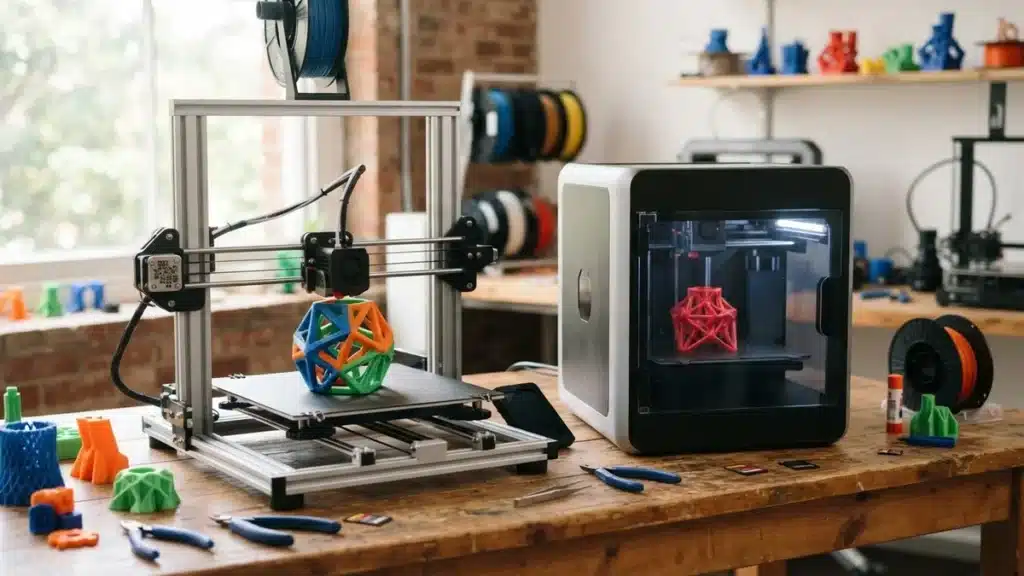
Bambu Lab A2L vs Centauri Carbon 2 is one of the most common dilemmas for people buying their first serious 3D printer in 2026. Both are affordable, both print at up to 500 mm/s and both come in a multicolor Combo version. Inside, though, they are very different machines: the Bambu Lab A2L is an open, large-format bed-slinger, while the Elegoo Centauri Carbon 2 is an enclosed CoreXY with a hardened steel nozzle.
This comparison goes through their official specs, multicolor systems (AMS lite vs CANVAS), supported materials and noise, so you can see which one fits what you want to print.
- Bambu Lab A2L vs Centauri Carbon 2: specs compared
- Design and motion: open bed-slinger vs enclosed CoreXY
- Build volume: the A2L wins clearly
- Materials: the Centauri Carbon 2 takes the lead
- Multicolor: AMS lite vs CANVAS
- Speed, quality and noise
- Software, camera and extras
- Bambu Lab A2L: pros and cons
- Elegoo Centauri Carbon 2: pros and cons
- Which one should you choose?
- A2L vs Centauri Carbon 2 FAQ
- Keep reading
Quick answer: pick the Bambu Lab A2L for large PLA and PETG parts, the most polished ecosystem and an optional cutting plotter. Pick the Elegoo Centauri Carbon 2 for ABS, ASA or carbon-fiber filaments, a quieter enclosed printer or the cheaper multicolor Combo.
Bambu Lab A2L vs Centauri Carbon 2: specs compared
| Spec | Bambu Lab A2L | Elegoo Centauri Carbon 2 |
|---|---|---|
| Release | June 1, 2026 | January 26, 2026 |
| Motion system | Bed-slinger (moving Y bed), open frame | CoreXY with enclosed chamber |
| Build volume | 330 × 320 × 325 mm | 256 × 256 × 256 mm |
| Speed / acceleration | 500 mm/s · 10,000 mm/s² | 500 mm/s |
| Hotend / bed | 300 °C / 80 °C | 350 °C hardened steel / 110 °C |
| Recommended materials | PLA, PETG and other non-technical filaments | PLA, PETG, TPU, PLA-CF; also ABS and ASA |
| Multicolor | AMS lite (4 colors) in Combo; up to 19 with multiple AMS units | CANVAS (4 colors) with RFID in Combo |
| Declared noise | Under 49 dB silent / about 52 dB standard | About 45 dB |
| Weight | 12.8 kg | 19.35 kg (Combo) |
| Extras | Optional cutting and drawing kit | AI camera and time-lapse, HEPA + carbon filter |
Design and motion: open bed-slinger vs enclosed CoreXY
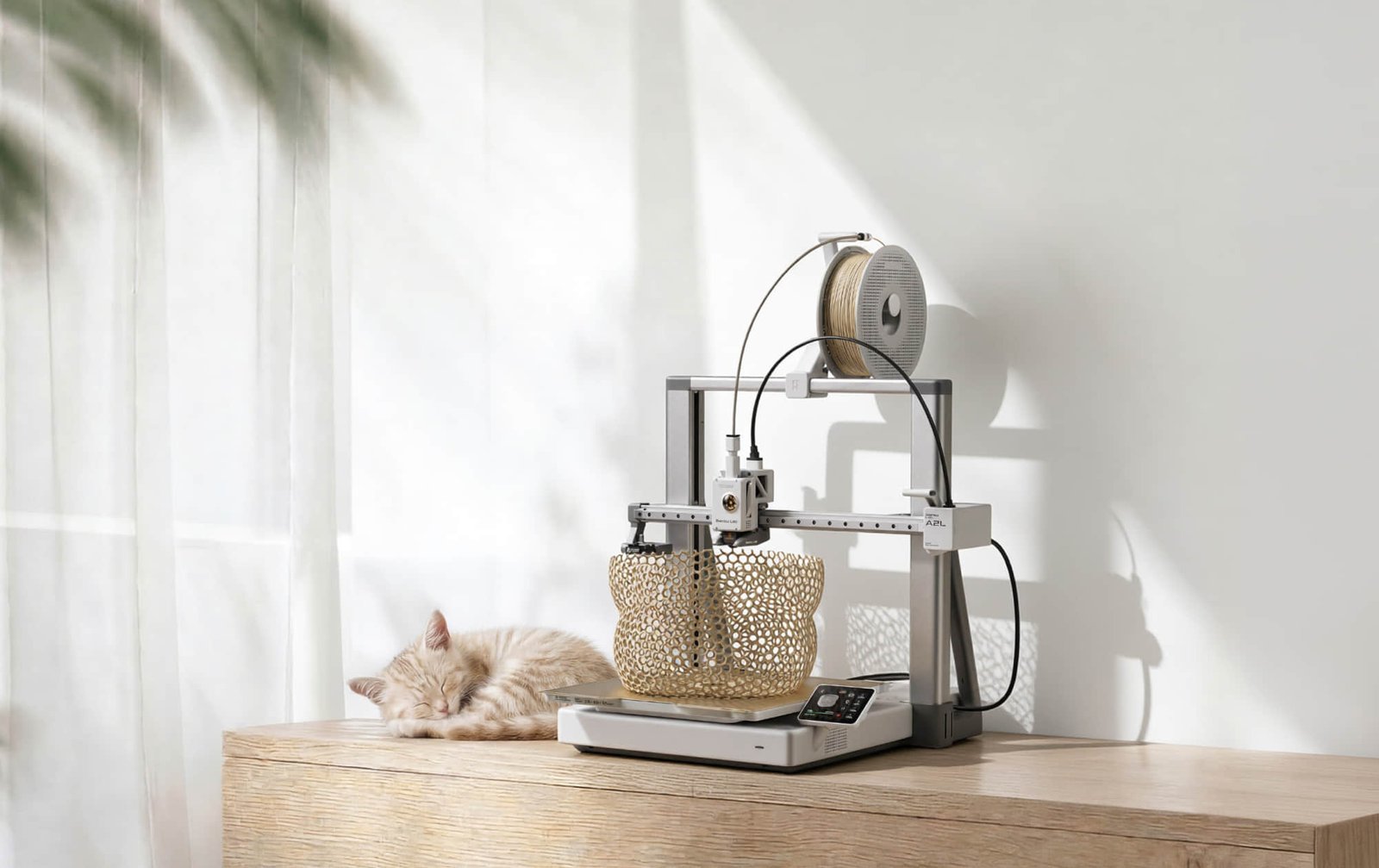
The most important difference is not speed but how they move. The A2L moves the bed back and forth, like the popular A1. The Centauri Carbon 2 moves the toolhead in X and Y on a CoreXY frame and keeps the bed moving only vertically.
In practice, an enclosed CoreXY is a compact cube with less inertia on tall, heavy parts. A bed-slinger needs clear space in front and behind for the bed’s travel, but it is simpler to maintain and allows big build volumes at a low cost. Bambu Lab offsets the bed motion with adaptive multi-point vibration compensation and two granular dampers inside the frame. Elegoo goes for an enclosed chassis with 19 sensors for automatic calibration and leveling.
Size and space at home
The A2L measures up to 544 × 529 × 505 mm, while the Centauri Carbon 2 Combo reaches 500 × 480 × 743 mm with the CANVAS module on top. The A2L’s bed travel means your desk needs plenty of depth.
Build volume: the A2L wins clearly
At 330 × 320 × 325 mm, the A2L offers about 34 liters of usable volume versus roughly 17 liters for the Centauri Carbon 2.
For cosplay helmets, planters, furniture parts or one-piece models, the A2L saves you from splitting and gluing. For figures, spare parts, organizers and most functional parts, Elegoo’s 256 mm cube is plenty.
Materials: the Centauri Carbon 2 takes the lead
This is where Elegoo pulls ahead. Its hotend reaches 350 °C, the bed 110 °C and the nozzle is hardened steel, so it handles abrasive carbon-fiber and glass-fiber filaments. Because it is enclosed, it holds heat and reduces warping with ABS and ASA, and it includes a HEPA filter with activated carbon.
The A2L is limited to a 300 °C nozzle and 80 °C bed, and Bambu Lab positions it for PLA, PETG and other non-technical materials. TPU is worth a try, but ABS or ASA on an open printer with an 80 °C bed will bring warping and fumes.
Not sure which filament you need? Read our guide to 3D printing materials and the PLA vs PETG vs ABS comparison.
Multicolor: AMS lite vs CANVAS
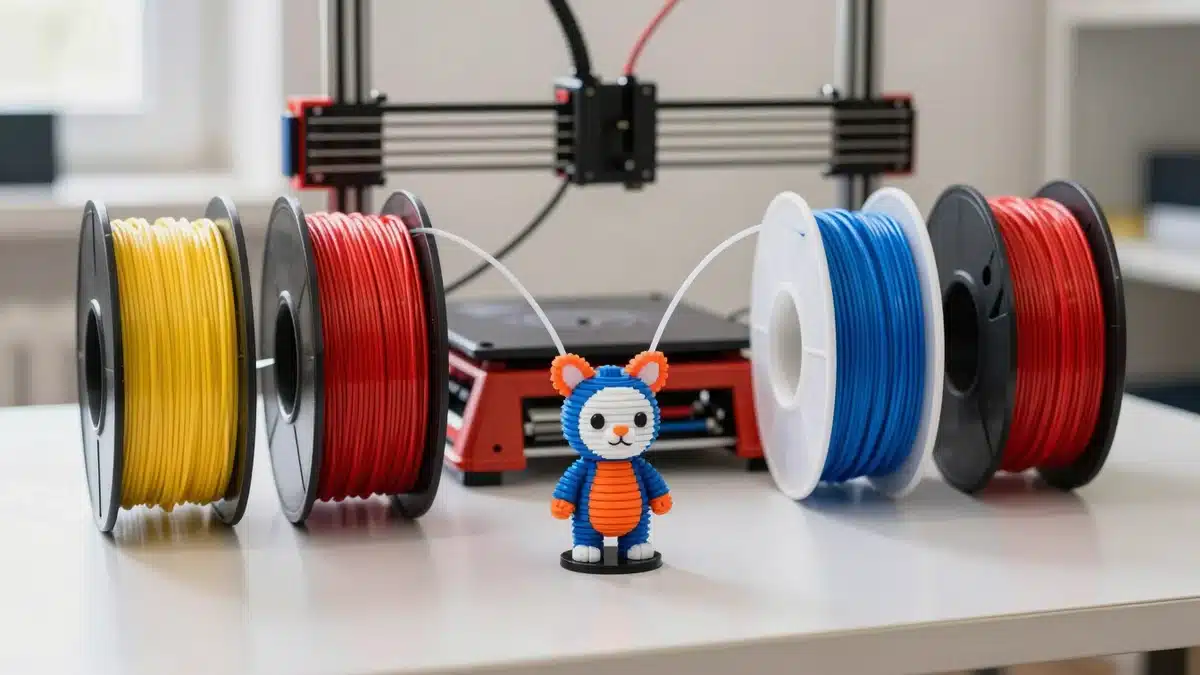
Both are sold as a Combo with a four-spool system:
- A2L Combo: includes the external AMS lite. It supports up to four box-style AMS units plus an AMS lite, for up to 19 colors. It works with the AMS 2 Pro and AMS HT, although their drying function needs external power.
- Centauri Carbon 2 Combo: includes CANVAS, a four-color module with RFID spool reading, 12 sensors, automatic loading, a backup spool and tangle prevention. It detects the material and suggests settings.
Four colors is enough for most users. The A2L has a much higher expansion ceiling, while Elegoo’s system is more integrated, and its Combo was the cheaper one at European launch pricing. Check current US prices before you buy. With either, single-nozzle multicolor creates purge waste that adds print time and filament cost.
Speed, quality and noise
On paper they tie at 500 mm/s. Bambu Lab adds 10,000 mm/s² acceleration, a 28 mm³/s flow rate and a closed-loop PMSM servo extruder. Elegoo does not publish acceleration in its spec sheet. In real-world speed, the CoreXY has a theoretical edge on tall parts because it does not move a loaded bed, while the A2L compensates with its anti-vibration algorithms.
Noise
Elegoo declares about 45 dB for the Centauri Carbon 2, and the enclosure helps contain sound. Bambu Lab quotes under 49 dB in silent mode and about 52 dB in standard mode, based on its internal tests. If the printer will sit in a living room or bedroom, the Elegoo starts with the advantage.
Software, camera and extras
The A2L runs on Bambu Studio and the Bambu Handy app, with access to MakerWorld. It is one of the most comfortable ecosystems for getting started. Its big extra is an optional blade cutting kit with a cutting module, a pen module and a mat, which lets it cut stickers, leather, fabric or paper and draw like a plotter.
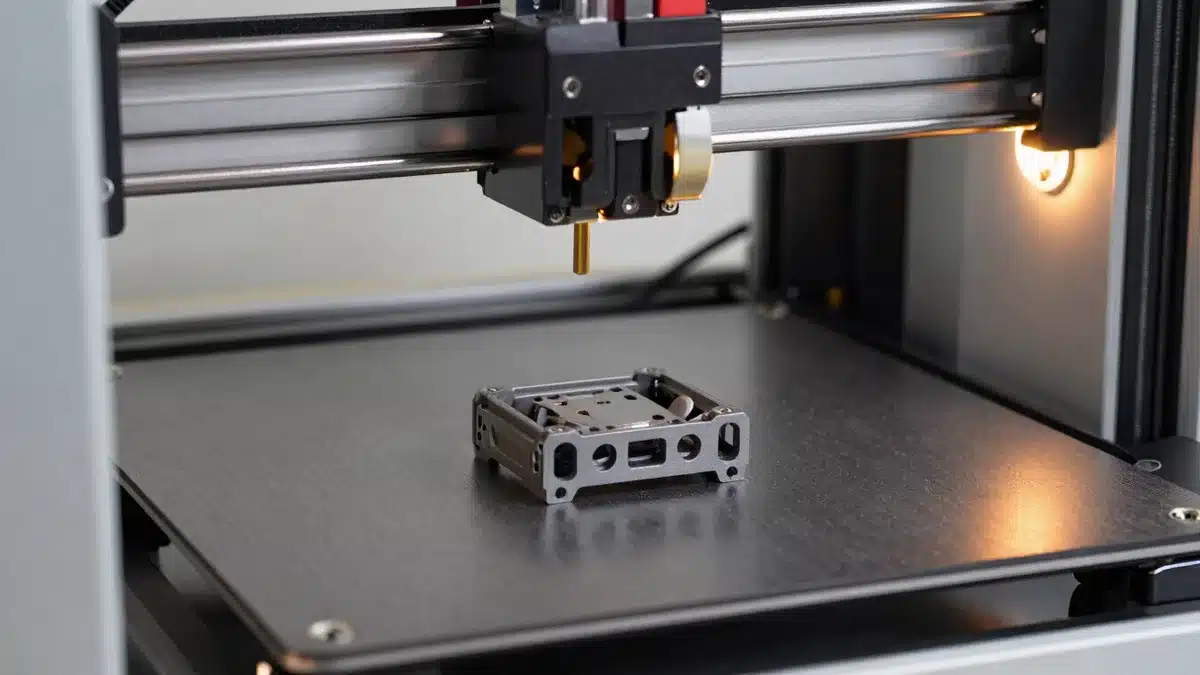
The Centauri Carbon 2 uses ElegooSlicer, the Nexprint platform and the MATRIX app. It includes an internal camera with AI detection and time-lapse, LED lighting and a 5-inch touchscreen. For more slicer options, see our guide to 3D printing software.
Both calibrate themselves, but it still pays to tune flow and retraction for each new filament. We explain how in how to calibrate a 3D printer.
Bambu Lab A2L: pros and cons
The A2L is Bambu Lab’s affordable large-format take on the A1, with a better extruder and a cutting option.
- 330 × 320 × 325 mm volume, nearly double the Elegoo
- Polished Bambu Studio, Bambu Handy and MakerWorld ecosystem
- Expandable to 19 colors with several AMS units
- Optional cutting and drawing kit
- Lighter at 12.8 kg
- Open frame: not suited to ABS, ASA or nylon
- Bed limited to 80 °C and hotend to 300 °C
- Needs space in front and behind for bed travel
- A bit louder in standard mode (about 52 dB)
- Combo costs more than the Elegoo’s
Elegoo Centauri Carbon 2: pros and cons
The Centauri Carbon 2 improves on the successful original Centauri Carbon with a 350 °C hotend, more sensors, automatic chamber ventilation and CANVAS multicolor.
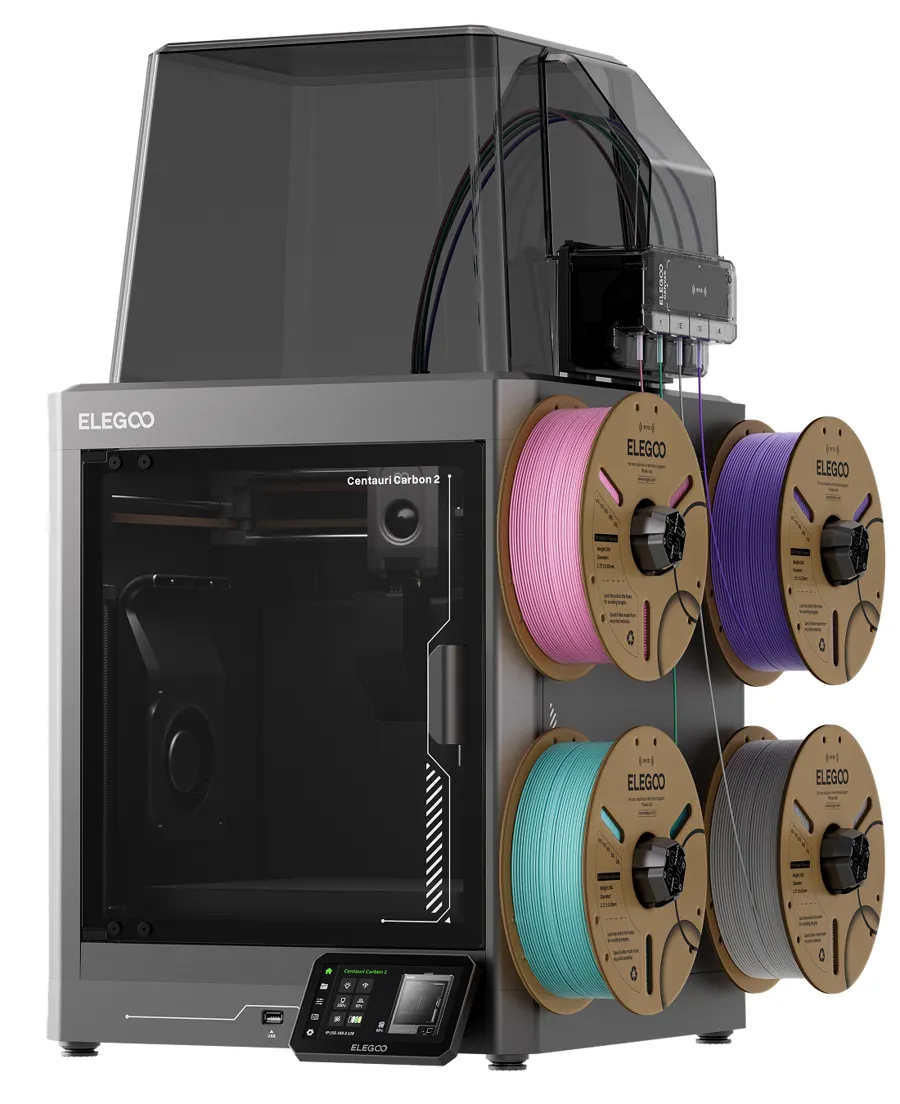
- Enclosed CoreXY: handles ABS, ASA and fiber filaments
- 350 °C hotend, 110 °C bed and hardened steel nozzle
- Quiet at about 45 dB declared
- AI camera and time-lapse included
- CANVAS Combo with RFID is the cheaper multicolor option
- Smaller build volume (256 mm per side)
- Multicolor limited to four colors
- Software ecosystem less mature than Bambu’s
- Heavier and taller with the CANVAS module
- The chamber is not actively heated
Elegoo Centauri Carbon 2
Best for: ABS, ASA and carbon fiber in an enclosed printer
Check price on AmazonWhich one should you choose?
| If you… | Choose | Why |
|---|---|---|
| Are new to 3D printing and mostly print PLA | Bambu Lab A2L | Simplest software, huge MakerWorld library, large volume |
| Need heat-resistant functional parts | Elegoo Centauri Carbon 2 | Enclosure, hot bed and hardened nozzle for ABS, ASA, PLA-CF |
| Want multicolor for the least money | Centauri Carbon 2 Combo | Cheaper Combo than the A2L Combo |
| Print cosplay, models or large parts | Bambu Lab A2L | 325 mm height and 330 × 320 mm base |
| Will keep it in a living space | Centauri Carbon 2 | Quieter, enclosed and filtered; safer around kids and pets |
| Like vinyl cutting and crafts | Bambu Lab A2L with the cutting kit | No Elegoo printer in this range offers anything similar |
If you are still comparing machines, our picks for the best beginner 3D printers and the guide to FDM 3D printers cover more options.
A2L vs Centauri Carbon 2 FAQ
It depends on use. The A2L is better for large PLA and PETG parts and has a more comfortable ecosystem. The Centauri Carbon 2 is better for ABS, ASA and fiber filaments thanks to its enclosure and 350 °C hotend.
It is not recommended. It is an open printer with an 80 °C bed, and Bambu Lab positions it for PLA, PETG and other non-technical materials. ABS tends to warp and give off fumes without an enclosure.
Both self-calibrate, but the A2L’s software and MakerWorld library are generally the easiest way to start with PLA. The Centauri Carbon 2 is also beginner-friendly if you want an enclosed, quiet machine.
They share a CoreXY base, but the Centauri 2 has no enclosure, camera or interior light and has fewer sensors. It costs less but is less suited to technical materials.
The A2L Combo includes a four-color AMS lite and supports up to 19 colors by combining several AMS units. The Centauri Carbon 2 Combo prints up to four colors with the CANVAS system.
According to the manufacturers, the Centauri Carbon 2 runs at about 45 dB. The A2L is quoted at under 49 dB in silent mode and about 52 dB in standard mode.
The A2L, at 330 × 320 × 325 mm, or about 34 liters. The Centauri Carbon 2 offers 256 × 256 × 256 mm, about 17 liters.
Enclosed printers hold heat and block drafts, which helps with ABS, ASA and other warp-prone filaments, and they keep noise and curious hands contained. Open printers are simpler and allow larger volumes at lower cost, and they work well for PLA and PETG.
Keep reading
- Creality K3: Price, Specs and Release Date
- PLA vs ABS vs PETG: Which 3D Printing Filament to Choose?
- 3D Printing Guide: Everything You Need to Know in 2026
- Best Sites to Download Free STL Files in 2026
Official sources: Bambu Lab A2L announcement · Elegoo Centauri Carbon 2 Combo