
Guías y tutoriales sobre drones
Los drones se han convertido en una tecnología accesible tanto para usuarios que buscan una nueva afición como para fotógrafos, creadores de contenido y empresas que necesitan realizar trabajos técnicos desde el aire.
Un drone puede utilizarse para grabar vídeos, tomar fotografías, inspeccionar infraestructuras, supervisar cultivos, crear mapas, competir en circuitos FPV o simplemente aprender a pilotar. Sin embargo, antes de comprar uno conviene entender cómo funciona, qué tipos existen y qué requisitos debes cumplir para volarlo.
En esta guía encontrarás una visión general de todo lo que necesitas saber sobre drones: sus componentes principales, sus aplicaciones, las diferencias entre categorías y los aspectos que debes valorar para elegir correctamente tu primer modelo.
Qué es un drone
Un drone o dron es una aeronave no tripulada que puede controlarse a distancia o realizar determinadas funciones mediante sistemas automáticos de navegación.
La mayoría de los modelos actuales combinan motores, hélices, sensores, una controladora de vuelo y diferentes sistemas de posicionamiento. Dependiendo de su diseño, pueden estar orientados al ocio, la fotografía, el vuelo FPV o el trabajo profesional.
El término UAV, procedente de Unmanned Aerial Vehicle, también se utiliza para referirse a este tipo de aeronaves, especialmente en contextos técnicos y profesionales.
Cómo funcionan los drones
Un drone consigue mantenerse en el aire gracias al trabajo conjunto de diferentes componentes:
- Motores y hélices: generan la fuerza necesaria para despegar, mantenerse estable y desplazarse.
- Controladora de vuelo: procesa las órdenes del piloto y la información recibida por los sensores.
- GPS y sistemas de posicionamiento: permiten mantener la ubicación y utilizar funciones como el regreso automático.
- Sensores: ayudan a calcular la orientación, la altura y, en algunos modelos, la proximidad de obstáculos.
- Cámara y transmisión de vídeo: permiten capturar imágenes y visualizar el vuelo desde el mando o el teléfono.
- Batería: suministra la energía necesaria para el vuelo y el funcionamiento de la electrónica.
Cuando el piloto mueve los controles, la controladora modifica la velocidad de los motores. Estas pequeñas variaciones permiten que el drone ascienda, descienda, gire o avance en una dirección determinada.
En nuestra guía sobre qué es un drone y cómo funciona explicamos con mayor profundidad la controladora de vuelo, el GPS, los sensores, la transmisión de vídeo y la función de cada componente.
Qué tipos de drones existen
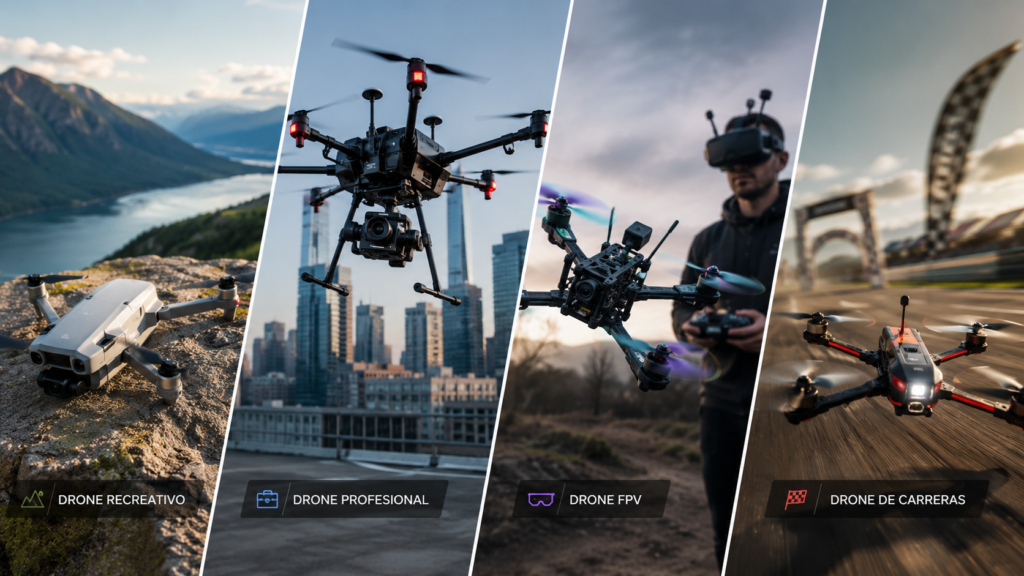
No todos los drones están diseñados para el mismo objetivo. Algunos priorizan la facilidad de uso, otros la calidad de imagen y otros la velocidad o la precisión necesaria para realizar trabajos técnicos.
| Tipo de drone | Uso principal | Usuario recomendado |
|---|---|---|
| Recreativo | Aprendizaje y vuelos de ocio | Principiantes |
| Con cámara | Fotografía, vídeo y viajes | Aficionados y creadores |
| Profesional | Producción audiovisual y trabajos técnicos | Profesionales y empresas |
| FPV | Vuelo inmersivo y grabaciones dinámicas | Pilotos con cierta experiencia |
| De carreras | Competición y velocidad | Pilotos FPV avanzados |
| Agrícola o industrial | Supervisión, medición e inspección | Empresas y especialistas |
Estas categorías pueden solaparse. Por ejemplo, un drone profesional puede incorporar una cámara avanzada y un modelo FPV puede utilizarse tanto para ocio como para producción audiovisual.
Consulta nuestra guía completa sobre los tipos de drones para conocer sus diferencias, ventajas, limitaciones y aplicaciones específicas.
Para qué sirven los drones
La utilidad de un drone depende de su cámara, sus sensores, su autonomía, su sistema de navegación y el software utilizado.
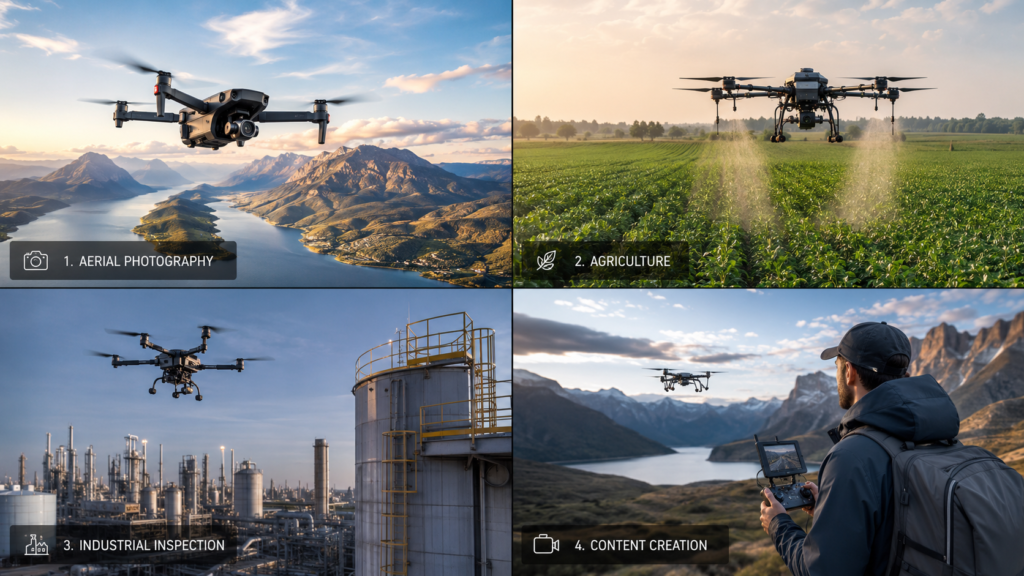
Fotografía, vídeo y creación de contenido
Los drones con cámara permiten capturar paisajes, edificios, eventos y escenas de viaje desde perspectivas difíciles de conseguir con una cámara convencional.
También se utilizan en:
- Producciones audiovisuales.
- Fotografía inmobiliaria.
- Documentales.
- Contenido para redes sociales.
- Vídeos de viajes.
- Seguimiento de actividades deportivas.
La calidad del resultado no depende únicamente de la resolución. El tamaño del sensor, la estabilización, el rango dinámico y la experiencia del piloto también influyen en las imágenes.
En la guía sobre cómo hacer fotografías y vídeos con drones encontrarás técnicas de grabación, movimientos de cámara y consejos de composición.
Agricultura, cartografía e inspección
En entornos profesionales, los drones pueden recopilar información y acceder a lugares difíciles o peligrosos.
Entre sus aplicaciones encontramos:
- Supervisión de cultivos.
- Creación de mapas y modelos tridimensionales.
- Inspección de cubiertas y edificios.
- Revisión de aerogeneradores y líneas eléctricas.
- Seguimiento de obras.
- Operaciones de búsqueda y emergencias.
Para estos trabajos suelen utilizarse cámaras térmicas, sensores multiespectrales, sistemas RTK u otras herramientas especializadas.
Ocio, aprendizaje y competición
Muchas personas compran un drone simplemente para disfrutar del vuelo y aprender una nueva habilidad.
Los drones recreativos suelen incorporar modos asistidos que facilitan los primeros vuelos. En cambio, los modelos FPV ofrecen una experiencia más directa, rápida e inmersiva.
Los pilotos interesados en este tipo de vuelo pueden consultar nuestra guía sobre cómo funcionan los drones FPV.
Ventajas y limitaciones de los drones
Antes de comprar un drone conviene conocer tanto sus posibilidades como sus limitaciones.
Principales ventajas
- Permiten obtener perspectivas aéreas únicas.
- Acceden a lugares de difícil alcance.
- Reducen riesgos en determinadas inspecciones.
- Pueden automatizar rutas y tareas.
- Existen modelos adaptados a diferentes niveles y presupuestos.
- Ofrecen aplicaciones recreativas y profesionales.
Principales limitaciones
- La autonomía depende de la batería y las condiciones de vuelo.
- El viento, la lluvia y las temperaturas extremas pueden limitar su uso.
- Existen zonas donde el vuelo está restringido.
- Algunos modelos avanzados requieren formación y práctica.
- Las baterías, hélices y accesorios suponen un coste adicional.
- Un error de configuración puede provocar pérdida de control o daños.
Cómo elegir un drone según tus necesidades
El mejor drone no es necesariamente el más caro. La elección correcta depende del uso que quieras darle, tu experiencia y el presupuesto disponible.
Antes de comprar, compara:
- Facilidad de pilotaje.
- Peso y dimensiones.
- Calidad de cámara.
- Sistema de estabilización.
- Autonomía declarada y baterías incluidas.
- Alcance de transmisión.
- Sensores anticolisión.
- Funciones automáticas.
- Disponibilidad de repuestos.
- Requisitos legales aplicables.
Drone para principiantes
Para aprender suele ser recomendable un modelo estable, con GPS, retorno automático y modos de vuelo asistido.
También conviene que tenga repuestos fáciles de encontrar y una aplicación sencilla. La detección de obstáculos puede aportar seguridad, aunque no sustituye la atención del piloto.
En nuestra comparativa de mejores drones para principiantes encontrarás modelos pensados para aprender de forma progresiva.
Drone para fotografía y vídeo
Para crear contenido debes prestar atención a:
- Tamaño y calidad del sensor.
- Estabilización mediante gimbal.
- Resolución y frecuencia de grabación.
- Modos de seguimiento.
- Fotografía RAW.
- Perfiles de color.
- Autonomía.
- Facilidad de transporte.
Puedes consultar nuestra selección de mejores drones con cámara para comparar modelos orientados a fotografía y vídeo.
Drone para uso profesional
Los trabajos profesionales pueden exigir mayor precisión, fiabilidad y compatibilidad con cámaras o sensores especializados.
En estos casos son importantes:
- Seguridad y redundancia.
- Precisión de posicionamiento.
- Cámaras intercambiables o sensores específicos.
- Planificación de misiones.
- Gestión de datos.
- Servicio técnico.
- Autonomía y resistencia.
La comparativa de drones profesionales recomendados está orientada a usuarios que necesitan un equipo para trabajar.
Drone para vuelo FPV
Los drones FPV están pensados para quienes buscan velocidad, maniobrabilidad y una experiencia de vuelo en primera persona.
Requieren más práctica que un drone convencional y pueden necesitar gafas, emisora, baterías adicionales y conocimientos básicos de configuración o reparación.
Antes de elegir, conviene decidir si buscas un sistema sencillo para empezar, un modelo cinematográfico o un drone de carreras.
Qué necesitas antes de realizar tu primer vuelo
Antes de despegar por primera vez:
- Lee el manual y actualiza el firmware si es necesario.
- Comprueba el estado de las hélices y la batería.
- Configura correctamente la aplicación y el mando.
- Consulta si puedes volar en la zona elegida.
- Revisa las condiciones meteorológicas.
- Espera a que el drone establezca correctamente su posición.
- Configura la altura de regreso automático cuando el modelo lo permita.
- Practica inicialmente en un espacio amplio y sin obstáculos.
- Mantén el drone a la vista durante el vuelo.
- Aterriza antes de agotar completamente la batería.
La guía sobre cómo volar un drone por primera vez explica el proceso de despegue, control, orientación y aterrizaje paso a paso.
Normativa básica para drones en España
Comprar un drone no significa que pueda volarse en cualquier lugar.
Los requisitos pueden variar según las características de la aeronave, el tipo de operación, la formación del piloto y la zona en la que se pretende volar. También deben respetarse la privacidad, las restricciones del espacio aéreo y las distancias de seguridad aplicables.
Antes de cada vuelo es importante comprobar la información actualizada y no basarse únicamente en la antigüedad, el precio o el tamaño del drone.
Consulta nuestra guía sobre normativa para drones en España para conocer los requisitos aplicables y el tutorial para registrar un drone en España cuando sea necesario.
Conclusión
Los drones pueden utilizarse para aprender a volar, capturar imágenes, crear contenido o realizar trabajos profesionales. La clave está en escoger una categoría adecuada y comprender sus limitaciones antes de comprar.
Un principiante debería priorizar la estabilidad y la facilidad de uso. Un creador de contenido necesitará una buena cámara y estabilización. Un profesional deberá valorar la fiabilidad, la precisión y las herramientas específicas para su actividad.
Cuando ya tengas claras tus necesidades, puedes consultar nuestra comparativa de mejores drones del mercado para encontrar modelos adaptados a diferentes perfiles.
Preguntas frecuentes sobre drones
Un drone es una aeronave no tripulada que puede controlarse de forma remota o mediante sistemas automáticos de navegación.
Actualmente se utilizan tanto para ocio como para aplicaciones profesionales.
No.
Los drones modernos incorporan numerosos sistemas de asistencia que facilitan enormemente el aprendizaje.
La mayoría de usuarios pueden realizar vuelos básicos tras pocas horas de práctica.
Dependerá del tipo de drone y de la operación que quieras realizar.
En muchos casos será necesario registrarse como operador y cumplir determinados requisitos legales.
No existe una única respuesta.
Dependerá del presupuesto y del uso previsto.
Sin embargo, los modelos con GPS y sistemas de asistencia suelen ser las mejores opciones para empezar.
Los drones FPV permiten pilotar viendo en tiempo real la imagen transmitida por la cámara mediante gafas especiales.
Esto proporciona una experiencia mucho más inmersiva.
La mayoría de drones actuales ofrecen entre 20 y 45 minutos de vuelo por batería.
Los modelos profesionales suelen alcanzar autonomías superiores.
Sí.
Muchos drones actuales incorporan cámaras de alta calidad capaces de grabar en 4K e incluso resoluciones superiores.
Por ello son ampliamente utilizados en fotografía y producción audiovisual.
Existen restricciones en determinadas zonas como:
Aeropuertos.
Infraestructuras críticas.
Espacios protegidos.
Algunas áreas urbanas.
Por ello siempre es recomendable consultar la normativa vigente antes de volar.
La mayoría de principiantes deberían buscar un modelo equilibrado entre facilidad de uso, seguridad y calidad de imagen.
Las comparativas específicas para principiantes suelen ser la mejor referencia antes de comprar.
Sí. “Dron” es la adaptación utilizada en español, mientras que “drone” es la forma inglesa que continúa empleándose con frecuencia en búsquedas, marcas y contenidos tecnológicos.
No. Un peso reducido no elimina todas las restricciones. Siguen existiendo zonas limitadas, normas de privacidad y condiciones operativas que deben respetarse.
Depende del modelo y de su configuración. Muchos drones con GPS pueden detenerse, aterrizar o regresar al punto de despegue, pero estas funciones deben configurarse y comprobarse antes del vuelo.