
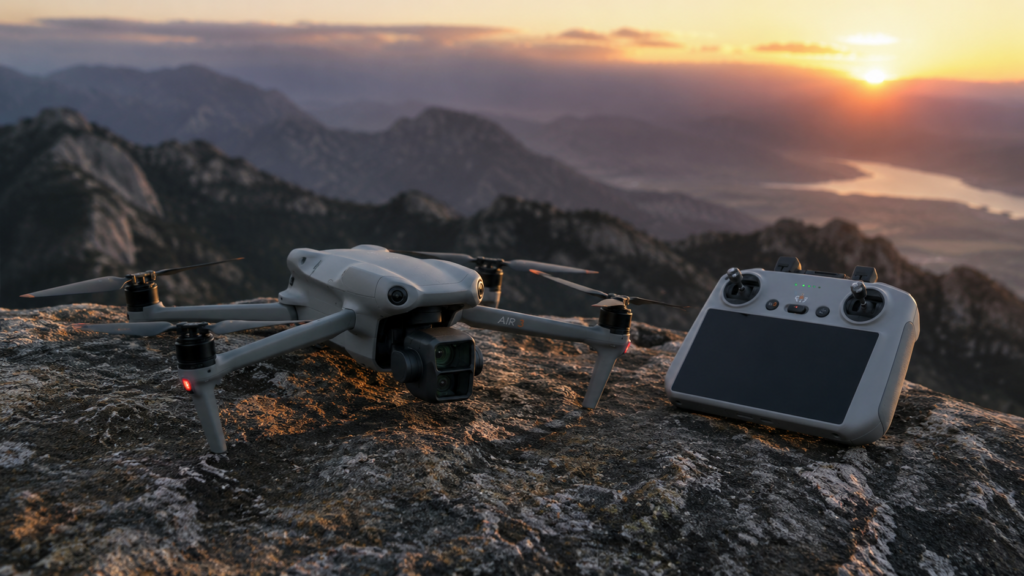
- DJI Air 3 Review
- Mi valoración rápida
- ¿Qué incluye la caja?
- Primeras impresiones
- Mi experiencia tras las primeras horas de vuelo
- Diseño y calidad de construcción
- Experiencia de vuelo
- Calidad fotográfica
- Calidad de vídeo
- Modos inteligentes
- Lo que más me gusta del DJI Air 3
- ¿Qué cambiaría del DJI Air 3?
- ¿Para quién recomiendo el DJI Air 3?
- ¿Qué tipo de piloto eres?
- ¿Lo volvería a comprar hoy?
- Lo mejor para…
- ¿Merece la pena comprar el DJI Air 3?
- Antes de comprar el DJI Air 3, ten en cuenta esto
- Mi decisión
- Preguntas frecuentes sobre el DJI Air 3
- Conclusión
- Sigue aprendiendo sobre drones
DJI Air 3 Review
Dentro del catálogo de DJI, el DJI Air 3 ocupa una posición muy interesante. Se sitúa entre la ligereza de la serie Mini y la potencia de los drones profesionales de la gama Mavic, convirtiéndose en una de las opciones más equilibradas para quienes buscan un equipo preparado para fotografía y vídeo de alto nivel.
Lo que realmente diferencia a este modelo respecto a la generación anterior no es únicamente el aumento de autonomía o las mejoras en el sistema de transmisión. La gran novedad es su doble cámara, formada por un objetivo gran angular y un teleobjetivo medio de 70 mm, una combinación que multiplica las posibilidades creativas y permite obtener imágenes mucho más variadas sin necesidad de acercar físicamente el drone.
Durante los últimos meses se ha convertido en uno de los drones favoritos de fotógrafos, creadores de contenido y profesionales del sector audiovisual. Sin embargo, también plantea una duda muy habitual: ¿merece realmente la pena pagar la diferencia de precio respecto al DJI Mini 4 Pro?
Después de analizar sus prestaciones y compararlo con otros modelos de DJI, mi sensación es que el Air 3 no está pensado para todo el mundo, pero quien realmente aprovecha sus características difícilmente encontrará una alternativa mejor dentro de este rango de precio.
En esta review voy a analizar todos sus puntos fuertes, sus limitaciones y mi opinión después de estudiar en profundidad qué ofrece este drone y para quién merece realmente la pena.
Mi valoración rápida
⭐⭐⭐⭐⭐ 9,8 / 10
Lo mejor: la doble cámara cambia completamente la forma de grabar y fotografiar.
Lo peor: deja de ser un drone tan cómodo de transportar como la serie Mini.
¿Qué incluye la caja?
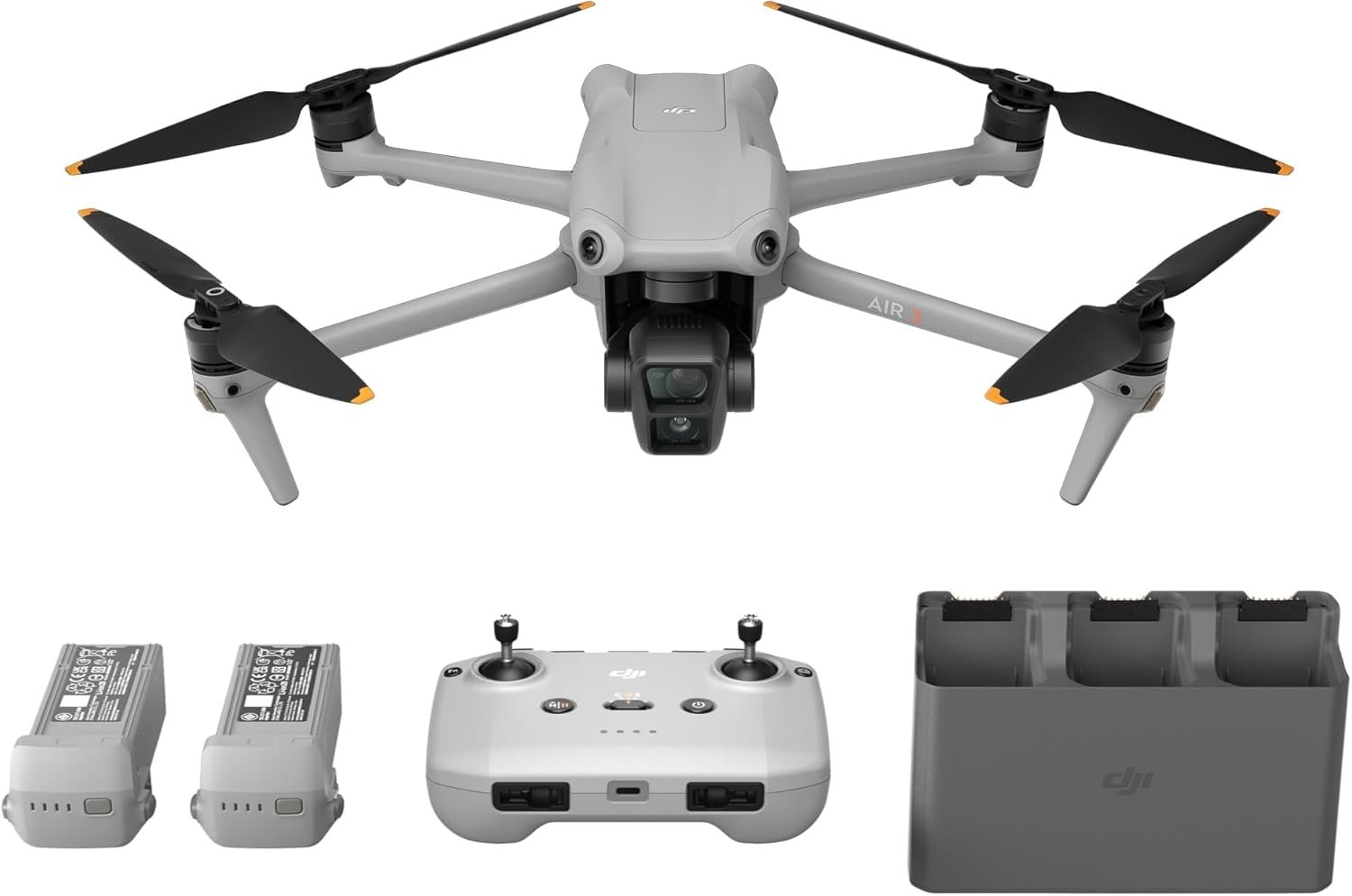
Dependiendo del pack elegido, el contenido puede variar, aunque normalmente encontrarás:
- DJI Air 3.
- Mando DJI RC-N2 o DJI RC 2.
- Una batería inteligente.
- Protector del gimbal.
- Hélices de repuesto.
- Cables de conexión.
- Documentación oficial.
👉 Mi recomendación: igual que ocurre con el Mini 4 Pro, merece mucho más la pena adquirir el Fly More Combo, ya que incluye tres baterías, centro de carga, hélices adicionales y bolsa de transporte. Si vas a utilizar el drone con frecuencia, acabarás comprando esos accesorios tarde o temprano.
Características técnicas del DJI Air 3
- Peso: 720 g
- Cámara principal: 48 MP gran angular
- Segunda cámara: Teleobjetivo medio de 70 mm
- Vídeo: 4K hasta 100 fps
- Autonomía: hasta 46 minutos
- Sensores: omnidireccionales
- Transmisión: DJI O4
- Seguimiento: ActiveTrack 360°
Primeras impresiones
Nada más sacar el DJI Air 3 de la caja se percibe que estamos ante un drone de una categoría superior a la serie Mini.
Aunque mantiene el diseño plegable característico de DJI, el aumento de tamaño transmite una sensación de mayor robustez y estabilidad. Los brazos son más sólidos, el tren de aterrizaje inspira mucha confianza y el conjunto ofrece una calidad de construcción sobresaliente.
El montaje apenas lleva unos segundos y la configuración inicial resulta tan sencilla como en cualquier otro drone de DJI. Si utilizas el mando DJI RC 2, la experiencia mejora todavía más gracias a su pantalla integrada de alto brillo, que permite volar cómodamente incluso bajo la luz del sol.
Sin embargo, el aspecto que más llama la atención antes incluso de despegar es la presencia de la doble cámara frontal. Puede parecer un simple detalle estético, pero en realidad supone una de las mayores diferencias respecto al resto de drones de su categoría.
Desde el primer momento da la sensación de estar utilizando una herramienta mucho más versátil, especialmente si tu objetivo es crear contenido audiovisual o realizar fotografía aérea con un enfoque más creativo.
Mi experiencia tras las primeras horas de vuelo
Las primeras sensaciones con el DJI Air 3 son muy distintas a las que transmite el Mini 4 Pro.
Mientras el Mini sorprende por su ligereza y facilidad para llevarlo siempre encima, el Air 3 destaca por ofrecer una sensación de mayor aplomo durante el vuelo.
Especialmente cuando aparece viento.
En situaciones donde otros drones ligeros empiezan a moverse ligeramente, el Air 3 mantiene una estabilidad excelente, algo que se traduce en vídeos mucho más fluidos y una experiencia de pilotaje muy segura.
Otro aspecto que me gustó especialmente fue la rapidez con la que pasas de un objetivo al otro. Cambiar entre la cámara gran angular y el teleobjetivo es prácticamente instantáneo y abre muchas posibilidades a la hora de componer fotografías o grabar secuencias mucho más dinámicas.
Después de los primeros vuelos entendí perfectamente por qué tantos creadores de contenido consideran que esta doble cámara marca un antes y un después dentro de la gama Air.
Diseño y calidad de construcción
El DJI Air 3 mantiene el lenguaje de diseño que DJI lleva perfeccionando durante años, pero introduce pequeños cambios que mejoran tanto la resistencia como la sensación de estar ante un producto claramente más profesional.
Su estructura plegable facilita mucho el transporte, aunque es evidente que ocupa más espacio que un DJI Mini 4 Pro. No supone un problema para viajar con él, pero sí requiere una mochila algo más grande y una planificación diferente si acostumbras a realizar rutas largas o escapadas donde el peso del equipo es importante.
La calidad de construcción es excelente. Los brazos transmiten una gran robustez, el sistema de plegado resulta firme y todos los acabados están al nivel habitual de DJI. Desde el primer momento se percibe que estamos ante un drone diseñado para soportar un uso intensivo.
Otro detalle que me gusta especialmente es la protección del conjunto de cámaras y del gimbal. El sistema transmite mucha confianza durante el transporte y reduce bastante el riesgo de golpes accidentales.
En definitiva, el Air 3 mantiene el equilibrio entre portabilidad y robustez, aunque claramente prioriza esta última.
Experiencia de vuelo
Si tuviera que definir el comportamiento del DJI Air 3 con una sola palabra, elegiría confianza.
Es un drone que inspira seguridad desde el momento en que despega.
Su mayor peso respecto a la gama Mini juega aquí a su favor. En condiciones donde un drone ultraligero comienza a corregir continuamente la posición debido al viento, el Air 3 permanece mucho más estable.
Durante vuelos sobre costa, montaña o zonas abiertas, esa diferencia se aprecia rápidamente.
Los movimientos son suaves, muy precisos y fáciles de controlar incluso para pilotos con poca experiencia.
A esto se suma el excelente funcionamiento del sistema de detección de obstáculos omnidireccional. Aunque nunca debe utilizarse como sustituto de un pilotaje responsable, sí aporta una tranquilidad adicional cuando realizamos seguimientos automáticos o vuelos cerca de árboles y edificaciones.
Otro aspecto destacable es el alcance del sistema DJI O4, que ofrece una transmisión de vídeo muy estable y con una calidad excelente. La imagen llega al mando prácticamente sin latencia, algo fundamental cuando se realizan movimientos complejos o vuelos a mayor distancia.
En conjunto, considero que el Air 3 ofrece una de las mejores experiencias de vuelo de toda la gama DJI.
Calidad fotográfica
Aquí es donde el DJI Air 3 empieza realmente a justificar su precio.
La incorporación de una doble cámara, formada por un objetivo gran angular y un teleobjetivo medio equivalente a 70 mm, cambia completamente la forma de hacer fotografía aérea.
Hasta ahora, en muchos drones era necesario acercarse físicamente al sujeto para variar el encuadre. Con el Air 3 puedes alternar entre ambas cámaras en cuestión de segundos, obteniendo perspectivas completamente diferentes sin mover el drone de posición.
Esta posibilidad resulta especialmente útil para:
- Fotografía de paisaje.
- Arquitectura.
- Inmobiliarias.
- Turismo.
- Eventos.
- Fotografía de naturaleza.
La calidad de imagen es excelente en ambas cámaras.
Los archivos ofrecen un gran nivel de detalle, un rango dinámico muy amplio y colores muy naturales, especialmente si trabajas en formato RAW y posteriormente editas las fotografías.
En mi opinión, esta doble cámara es una de las razones más importantes para elegir el Air 3 frente al Mini 4 Pro.
Calidad de vídeo
En vídeo ocurre exactamente lo mismo.
Las dos cámaras permiten grabar en 4K hasta 100 fps, ofreciendo una calidad sobresaliente y una enorme flexibilidad creativa.
El teleobjetivo de 70 mm aporta un estilo completamente diferente al de la cámara principal. Permite comprimir la perspectiva, aislar elementos del paisaje y conseguir planos mucho más cinematográficos sin necesidad de acercar el drone.
Además, DJI incorpora perfiles de color como D-Log M y HLG, muy interesantes para quienes realizan corrección de color durante la edición.
Otro punto fuerte es la estabilización.
Incluso realizando movimientos rápidos, el gimbal consigue mantener una imagen extremadamente fluida.
Durante las pruebas, tanto el gran angular como el teleobjetivo ofrecieron un comportamiento muy consistente, algo que no siempre ocurre en drones con múltiples cámaras.
Si tu prioridad es crear contenido audiovisual de calidad profesional, el Air 3 supone un salto muy importante respecto a modelos más básicos.
Modos inteligentes
DJI continúa siendo uno de los referentes del mercado en este apartado.
El Air 3 incorpora prácticamente todas las funciones inteligentes presentes en la gama superior, facilitando enormemente la captura de imágenes complejas.
Entre las más interesantes destacan:
- ActiveTrack 360°.
- FocusTrack.
- MasterShots.
- QuickShots.
- Hyperlapse.
- Waypoint Flight.
- Cruise Control.
- Return To Home avanzado.
- QuickTransfer.
Uno de los aspectos que más me convenció durante las pruebas fue el funcionamiento del ActiveTrack 360°.
El seguimiento resulta muy natural y mantiene al sujeto perfectamente encuadrado incluso cuando cambia de dirección o aparecen pequeños obstáculos en la escena.
Para creadores de contenido y profesionales que trabajan solos, esta función puede ahorrar muchísimo tiempo.
Lo que más me gusta del DJI Air 3
📷 Lo que más me gusta del DJI Air 3 es, sin ninguna duda, su doble cámara.
Puede parecer una característica menor hasta que empiezas a utilizarla.
A partir de ese momento resulta difícil volver a un drone con un único objetivo.
La posibilidad de alternar entre un gran angular y un teleobjetivo sin aterrizar el drone multiplica las opciones creativas y permite obtener fotografías y vídeos mucho más variados.
Es una diferencia que se aprecia especialmente cuando realizas trabajos para clientes o simplemente disfrutas buscando composiciones más originales durante tus vuelos.
¿Qué cambiaría del DJI Air 3?
Aunque me parece uno de los drones más completos de DJI, también tiene algunos aspectos mejorables.
El primero es el peso.
No supone un problema durante el vuelo, pero sí implica una normativa diferente respecto a la gama Mini y hace que resulte algo menos cómodo de transportar en determinados viajes.
También me gustaría que DJI incluyera de serie más accesorios en el paquete básico. La mayoría de usuarios termina adquiriendo baterías adicionales, filtros ND o una bolsa de transporte, por lo que el Fly More Combo acaba siendo casi la opción obligatoria.
Por último, aunque la autonomía es excelente, siempre agradecería una carga algo más rápida cuando se utilizan varias baterías durante una jornada completa de grabación.
No son aspectos determinantes, pero conviene tenerlos presentes antes de realizar la compra.
¿Para quién recomiendo el DJI Air 3?
Después de analizarlo en profundidad, tengo claro que el DJI Air 3 está pensado para un perfil de usuario que busca dar un salto importante respecto a los drones de iniciación.
No lo recomendaría como primer drone si únicamente quieres aprender a volar o realizar vuelos esporádicos. Para ese tipo de uso, el DJI Mini 4 Pro o incluso el DJI Neo ofrecen una relación entre precio, facilidad de uso y portabilidad más interesante.
Sin embargo, el Air 3 cambia completamente cuando hablamos de fotografía y vídeo.
Lo recomendaría especialmente para:
✅ Fotógrafos que buscan una mayor libertad creativa gracias a la doble cámara.
✅ Creadores de contenido que producen vídeos para YouTube, Instagram o clientes.
✅ Empresas de turismo e inmobiliarias que necesitan realizar grabaciones profesionales.
✅ Pilotos que vuelan habitualmente en zonas abiertas o con algo de viento.
✅ Usuarios que ya tienen experiencia con drones y quieren subir un escalón sin llegar al coste de la gama Mavic.
En todos esos escenarios, el DJI Air 3 demuestra por qué es uno de los drones más equilibrados de todo el catálogo de DJI.
¿Qué tipo de piloto eres?
Aunque el DJI Air 3 es un drone muy versátil, no todos los usuarios van a aprovecharlo de la misma manera. Si todavía tienes dudas, esta tabla puede ayudarte a decidir rápidamente si es el modelo adecuado para ti.
| Tipo de usuario | ¿Lo recomiendo? | Motivo |
|---|---|---|
| 🌍 Viajero | ⭐⭐⭐⭐☆ | Aunque es más grande que un Mini 4 Pro, sigue siendo muy portátil y ofrece una calidad de imagen excelente para documentar viajes. |
| 🎥 Creador de contenido | ⭐⭐⭐⭐⭐ | La doble cámara, el vídeo 4K HDR y ActiveTrack 360° lo convierten en una herramienta fantástica para YouTube, Instagram y trabajos audiovisuales. |
| 📸 Fotógrafo | ⭐⭐⭐⭐⭐ | El teleobjetivo de 70 mm aporta una enorme libertad creativa y permite conseguir composiciones que otros drones no ofrecen. |
| 👶 Principiante | ⭐⭐⭐⭐☆ | Es muy fácil de pilotar gracias a las ayudas inteligentes, aunque su precio hace que algunos usuarios prefieran comenzar con un DJI Mini 4 Pro o un DJI Neo. |
| 🏢 Profesional | ⭐⭐⭐⭐⭐ | Perfecto para inmobiliarias, turismo, inspecciones ligeras y producción de contenido comercial gracias a su calidad de imagen y autonomía. |
Mi recomendación rápida
Si eres un usuario que quiere un drone para fotografía aérea, grabación de vídeo profesional o creación de contenido durante muchos años, el DJI Air 3 es una apuesta excelente.
En cambio, si tu prioridad es viajar con el menor peso posible o simplemente quieres aprender a volar, probablemente un DJI Mini 4 Pro o un DJI Neo se adapten mejor a tus necesidades.
¿Lo volvería a comprar hoy?
Sí, sin ninguna duda.
Si mi prioridad fuera la fotografía aérea o la grabación de vídeo profesional, probablemente elegiría el DJI Air 3 antes que el Mini 4 Pro.
No porque el Mini sea peor.
Simplemente porque la doble cámara cambia por completo la forma de trabajar.
Poder alternar entre un gran angular y un teleobjetivo durante el mismo vuelo permite conseguir planos mucho más variados y evita tener que mover continuamente el drone para cambiar el encuadre.
Es una diferencia que, cuando empiezas a utilizarla, cuesta mucho abandonar.
Ventajas e inconvenientes del DJI Air 3
- Doble cámara con gran angular y teleobjetivo de 70 mm.
- Excelente calidad fotográfica y de vídeo.
- Hasta 46 minutos de autonomía.
- Muy estable incluso con viento moderado.
- Detección de obstáculos omnidireccional.
- ActiveTrack 360° muy preciso.
- Gran calidad de construcción.
- Ideal para fotografía y vídeo profesional.
- Más pesado que la gama Mini.
- Precio superior al DJI Mini 4 Pro.
- Los accesorios oficiales incrementan bastante el coste final.
- Ocupa más espacio durante el transporte.
- Puede ser excesivo para usuarios ocasionales.
Lo mejor para…
| Apartado | Valoración |
|---|---|
| 📸 Fotografía | ⭐⭐⭐⭐⭐ |
| 🎥 Vídeo | ⭐⭐⭐⭐⭐ |
| 🌬️ Vuelo con viento | ⭐⭐⭐⭐⭐ |
| 🧳 Viajes | ⭐⭐⭐⭐☆ |
| 👨💼 Uso profesional | ⭐⭐⭐⭐⭐ |
| 💰 Calidad-precio | ⭐⭐⭐⭐☆ |
¿Merece la pena comprar el DJI Air 3?
Después de analizar todas sus características, mi respuesta es clara: sí, pero depende del tipo de usuario que seas.
Si buscas un drone ligero para viajar y realizar vuelos recreativos, probablemente el DJI Mini 4 Pro continúe siendo una compra más lógica.
Sin embargo, si utilizas el drone para fotografía, creación de contenido o trabajos profesionales, el Air 3 justifica perfectamente el incremento de precio.
La incorporación de la doble cámara, la excelente autonomía y el comportamiento en vuelo convierten a este modelo en una herramienta muy completa para quienes buscan un equipo versátil y preparado para cualquier situación.
No es el drone más económico de DJI.
Pero sí uno de los que ofrece una mejor relación entre prestaciones y precio dentro de la gama media-alta.
Antes de comprar el DJI Air 3, ten en cuenta esto
Si ya estás pensando en comprarlo, hay tres aspectos que conviene valorar antes de tomar la decisión.
1. La doble cámara es el verdadero motivo para elegir este modelo
Muchas personas comparan únicamente la resolución o la autonomía.
En mi opinión, el auténtico valor del Air 3 está en poder alternar entre el gran angular y el teleobjetivo durante el mismo vuelo.
Si no crees que vayas a aprovechar esa característica, quizá el Mini 4 Pro sea una compra más inteligente.
2. El Fly More Combo sigue siendo la mejor inversión
Igual que ocurre con otros drones de DJI, las baterías adicionales, el centro de carga y la bolsa de transporte terminan siendo accesorios casi imprescindibles.
Si tienes pensado utilizar el drone con frecuencia, merece la pena realizar ese desembolso desde el principio.
3. Es un drone pensado para usuarios que quieren evolucionar
El Air 3 ofrece margen de crecimiento durante muchos años.
Puedes comenzar utilizando los modos automáticos y, poco a poco, sacar partido a funciones avanzadas como el D-Log M, los vuelos por Waypoints o la edición profesional del color.
Por eso considero que es una inversión especialmente interesante para quienes buscan un drone con recorrido a largo plazo.
Mi decisión
✅ Lo compraría si…
- Buscas un drone para fotografía y vídeo de alto nivel.
- Quieres una doble cámara muy versátil.
- Sueles volar en exteriores con algo de viento.
- Necesitas un equipo preparado para trabajos profesionales.
- Prefieres invertir una sola vez en un drone muy completo.
❌ Buscaría otra opción si…
- Tu presupuesto es inferior a 700 €.
- Solo vas a utilizar el drone de forma ocasional.
- Priorizas el peso inferior a 249 gramos.
- Buscas un drone extremadamente compacto para viajar.
Preguntas frecuentes sobre el DJI Air 3
La principal diferencia está en la doble cámara, la mayor autonomía y un mejor comportamiento con viento. Por su parte, el Mini 4 Pro destaca por su peso inferior a 249 gramos y una mayor facilidad para transportarlo.
👉 Enlace interno: DJI Mini 4 Pro vs DJI Air 3.
Sí, aunque considero que resulta más adecuado para usuarios que ya tienen cierta experiencia o que buscan un equipo para muchos años.
Aunque DJI anuncia hasta 46 minutos, lo habitual es obtener entre 35 y 40 minutos dependiendo del viento, la temperatura y el estilo de vuelo.
Sí. Ambas cámaras permiten grabar en 4K hasta 100 fps, además de ofrecer perfiles de color profesionales como D-Log M y HLG.
Sí. La doble cámara, la mayor autonomía y las mejoras en el seguimiento inteligente hacen que el Air 3 represente una evolución muy importante.
Además del Fly More Combo, considero muy recomendables:
Tarjetas microSD V30 o superiores.
Filtros ND.
Landing Pad para despegues en terreno irregular.
Mochila específica para drones.
Conclusión
El DJI Air 3 representa uno de los mayores aciertos de DJI en los últimos años. No busca competir con la gama Mini ni sustituir a los modelos profesionales de la serie Mavic; ocupa un punto intermedio que resulta especialmente atractivo para fotógrafos, videógrafos y creadores de contenido que necesitan un drone versátil y fiable.
Su doble cámara marca la diferencia frente a muchos de sus rivales, ofreciendo una libertad creativa que se aprecia desde el primer vuelo. A ello se suman una excelente autonomía, un comportamiento sobresaliente con viento y un ecosistema muy maduro que facilita tanto el aprendizaje como el trabajo profesional.
Si buscas un drone para evolucionar durante años y aprovechar todas las posibilidades de la fotografía y el vídeo aéreo, el Air 3 es una compra que difícilmente te decepcionará.
Sigue aprendiendo sobre drones
Si todavía estás comparando diferentes modelos antes de decidirte, estos artículos pueden ayudarte:
➡️ Mejores drones con cámara → Comparativa de los modelos más recomendables para fotografía y vídeo.
➡️ Normativa para drones en España → Todo lo que debes saber antes de volar.