
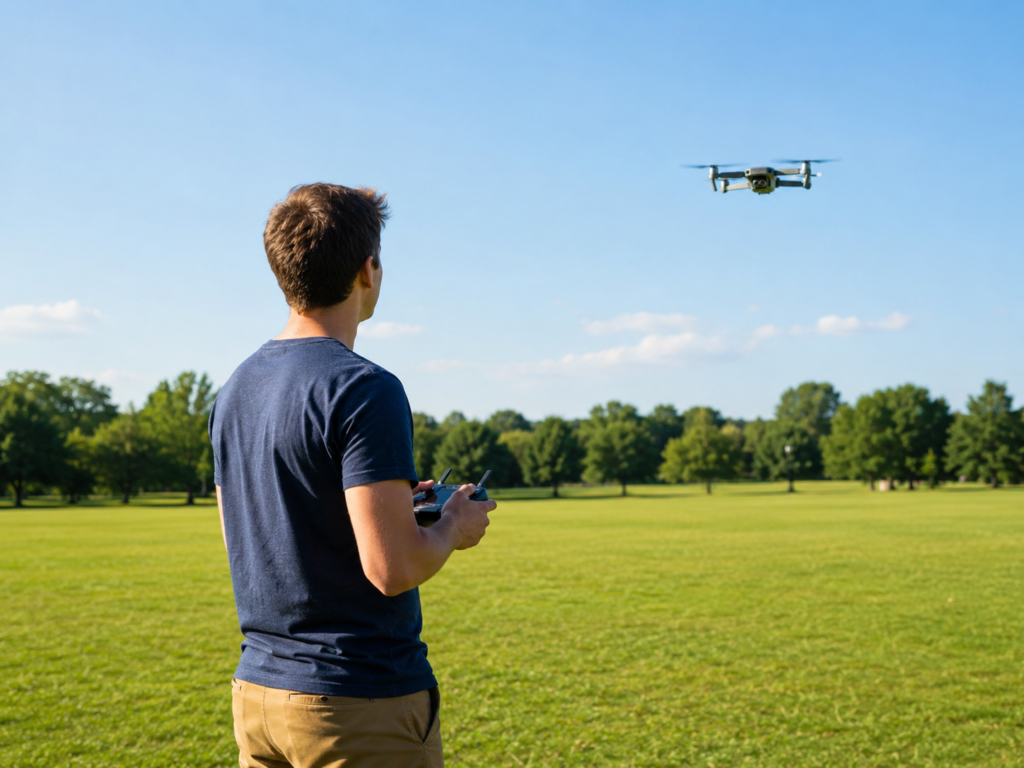
- ¿Primera vez volando un drone?
- Qué hacer antes de volar un drone
- Elige una zona adecuada para aprender
- Primeros pasos antes de despegar
- Cómo despegar un drone correctamente
- Aprende los controles básicos
- Cómo aterrizar un drone correctamente
- Ejercicios para aprender a volar un drone más rápido
- Cómo utilizar el GPS y el retorno al punto de origen
- Errores que debes evitar durante tus primeros vuelos
- Sigue aprendiendo sobre drones
- Preguntas frecuentes sobre cómo volar un drone
¿Primera vez volando un drone?
Comprar un drone es emocionante.
Sin embargo, muchas personas descubren rápidamente que pilotarlo no es tan sencillo como parece.
Aunque los drones modernos incorporan tecnologías avanzadas como GPS, retorno automático al punto de origen y sistemas de estabilización inteligente, es importante aprender las bases antes de realizar vuelos más complejos.
La buena noticia es que hoy resulta mucho más fácil aprender cómo volar un drone por primera vez que hace apenas unos años.
Los sistemas de asistencia actuales ayudan enormemente a los principiantes y permiten ganar confianza rápidamente.
Aun así, cometer errores durante los primeros vuelos puede provocar:
- Golpes.
- Caídas.
- Daños en las hélices.
- Pérdida de control.
- Situaciones de riesgo innecesarias.
Por este motivo conviene seguir una metodología sencilla que permita aprender progresivamente.
En esta guía descubrirás cómo pilotar un drone, qué debes revisar antes de despegar, cuáles son los errores más frecuentes y cómo realizar tus primeros vuelos con seguridad.
Qué hacer antes de volar un drone
Antes de pensar en despegar, conviene dedicar unos minutos a preparar correctamente el equipo.
Muchos problemas aparecen precisamente por saltarse este paso.
Revisa la normativa aplicable
Antes de cualquier vuelo debes asegurarte de que la zona permite operaciones con drones.
Para ello es recomendable consultar:
👉 ENAIRE Drones → https://drones.enaire.es
Además, conviene conocer la normativa para drones en España y verificar si necesitas registro o certificación.
Comprueba la batería
Nunca realices un primer vuelo con una batería parcialmente descargada.
Lo ideal es comenzar con la batería completamente cargada tanto en:
- Drone.
- Mando de control.
Inspecciona las hélices
Las hélices son uno de los elementos más importantes de la aeronave.
Comprueba que:
- Están correctamente instaladas.
- No presentan grietas.
- No muestran deformaciones.
Espera buenas condiciones meteorológicas
Si estás aprendiendo cómo volar un drone sin experiencia, evita:
- Viento fuerte.
- Lluvia.
- Niebla.
- Condiciones adversas.
Los primeros vuelos deben realizarse en días tranquilos.
Elige una zona adecuada para aprender
Uno de los mejores consejos para principiantes es escoger correctamente el lugar de práctica.
Lo ideal es buscar:
- Espacios abiertos.
- Zonas despejadas.
- Pocos obstáculos.
- Escasa presencia de personas.
Evita durante tus primeras sesiones:
- Árboles densos.
- Cables eléctricos.
- Edificios.
- Tráfico.
- Multitudes.
Cuanto más espacio tengas, más margen tendrás para corregir errores.
Primeros pasos antes de despegar
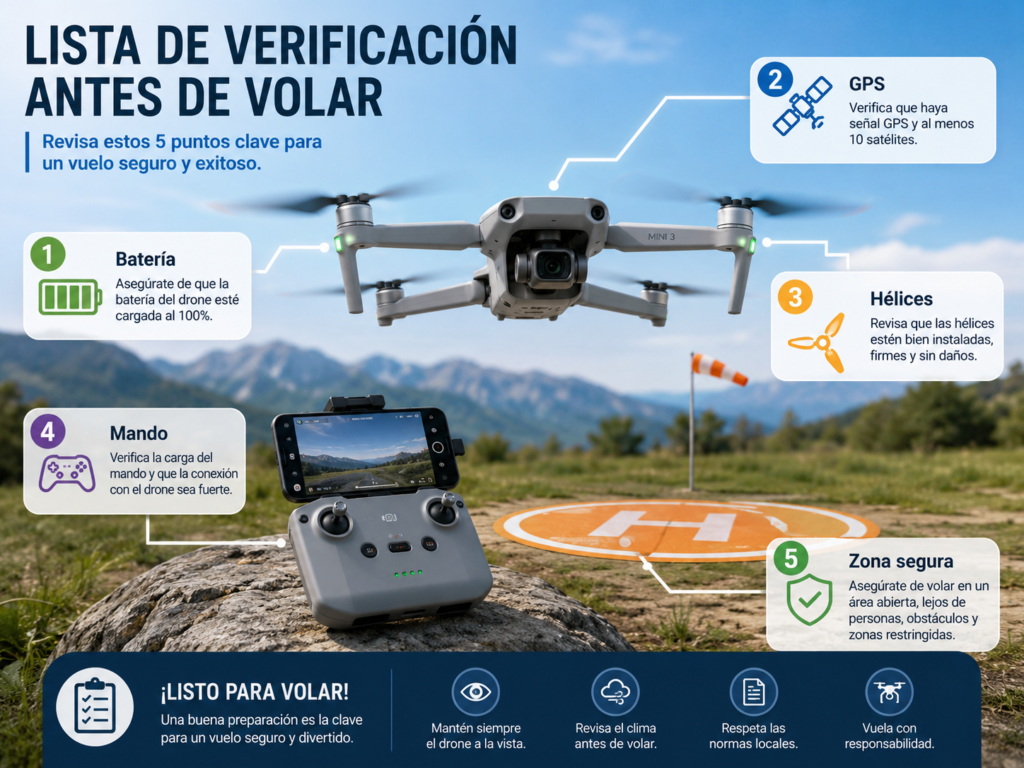
Cuando todo esté preparado, es momento de encender el equipo.
La secuencia habitual suele ser:
- Encender el mando.
- Encender el drone.
- Esperar conexión GPS.
- Comprobar indicadores.
- Verificar nivel de batería.
Muchos drones modernos muestran avisos automáticos si detectan algún problema.
No ignores estas advertencias.
Especialmente durante los primeros vuelos.
Cómo despegar un drone correctamente
El despegue es uno de los momentos que más nervios genera a los principiantes.
Sin embargo, suele ser bastante sencillo.
Lo recomendable es:
- Despegar lentamente.
- Ascender unos pocos metros.
- Mantener posición.
- Comprobar estabilidad.
Durante esta fase evita realizar movimientos bruscos.
El objetivo es familiarizarte con la respuesta de los controles.
Si es tu primer vuelo, te recomiendo ver este breve tutorial práctico. En pocos minutos aprenderás cómo despegar, aterrizar y realizar los movimientos básicos con seguridad.
Aprende los controles básicos
Para dominar el manejo básico de drones, debes practicar primero movimientos simples.
Comienza trabajando:
Ascenso y descenso
Controla la altura de forma progresiva.
Giro sobre su eje
Aprende cómo responde la aeronave cuando rota.
Avance y retroceso
Realiza movimientos suaves y controlados.
Desplazamiento lateral
Practica movimientos hacia la izquierda y la derecha.
La clave no está en volar rápido.
La clave está en desarrollar precisión y confianza.
Cómo aterrizar un drone correctamente
Si el despegue genera nervios, el aterrizaje suele ser el momento donde más errores cometen los principiantes.
La clave consiste en mantener la calma y realizar movimientos suaves.
Para aterrizar correctamente:
- Reduce la altura progresivamente.
- Mantén el drone estable.
- Busca una superficie despejada.
- Evita movimientos bruscos cerca del suelo.
- Desciende lentamente hasta que las hélices puedan detenerse con seguridad.
Muchos drones modernos incorporan funciones automáticas de aterrizaje.
Aun así, es recomendable practicar también el aterrizaje manual para ganar confianza.
Ejercicios para aprender a volar un drone más rápido
Una de las mejores formas de mejorar consiste en practicar ejercicios sencillos.
No intentes grabar vídeos espectaculares durante el primer día.
Primero domina los fundamentos.
Mantener posición
Intenta mantener el drone inmóvil durante varios segundos.
Este ejercicio ayuda a desarrollar sensibilidad sobre los controles.
Dibujar un cuadrado en el aire
Realiza movimientos:
- Adelante.
- Derecha.
- Atrás.
- Izquierda.
Manteniendo siempre la misma altura.
Es uno de los ejercicios clásicos para aprender cómo controlar un drone fácilmente.
Vuelo en círculos
Practica giros suaves manteniendo una trayectoria constante.
Esto mejora la coordinación entre orientación y movimiento.
Despegue y aterrizaje repetido
Realiza varios ciclos completos.
Es una de las formas más rápidas de ganar confianza.
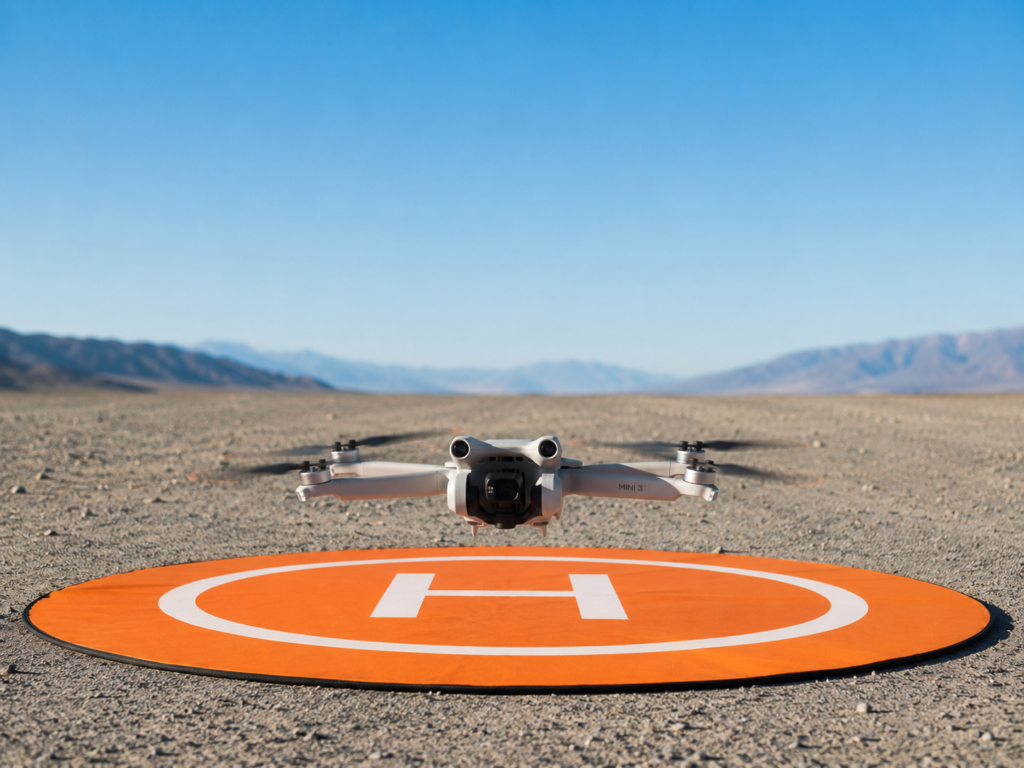
Cómo utilizar el GPS y el retorno al punto de origen
Los drones modernos incorporan sistemas extremadamente útiles para principiantes.
Uno de los más importantes es el GPS para drones.
Gracias a esta tecnología la aeronave puede:
- Mantener posición.
- Mejorar la estabilidad.
- Registrar el punto de despegue.
- Activar funciones inteligentes.
Otra función especialmente interesante es el retorno automático al punto de origen.
Si se pierde la señal o la batería alcanza niveles críticos, el drone puede regresar automáticamente al lugar donde inició el vuelo.
Esta característica ha evitado la pérdida de miles de drones en todo el mundo.
Por ello siempre es recomendable esperar a que el GPS tenga buena cobertura antes de despegar.
Errores que debes evitar durante tus primeros vuelos
Muchos pilotos principiantes cometen errores similares.
Conocerlos de antemano puede ayudarte a progresar mucho más rápido.
Volar demasiado lejos
Uno de los errores más habituales consiste en alejar el drone antes de dominar los controles básicos.
Durante las primeras sesiones es mejor mantener la aeronave cerca.
Ignorar el viento
Aunque parezca débil desde el suelo, a cierta altura puede ser considerable.
Esto afecta especialmente a pilotos sin experiencia.
Despegar sin señal GPS
Muchos usuarios tienen prisa por volar.
Sin embargo, esperar unos segundos adicionales puede marcar una gran diferencia en estabilidad y seguridad.
No practicar aterrizajes
Muchos principiantes practican únicamente maniobras de vuelo.
Sin embargo, los aterrizajes también requieren entrenamiento.
Volar sin revisar la normativa
Antes de cualquier operación conviene consultar:
Esto evita problemas legales y mejora la seguridad del vuelo.
Conclusión
Aprender cómo volar un drone por primera vez no es tan complicado como muchas personas imaginan.
Los drones actuales incorporan sistemas avanzados que ayudan a mantener la estabilidad y reducen considerablemente la dificultad del aprendizaje.
Sin embargo, la tecnología no sustituye a la práctica.
Elegir una zona adecuada, comprender los controles básicos, respetar la normativa y avanzar progresivamente son los factores que realmente marcarán la diferencia durante tus primeros vuelos.
Si dedicas tiempo a dominar las maniobras fundamentales, muy pronto podrás disfrutar de vuelos más largos, grabaciones más estables y una experiencia mucho más segura.
La paciencia durante los primeros días suele convertirse en la mejor inversión para cualquier piloto principiante.
Sigue aprendiendo sobre drones
Preguntas frecuentes sobre cómo volar un drone
No.
Los drones modernos incorporan tecnologías como GPS, estabilización automática y retorno al punto de origen, que facilitan enormemente el aprendizaje.
La mayoría de usuarios pueden realizar vuelos básicos con seguridad tras pocas sesiones de práctica.
Lo ideal es elegir:
Espacios abiertos.
Zonas despejadas.
Terrenos sin obstáculos.
Lugares alejados de grandes concentraciones de personas.
Cuanto más margen tengas para maniobrar, más sencillo será aprender.
Sí.
De hecho, es una de las mejores ayudas para principiantes.
El GPS para drones permite mantener la posición automáticamente y mejora notablemente la estabilidad durante el vuelo.
Durante las primeras sesiones no es necesario subir demasiado.
Lo recomendable es:
Despegar.
Ascender unos pocos metros.
Practicar movimientos básicos.
Mantener siempre el control visual del drone.
La confianza llegará progresivamente.
Si tu drone dispone de retorno automático al punto de origen, puedes activar esta función para que regrese automáticamente al lugar de despegue.
Por este motivo es importante comprobar siempre que el GPS esté correctamente conectado antes de iniciar el vuelo.
Sí.
Muchos pilotos experimentados recomiendan utilizar simuladores antes de realizar vuelos reales.
Esto permite aprender movimientos básicos y mejorar los reflejos sin riesgo de dañar el equipo.
Depende de cada persona.
Sin embargo, la mayoría de usuarios adquiere las bases del pilotaje de drones para principiantes tras varias sesiones cortas de práctica.
La clave es avanzar poco a poco y no intentar realizar maniobras complejas desde el primer día.
No.
Antes de despegar debes consultar las restricciones aplicables en la zona.
La plataforma ENAIRE Drones permite comprobar si el vuelo está permitido y conocer posibles limitaciones.
Uno de los errores más frecuentes consiste en intentar volar demasiado lejos demasiado pronto.
Durante las primeras prácticas es recomendable mantener el drone cerca y centrarse en dominar los movimientos básicos.
Los modelos con:
GPS.
Retorno automático.
Buena estabilidad.
Sistemas de asistencia.
suelen ser los más recomendables para quienes buscan cómo aprender a pilotar un drone de forma segura.