
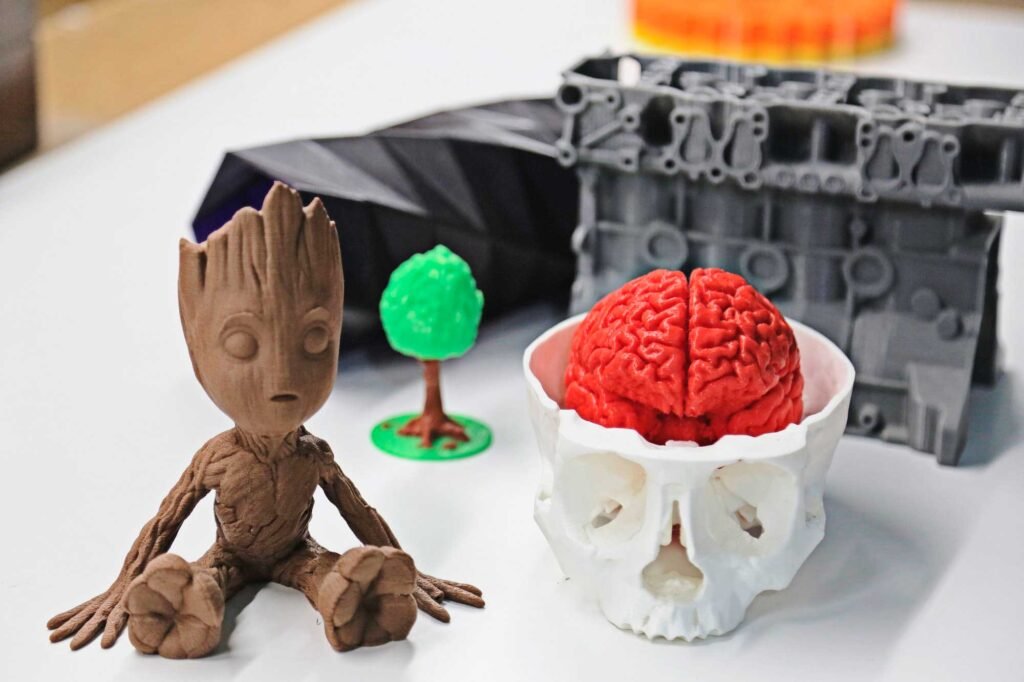
- Materiales para Impresión 3D
- ¿Qué son los materiales para impresión 3D?
- PLA (Ácido Poliláctico) – El mejor material para empezar en impresión 3D
- PETG – El equilibrio perfecto entre resistencia y facilidad de impresión
- ABS – El material clásico de la industria
- ASA – El mejor material para impresión 3D en exteriores
- TPU – El material flexible más utilizado en impresión 3D
- Nylon – Uno de los materiales más resistentes para impresión 3D
- Fibra de Carbono – Material avanzado para usuarios profesionales
- Materiales para impresoras 3D de resina
- Resina ABS Like
- Resina lavable al agua
- Resina flexible
- Resina dental y profesional
- Tabla comparativa de materiales para impresión 3D
- ¿Qué material de impresión 3D elegir según cada necesidad?
- Consejos para almacenar filamentos y resinas correctamente
- Errores comunes al elegir materiales para impresión 3D
- Futuro de los materiales para impresión 3D
- Resinas técnicas de nueva generación
- Conclusión
- Sigue aprendiendo sobre impresión 3D
- Preguntas frecuentes sobre materiales para impresión 3D
Materiales para Impresión 3D
La elección del material es uno de los factores más importantes dentro del mundo de la impresión 3D.
De hecho, una misma impresora puede ofrecer resultados completamente diferentes dependiendo del material utilizado.
Actualmente existen decenas de materiales para impresión 3D, cada uno diseñado para aplicaciones específicas.
Algunos destacan por su facilidad de uso, otros por su resistencia mecánica, su flexibilidad, su resistencia al calor o incluso por su capacidad para soportar condiciones extremas en entornos industriales.
Por este motivo, conocer las características de cada material resulta fundamental para obtener buenos resultados y aprovechar al máximo las posibilidades de una impresora 3D.
Si eres principiante probablemente hayas escuchado hablar de materiales como:
- PLA
- PETG
- ABS
- TPU
Sin embargo, el ecosistema actual va mucho más allá.
Hoy en día también existen materiales avanzados como:
- Nylon.
- ASA.
- Policarbonato.
- Fibra de carbono.
- Resinas técnicas.
- Resinas dentales.
- Materiales compuestos.
En esta guía completa descubrirás cuáles son los principales materiales para impresión 3D, sus ventajas, desventajas, aplicaciones y cuál deberías elegir según tus necesidades.
¿Qué son los materiales para impresión 3D?
Los materiales para impresión 3D son las materias primas utilizadas por las impresoras para fabricar objetos físicos capa a capa.
Dependiendo de la tecnología utilizada, estos materiales pueden presentarse en diferentes formatos.
Las impresoras 3D FDM utilizan filamentos termoplásticos enrollados en bobinas.
Las impresoras 3D de resina utilizan resinas líquidas fotosensibles que se solidifican mediante luz ultravioleta.
En entornos industriales también existen tecnologías que utilizan:
- Polvos metálicos.
- Polvos plásticos.
- Materiales cerámicos.
- Compuestos avanzados.
Cada material posee propiedades únicas que influyen directamente en:
- Resistencia.
- Flexibilidad.
- Durabilidad.
- Acabado superficial.
- Facilidad de impresión.
- Resistencia térmica.
Por ello, elegir correctamente el material es tan importante como elegir la propia impresora.
Tipos de materiales para impresión 3D
Podemos dividir los materiales de impresión 3D en dos grandes categorías:
Materiales para impresoras 3D de filamento (FDM)
Son los más populares y utilizados por usuarios domésticos, makers y pequeñas empresas.
Materiales para impresoras 3D de resina
Ofrecen niveles de detalle superiores y están especialmente orientados a miniaturas, joyería, odontología y aplicaciones profesionales.
A continuación analizaremos los materiales más importantes utilizados actualmente.
PLA (Ácido Poliláctico) – El mejor material para empezar en impresión 3D
El PLA (Polylactic Acid o Ácido Poliláctico) es, sin ninguna duda, el material más utilizado dentro del mundo de la impresión 3D.
Si acabas de comprar tu primera impresora o estás pensando en iniciarte en este apasionante hobby, lo más probable es que tu primera bobina sea de PLA.
Y no es casualidad.
La enorme popularidad de este material se debe a una combinación muy difícil de igualar:
- Facilidad de impresión.
- Bajo coste.
- Excelente acabado visual.
- Amplia disponibilidad.
- Gran variedad de colores y acabados.
Actualmente prácticamente todos los fabricantes de filamento producen múltiples variantes de PLA.
Además, es compatible con la inmensa mayoría de impresoras FDM del mercado.
Por ello suele ser la recomendación principal cuando alguien pregunta:
¿Cuál es el mejor material para impresión 3D si soy principiante?
La respuesta suele ser siempre la misma:
👉 PLA.
¿Qué es exactamente el PLA?
El PLA es un termoplástico derivado de recursos renovables como:
- Almidón de maíz.
- Caña de azúcar.
- Remolacha.
A diferencia de otros materiales derivados directamente del petróleo, el PLA posee una huella ambiental relativamente más favorable.
Aunque no debemos considerarlo completamente biodegradable en condiciones domésticas, sí representa una alternativa más sostenible frente a otros polímeros tradicionales.
Ventajas del PLA
Muy fácil de imprimir
Esta es probablemente su principal ventaja.
El PLA presenta muy pocos problemas de:
- Warping.
- Cracking.
- Contracción.
Por ello resulta perfecto para usuarios que están aprendiendo.
Excelente calidad superficial
Las impresiones realizadas con PLA suelen mostrar:
- Capas uniformes.
- Buen nivel de detalle.
- Acabados limpios.
Incluso con impresoras económicas.
Amplísima variedad de colores
Actualmente existen PLA de prácticamente cualquier color imaginable.
Además podemos encontrar variantes especiales:
- PLA seda.
- PLA mate.
- PLA madera.
- PLA mármol.
- PLA metalizado.
- PLA arcoíris.
- PLA brillante.
Precio económico
El PLA continúa siendo uno de los filamentos más baratos del mercado.
Por ello es ideal para:
- Aprender.
- Hacer pruebas.
- Fabricar piezas decorativas.
Desventajas del PLA
Menor resistencia térmica
El PLA comienza a deformarse a temperaturas relativamente bajas.
No suele recomendarse para piezas sometidas a:
- Sol directo.
- Interior de vehículos.
- Entornos industriales.
Menor resistencia mecánica
Aunque es suficientemente resistente para muchos usos, existen materiales superiores cuando necesitamos piezas funcionales exigentes.
¿Para qué sirve el PLA?
El PLA es ideal para:
- Decoración.
- Figuras.
- Prototipos visuales.
- Organización doméstica.
- Educación.
- Aprendizaje.
- Maquetas.
- Impresión 3D para principiantes.
Temperaturas recomendadas PLA
- Hotend: 190ºC – 220ºC
- Cama caliente: 0ºC – 60ºC
- Ventilación: Alta
Nuestra recomendación
Si estás empezando en la impresión 3D, compra PLA.
Ningún otro material ofrece una experiencia tan sencilla para aprender.
PETG – El equilibrio perfecto entre resistencia y facilidad de impresión
Si el PLA es el rey de los principiantes, el PETG es probablemente el material más equilibrado que existe actualmente dentro de la impresión 3D.
Muchos usuarios consideran que el PETG representa el punto intermedio perfecto entre:
- Facilidad de impresión.
- Resistencia mecánica.
- Resistencia térmica.
- Durabilidad.
Por ello se ha convertido en uno de los filamentos favoritos para fabricar piezas funcionales.
Cuando una persona comienza a dominar el PLA, normalmente el siguiente paso natural suele ser precisamente el PETG.
¿Qué es el PETG?
El PETG es una variante modificada del PET, el mismo material utilizado en numerosas botellas de plástico.
La incorporación de glicol mejora determinadas propiedades y facilita su uso en impresión 3D.
El resultado es un material:
- Resistente.
- Flexible.
- Duradero.
- Relativamente sencillo de imprimir.
Ventajas del PETG
Mayor resistencia mecánica
Comparado con PLA, el PETG soporta mejor:
- Golpes.
- Vibraciones.
- Esfuerzos mecánicos.
Mejor resistencia térmica
Tolera temperaturas significativamente más elevadas.
Esto lo convierte en una excelente opción para aplicaciones funcionales.
Resistencia química
El PETG presenta una buena resistencia frente a:
- Humedad.
- Productos químicos suaves.
- Condiciones ambientales adversas.
Excelente para piezas funcionales
Por ello es uno de los materiales más utilizados para:
- Soportes.
- Carcasas.
- Componentes mecánicos.
- Herramientas.
- Proyectos de robótica.
Desventajas del PETG
Más difícil de imprimir que PLA
Aunque sigue siendo relativamente sencillo, requiere algo más de experiencia.
Tendencia al stringing
Es habitual observar pequeños hilos de material si la configuración no está optimizada.
Acabado menos limpio
En determinadas impresiones el acabado puede resultar algo menos refinado que el PLA.
¿Para qué sirve el PETG?
El PETG es ideal para:
- Piezas funcionales.
- Proyectos mecánicos.
- Componentes expuestos al exterior.
- Robótica.
- Ingeniería.
- Carcasas electrónicas.
Temperaturas recomendadas PETG
- Hotend: 220ºC – 250ºC
- Cama caliente: 70ºC – 90ºC
- Ventilación: Media
Nuestra recomendación
Si ya dominas PLA y quieres fabricar piezas más resistentes, PETG es probablemente la mejor evolución natural.
ABS – El material clásico de la industria
Durante muchos años, el ABS (Acrilonitrilo Butadieno Estireno) fue el material dominante dentro de la impresión 3D.
Antes de la popularización del PETG y otros materiales modernos, gran parte de las impresoras profesionales trabajaban principalmente con ABS.
Y aunque actualmente existen alternativas más cómodas de utilizar, sigue siendo un material extremadamente relevante.
¿Qué es el ABS?
El ABS es un termoplástico de ingeniería utilizado desde hace décadas en multitud de sectores industriales.
De hecho, muchos productos cotidianos contienen ABS:
- Componentes de automóviles.
- Electrodomésticos.
- Juguetes.
- Herramientas.
- Carcasas electrónicas.
Su popularidad se debe a una combinación muy interesante de:
- Resistencia.
- Durabilidad.
- Resistencia térmica.
Ventajas del ABS
Excelente resistencia mecánica
El ABS soporta esfuerzos mecánicos importantes.
Buena resistencia térmica
Tolera temperaturas mucho más elevadas que PLA.
Material ampliamente probado
Décadas de uso industrial avalan su fiabilidad.
Ideal para piezas funcionales
Muy utilizado en:
- Automoción.
- Robótica.
- Ingeniería.
- Fabricación industrial.
Desventajas del ABS
Warping
Es uno de los materiales con mayor tendencia a deformarse durante la impresión.
Necesita cámara cerrada
Las impresoras abiertas suelen tener más dificultades para trabajar correctamente con ABS.
Emisión de olores
Durante la impresión genera vapores que requieren una buena ventilación.
¿Para qué sirve el ABS?
- Piezas mecánicas.
- Ingeniería.
- Automoción.
- Herramientas.
- Aplicaciones industriales.
Temperaturas recomendadas ABS
- Hotend: 230ºC – 260ºC
- Cama caliente: 90ºC – 110ºC
- Cámara cerrada: Muy recomendable
Nuestra recomendación
Actualmente muchos usuarios prefieren PETG o ASA para usos generales.
Sin embargo, el ABS continúa siendo una excelente opción cuando se necesita resistencia mecánica y térmica en aplicaciones exigentes.
ASA – El mejor material para impresión 3D en exteriores
El ASA (Acrilonitrilo Estireno Acrilato) es uno de los materiales más interesantes para usuarios que buscan fabricar piezas capaces de soportar condiciones ambientales adversas.
De hecho, muchos expertos consideran que el ASA es la evolución natural del ABS.
Ambos materiales comparten numerosas propiedades, pero el ASA incorpora una ventaja fundamental:
👉 Excelente resistencia a los rayos UV.
Esta característica lo convierte en una opción ideal para aplicaciones exteriores donde el PLA o incluso el ABS pueden deteriorarse con el paso del tiempo.
¿Qué es el ASA?
El ASA es un termoplástico técnico desarrollado para ofrecer:
- Alta resistencia mecánica.
- Resistencia química.
- Resistencia térmica.
- Estabilidad frente al sol y la intemperie.
Por ello es muy utilizado en sectores como:
- Automoción.
- Construcción.
- Ingeniería.
- Señalización exterior.
- Componentes industriales.
Ventajas del ASA
Excelente resistencia UV
A diferencia del ABS, el ASA no se degrada fácilmente por la exposición solar.
Muy resistente al exterior
Tolera perfectamente:
- Lluvia.
- Humedad.
- Cambios de temperatura.
- Radiación solar.
Buena resistencia mecánica
Sus propiedades estructurales lo convierten en un excelente material funcional.
Acabado profesional
Produce piezas con muy buena apariencia visual.
Desventajas del ASA
Requiere experiencia
No es un material especialmente orientado a principiantes.
Necesita impresoras adecuadas
Lo ideal es disponer de:
- Cámara cerrada.
- Cama caliente.
- Control térmico estable.
¿Para qué sirve el ASA?
- Carcasas exteriores.
- Componentes industriales.
- Señalización.
- Automoción.
- Piezas expuestas al exterior.
Temperaturas recomendadas ASA
- Hotend: 240ºC – 260ºC
- Cama caliente: 90ºC – 110ºC
- Cámara cerrada: Recomendada
Nuestra recomendación
Si necesitas fabricar piezas para exteriores, ASA es probablemente una de las mejores opciones disponibles actualmente.
TPU – El material flexible más utilizado en impresión 3D
El TPU (Poliuretano Termoplástico) es uno de los materiales más sorprendentes dentro del ecosistema de la impresión 3D.
A diferencia de PLA, PETG o ABS, el TPU es flexible.
Esto permite fabricar piezas capaces de doblarse, absorber impactos y recuperar su forma original.
Gracias a estas propiedades se ha convertido en un material extremadamente popular.
¿Qué es el TPU?
El TPU pertenece a la familia de los elastómeros termoplásticos.
Combina:
- Flexibilidad.
- Elasticidad.
- Resistencia al desgaste.
- Durabilidad.
Todo ello manteniendo una buena capacidad de impresión.
Ventajas del TPU
Gran flexibilidad
Permite fabricar piezas imposibles de producir con materiales rígidos.
Resistencia al desgaste
Excelente comportamiento frente a:
- Rozamiento.
- Golpes.
- Vibraciones.
Buena resistencia química
Adecuado para numerosas aplicaciones funcionales.
Durabilidad
Mantiene sus propiedades durante largos periodos de uso.
Desventajas del TPU
Más difícil de imprimir
La flexibilidad del material puede generar problemas en impresoras poco optimizadas.
Impresiones más lentas
Normalmente requiere velocidades reducidas.
¿Para qué sirve el TPU?
- Fundas para dispositivos.
- Juntas.
- Ruedas.
- Amortiguadores.
- Componentes flexibles.
- Robótica.
Temperaturas recomendadas TPU
- Hotend: 210ºC – 240ºC
- Cama caliente: 40ºC – 60ºC
- Velocidad: Baja
Nuestra recomendación
Si necesitas piezas flexibles, TPU es el material más popular y versátil disponible actualmente.
Nylon – Uno de los materiales más resistentes para impresión 3D
Cuando hablamos de materiales técnicos para impresión 3D, el Nylon ocupa una posición privilegiada.
Durante años ha sido uno de los materiales favoritos en aplicaciones de ingeniería gracias a su extraordinaria resistencia mecánica.
Muchos usuarios avanzados consideran el Nylon como el siguiente paso después de dominar:
- PLA.
- PETG.
- ABS.
¿Qué es el Nylon?
El Nylon es un polímero técnico ampliamente utilizado en aplicaciones industriales.
Destaca especialmente por:
- Resistencia.
- Flexibilidad controlada.
- Durabilidad.
- Resistencia al desgaste.
Ventajas del Nylon
Excelente resistencia mecánica
Ideal para piezas sometidas a esfuerzos importantes.
Muy resistente al desgaste
Perfecto para componentes móviles.
Buena resistencia química
Adecuado para numerosos entornos industriales.
Ligereza
Permite fabricar piezas robustas sin excesivo peso.
Desventajas del Nylon
Absorbe humedad
Debe almacenarse correctamente.
Impresión compleja
Requiere experiencia y equipos adecuados.
Temperaturas elevadas
Necesita impresoras capaces de trabajar a temperaturas altas.
¿Para qué sirve el Nylon?
- Engranajes.
- Componentes mecánicos.
- Robótica.
- Ingeniería.
- Herramientas.
Temperaturas recomendadas Nylon
- Hotend: 240ºC – 280ºC
- Cama caliente: 80ºC – 110ºC
- Cámara cerrada: Muy recomendable
Nuestra recomendación
Si buscas fabricar piezas funcionales de alto rendimiento, el Nylon es una de las mejores opciones disponibles.
Fibra de Carbono – Material avanzado para usuarios profesionales
La fibra de carbono para impresión 3D no es realmente un material puro.
Se trata de filamentos compuestos que combinan materiales base como:
- PLA.
- PETG.
- Nylon.
con fibras de carbono cortas.
El resultado son piezas:
- Más rígidas.
- Más resistentes.
- Más ligeras.
Por este motivo la fibra de carbono se ha convertido en uno de los materiales favoritos de sectores como:
- Ingeniería.
- Automoción.
- Aeronáutica.
- Robótica.
Ventajas de la fibra de carbono
Excelente rigidez
Las piezas presentan una gran estabilidad estructural.
Reducción de peso
Ideal para aplicaciones donde cada gramo cuenta.
Acabado profesional
Produce superficies con una apariencia muy atractiva.
Rendimiento técnico
Permite fabricar componentes funcionales avanzados.
Desventajas de la fibra de carbono
Material abrasivo
Puede desgastar boquillas convencionales.
Precio superior
Es considerablemente más caro que PLA o PETG.
Requiere impresoras avanzadas
No todas las máquinas son compatibles.
¿Para qué sirve la fibra de carbono?
- Drones.
- Robótica.
- Ingeniería.
- Automoción.
- Aeromodelismo.
Temperaturas recomendadas
Dependen del material base utilizado.
Nuestra recomendación
La fibra de carbono es una excelente opción para usuarios avanzados y profesionales que buscan el máximo rendimiento mecánico.
Materiales para impresoras 3D de resina
Aunque los filamentos dominan gran parte del mercado doméstico, las impresoras 3D de resina han experimentado un crecimiento espectacular durante los últimos años.
Su principal ventaja es la capacidad para producir piezas con un nivel de detalle extremadamente superior al de las impresoras FDM.
Por ello son especialmente populares en:
- Miniaturas.
- Modelismo.
- Joyería.
- Odontología.
- Figuras coleccionables.
- Prototipado de alta precisión.
Sin embargo, al igual que ocurre con los filamentos, existen diferentes tipos de resinas para impresión 3D, cada una diseñada para necesidades específicas.
Resina estándar
La resina estándar es el equivalente al PLA dentro del mundo de la impresión 3D de resina.
Es el material más utilizado por:
- Principiantes.
- Aficionados.
- Modelistas.
- Usuarios domésticos.
Su principal objetivo es ofrecer:
- Buena calidad visual.
- Facilidad de uso.
- Precio competitivo.
Ventajas
- Excelente nivel de detalle.
- Fácil de encontrar.
- Gran variedad de colores.
- Precio relativamente económico.
Desventajas
- Fragilidad superior a otros tipos de resina.
- Menor resistencia a impactos.
Aplicaciones
- Miniaturas.
- Figuras decorativas.
- Modelismo.
- Prototipos visuales.
Nuestra recomendación
La mejor opción para comenzar en el mundo de las impresoras 3D de resina.
Resina ABS Like
La resina ABS Like ha sido desarrollada para solucionar uno de los principales problemas de las resinas estándar:
su fragilidad.
Este material intenta replicar parte de las propiedades mecánicas del ABS utilizado en impresión FDM.
Ventajas
- Mayor resistencia mecánica.
- Menor fragilidad.
- Mejor comportamiento frente a impactos.
- Excelente nivel de detalle.
Desventajas
- Precio algo superior.
- Menor disponibilidad que la resina estándar.
Aplicaciones
- Piezas funcionales.
- Prototipos mecánicos.
- Componentes sometidos a esfuerzo.
Nuestra recomendación
Probablemente la mejor resina generalista para la mayoría de usuarios.
Resina lavable al agua
Las resinas water washable han ganado mucha popularidad gracias a la simplificación del postprocesado.
Tradicionalmente las piezas impresas debían limpiarse utilizando alcohol isopropílico.
Las resinas lavables al agua reducen esta necesidad.
Ventajas
- Limpieza más sencilla.
- Menor manipulación de productos químicos.
- Ideal para principiantes.
Desventajas
- Suelen ser algo más frágiles.
- El agua utilizada debe gestionarse correctamente.
Aplicaciones
- Uso doméstico.
- Aprendizaje.
- Miniaturas.
- Modelismo.
Nuestra recomendación
Una excelente opción para usuarios que buscan comodidad.
Resina flexible
Las resinas flexibles permiten fabricar piezas elásticas y deformables.
Representan el equivalente al TPU dentro del mundo FDM.
Ventajas
- Flexibilidad.
- Elasticidad.
- Resistencia a deformaciones.
Desventajas
- Más complejas de imprimir.
- Precio superior.
Aplicaciones
- Juntas.
- Fundas.
- Componentes flexibles.
- Elementos amortiguadores.
Nuestra recomendación
Perfectas para aplicaciones específicas donde la flexibilidad sea importante.
Resina dental y profesional
Las resinas dentales representan uno de los segmentos más avanzados de la impresión 3D profesional.
Han revolucionado sectores como:
- Odontología.
- Prótesis dentales.
- Ortodoncia.
- Aplicaciones médicas.
Ventajas
- Precisión extrema.
- Certificaciones específicas.
- Excelente estabilidad dimensional.
Desventajas
- Coste elevado.
- Uso profesional especializado.
Aplicaciones
- Modelos dentales.
- Guías quirúrgicas.
- Prótesis.
- Ortodoncia.
Nuestra recomendación
Orientadas exclusivamente a entornos profesionales.
Tabla comparativa de materiales para impresión 3D
| Material | Facilidad de impresión | Resistencia mecánica | Resistencia térmica | Flexibilidad | Nivel recomendado |
|---|---|---|---|---|---|
| PLA | ⭐⭐⭐⭐⭐ | ⭐⭐⭐ | ⭐⭐ | ⭐ | Principiante |
| PETG | ⭐⭐⭐⭐ | ⭐⭐⭐⭐ | ⭐⭐⭐ | ⭐⭐ | Intermedio |
| ABS | ⭐⭐⭐ | ⭐⭐⭐⭐ | ⭐⭐⭐⭐ | ⭐⭐ | Intermedio |
| ASA | ⭐⭐⭐ | ⭐⭐⭐⭐ | ⭐⭐⭐⭐ | ⭐⭐ | Intermedio/Avanzado |
| TPU | ⭐⭐ | ⭐⭐⭐ | ⭐⭐⭐ | ⭐⭐⭐⭐⭐ | Intermedio |
| Nylon | ⭐⭐ | ⭐⭐⭐⭐⭐ | ⭐⭐⭐⭐ | ⭐⭐⭐ | Avanzado |
| Fibra de Carbono | ⭐⭐ | ⭐⭐⭐⭐⭐ | ⭐⭐⭐⭐ | ⭐⭐ | Avanzado |
| Resina Estándar | ⭐⭐⭐⭐ | ⭐⭐ | ⭐⭐ | ⭐ | Principiante |
| Resina ABS Like | ⭐⭐⭐⭐ | ⭐⭐⭐⭐ | ⭐⭐⭐ | ⭐ | Intermedio |
| Resina Flexible | ⭐⭐⭐ | ⭐⭐ | ⭐⭐ | ⭐⭐⭐⭐⭐ | Intermedio |
| Resina Dental | ⭐⭐⭐ | ⭐⭐⭐⭐ | ⭐⭐⭐⭐ | ⭐ | Profesional |
¿Qué material de impresión 3D elegir según cada necesidad?
Elegir correctamente el material es tan importante como elegir la propia impresora.
Estas son nuestras recomendaciones.
Mejor material para principiantes
🥇 PLA
Fácil de imprimir, económico y compatible con prácticamente cualquier impresora FDM.
Mejor material calidad-precio
🥇 PETG
Combina resistencia, facilidad de uso y durabilidad.
Mejor material para exteriores
🥇 ASA
Excelente comportamiento frente a rayos UV y condiciones climáticas adversas.
Mejor material flexible
🥇 TPU
La referencia actual para piezas elásticas.
Mejor material para ingeniería
🥇 Nylon
Gran resistencia mecánica y excelente rendimiento técnico.
Mejor material profesional
🥇 Fibra de Carbono
Ideal para aplicaciones avanzadas donde se requiere máxima rigidez y ligereza.
Mejor resina para uso general
🥇 Resina ABS Like
Excelente equilibrio entre resistencia y detalle.
Mejor resina para principiantes
🥇 Resina estándar
La forma más sencilla de iniciarse en la impresión 3D de resina.
Consejos para almacenar filamentos y resinas correctamente
Uno de los errores más frecuentes en impresión 3D es almacenar incorrectamente los materiales.
La humedad puede afectar seriamente la calidad de impresión.
Por ello recomendamos:
Para filamentos
- Guardarlos en bolsas herméticas.
- Utilizar sílice antihumedad.
- Evitar exposición solar directa.
- Mantener temperatura estable.
Especialmente importante para:
- Nylon.
- TPU.
- PETG.
Para resinas
- Mantener los envases cerrados.
- Evitar la exposición a la luz UV.
- Conservar en lugares frescos y secos.
- Agitar antes de utilizar.
Un correcto almacenamiento puede prolongar enormemente la vida útil de los materiales.
Errores comunes al elegir materiales para impresión 3D
Elegir el material adecuado puede marcar la diferencia entre una impresión exitosa y una auténtica pesadilla llena de fallos, deformaciones y piezas inutilizables.
De hecho, muchos problemas que los usuarios atribuyen a la impresora tienen su origen en una mala elección del material.
Por ello, antes de comprar una bobina o una botella de resina, conviene conocer algunos de los errores más frecuentes.
Elegir PLA para aplicaciones sometidas a calor
El PLA es un material fantástico para principiantes, pero presenta una limitación importante:
Su baja resistencia térmica.
Por este motivo no suele ser recomendable para:
- Interior de vehículos.
- Piezas expuestas al sol.
- Componentes cercanos a fuentes de calor.
En estos casos materiales como:
- PETG.
- ASA.
- ABS.
suelen ofrecer mejores resultados.
Utilizar ABS sin impresora adecuada
Muchos usuarios compran ABS pensando que es la mejor opción para piezas resistentes.
Sin embargo, olvidan que este material suele requerir:
- Cámara cerrada.
- Temperaturas estables.
- Buena ventilación.
Si tu impresora es básica, probablemente PETG sea una alternativa mucho más sencilla.
Ignorar la humedad del filamento
La humedad es uno de los enemigos más importantes de la impresión 3D.
Filamentos como:
- Nylon.
- TPU.
- PETG.
absorben agua con relativa facilidad.
Cuando esto ocurre pueden aparecer:
- Burbujas.
- Hilos.
- Mala adhesión.
- Pérdida de calidad superficial.
Comprar materiales avanzados demasiado pronto
Muchos principiantes sienten curiosidad por materiales como:
- Nylon.
- Fibra de carbono.
- Policarbonato.
Sin embargo, suelen requerir más experiencia y equipos preparados para trabajar a temperaturas elevadas.
Nuestra recomendación siempre es:
👉 Empezar con PLA.
👉 Pasar después a PETG.
👉 Explorar materiales técnicos más adelante.
Elegir resina estándar para piezas funcionales
Las resinas estándar ofrecen una calidad visual excelente.
Sin embargo, no son la mejor opción para componentes sometidos a esfuerzos mecánicos.
En esos casos suelen funcionar mejor:
- Resinas ABS Like.
- Resinas técnicas.
- Resinas reforzadas.
Futuro de los materiales para impresión 3D
La evolución de los materiales está siendo tan importante como la evolución de las propias impresoras.
Cada año aparecen nuevos desarrollos que permiten fabricar piezas más resistentes, ligeras y sostenibles.
Algunas de las tendencias más interesantes son las siguientes.
Materiales más sostenibles
La preocupación medioambiental está impulsando el desarrollo de materiales:
- Reciclados.
- Biobasados.
- Más sostenibles.
Cada vez encontramos más filamentos fabricados a partir de recursos renovables.
Materiales compuestos avanzados
La combinación de polímeros con:
- Fibra de carbono.
- Fibra de vidrio.
- Kevlar.
permite obtener propiedades mecánicas cada vez más impresionantes.
Materiales industriales accesibles
Tecnologías que antes estaban reservadas a grandes empresas comienzan a llegar al mercado doméstico.
Esto permite a pequeños talleres y makers trabajar con materiales cada vez más avanzados.
Resinas técnicas de nueva generación
Las nuevas resinas están mejorando notablemente aspectos como:
- Resistencia.
- Elasticidad.
- Durabilidad.
- Seguridad.
Lo que amplía enormemente sus aplicaciones profesionales.
Impresión multimaterial
Cada vez más impresoras permiten combinar diferentes materiales en una misma pieza.
Esta tendencia será una de las grandes protagonistas durante los próximos años.
Conclusión
Los materiales para impresión 3D son uno de los pilares fundamentales de cualquier proyecto de fabricación aditiva.
Elegir correctamente el material adecuado puede mejorar enormemente la calidad de impresión, la resistencia de las piezas y la experiencia general de uso.
Si estás comenzando, nuestra recomendación es apostar por el PLA, ya que ofrece la curva de aprendizaje más sencilla.
Cuando ganes experiencia podrás explorar materiales más avanzados como:
- PETG.
- ABS.
- ASA.
- TPU.
- Nylon.
- Fibra de carbono.
Por otro lado, si utilizas impresoras de resina, la elección correcta entre resina estándar, ABS Like o resinas técnicas será clave para obtener los resultados deseados.
Lo más importante es entender que no existe un único material perfecto.
Cada proyecto tiene necesidades diferentes.
Y precisamente ahí reside una de las mayores fortalezas de la impresión 3D moderna: la enorme variedad de materiales disponibles para fabricar prácticamente cualquier tipo de pieza.
Sigue aprendiendo sobre impresión 3D
Te recomendamos visitar nuestras guías relacionadas:
👉 Todo lo que necesitas saber sobre impresión 3D
👉 Impresoras 3D para principiantes
👉 Mejores impresoras 3D profesionales
👉 PLA vs ABS vs PETG
👉 Software para impresión 3D
👉 Cómo calibrar una impresora 3D
Preguntas frecuentes sobre materiales para impresión 3D
Depende del uso previsto.
Para la mayoría de usuarios, el PLA sigue siendo la mejor opción para comenzar.
Dependerá de la tecnología utilizada.
Las impresoras FDM utilizan filamentos y las impresoras SLA/MSLA utilizan resinas fotosensibles.
Entre los materiales más populares destacan:
Nylon.
Fibra de carbono.
Policarbonato.
El PLA es más fácil de imprimir.
El PETG ofrece mayor resistencia mecánica y térmica.
El ASA es actualmente una de las mejores opciones para aplicaciones exteriores.
En la mayoría de casos las resinas ofrecen mejores resultados que los filamentos.
PETG, ASA, Nylon o fibra de carbono suelen ser las opciones más recomendables.
Resinas fotosensibles que se endurecen mediante luz ultravioleta.
Es un material de origen renovable, aunque su biodegradación depende de condiciones específicas.
El PLA continúa siendo el filamento más sencillo para usuarios principiantes.
ASA
Nylon y fibra de carbono.
Depende del tipo de resina.
Las resinas estándar suelen ser más frágiles que muchos filamentos técnicos.
En recipientes herméticos junto con bolsas antihumedad.
Sí, especialmente cuando se buscan propiedades específicas o aplicaciones profesionales.