
- Drones FPV
- Qué significa FPV en drones
- Qué es un drone FPV
- Por qué los drones FPV son diferentes
- Cómo funciona un sistema FPV
- Diferencias entre un drone FPV y un drone tradicional
- Tipos de drones FPV
- FPV analógico vs FPV digital
- Ventajas de los drones FPV
- Desventajas de los drones FPV
- Qué necesitas para empezar en FPV
- Drones FPV para principiantes
- Sigue aprendiendo sobre drones
- Preguntas frecuentes sobre drones FPV
Drones FPV
Los drones FPV han revolucionado la forma de pilotar aeronaves no tripuladas.
Mientras que los drones tradicionales suelen volarse observándolos desde el exterior o utilizando la pantalla de un móvil, los sistemas FPV permiten experimentar el vuelo desde una perspectiva completamente diferente.
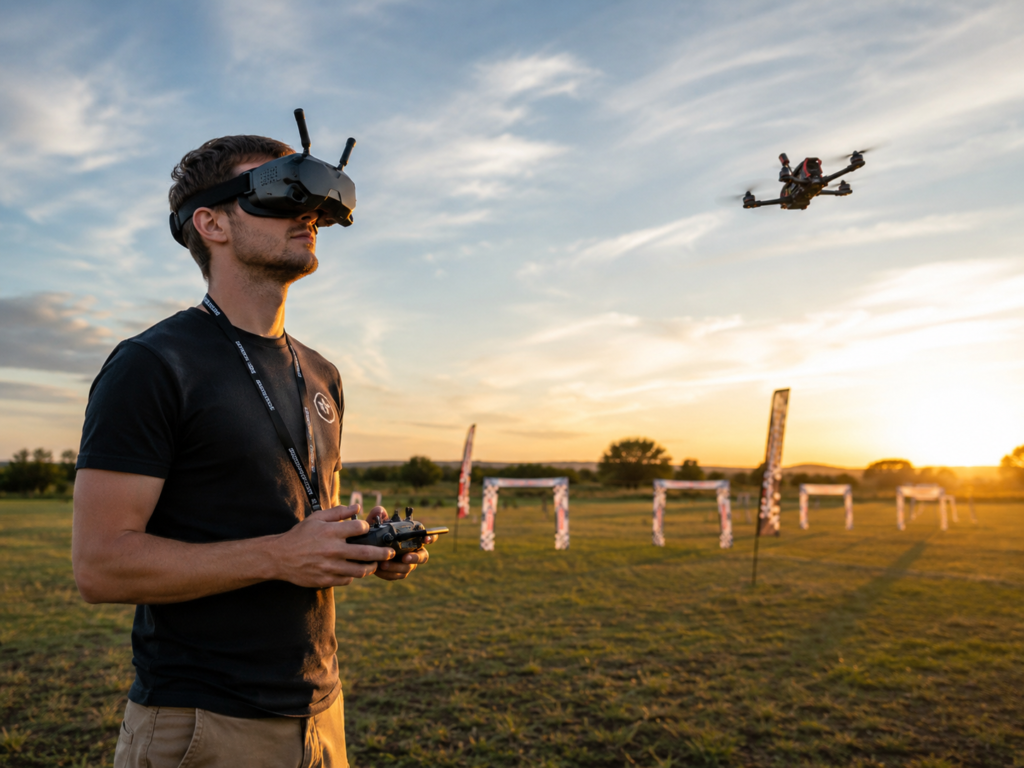
Las siglas FPV (First Person View) significan literalmente “vista en primera persona”.
Gracias a esta tecnología, el piloto puede ver en tiempo real exactamente lo que capta la cámara instalada en el drone, creando una experiencia inmersiva que recuerda a estar dentro de la propia aeronave.
Esta modalidad ha ganado una enorme popularidad durante los últimos años debido a su capacidad para ofrecer:
- Mayor sensación de velocidad.
- Control más preciso.
- Grabaciones espectaculares.
- Experiencias de vuelo únicas.
Por este motivo cada vez más personas buscan información sobre qué es un drone FPV, cómo funcionan los drones FPV y qué necesito para empezar en el vuelo FPV.
En esta guía descubrirás todo lo que necesitas saber para comprender esta tecnología y entender por qué se ha convertido en una de las categorías más emocionantes del sector.
Qué significa FPV en drones
Las siglas FPV provienen del término inglés First Person View.
Este sistema permite que el piloto reciba en tiempo real la imagen capturada por la cámara instalada en el drone.
En lugar de observar la aeronave desde el exterior, la sensación es similar a ocupar el asiento de un piloto dentro de una cabina.
Por esta razón muchas personas describen el vuelo FPV como una experiencia completamente diferente a la que ofrecen los drones convencionales.
La inmersión es uno de sus mayores atractivos.
Qué es un drone FPV
Un drone FPV es una aeronave equipada con un sistema de transmisión de vídeo en tiempo real.
Este sistema permite enviar la imagen capturada por la cámara directamente a unas gafas especiales o a una pantalla compatible.
Gracias a ello el piloto puede controlar el drone utilizando la perspectiva de la propia aeronave.
A diferencia de muchos drones tradicionales, los modelos FPV están diseñados para priorizar:
- Velocidad.
- Agilidad.
- Maniobrabilidad.
- Sensación de inmersión.
Por ello son especialmente populares en modalidades como:
- Freestyle FPV.
- Carreras FPV.
- Grabaciones cinematográficas dinámicas.
- Vuelo recreativo avanzado.
Actualmente encontramos desde drones FPV para principiantes hasta modelos profesionales utilizados en producciones audiovisuales de alto nivel.
Por qué los drones FPV son diferentes
La principal diferencia entre un drone FPV y un drone convencional no está únicamente en la cámara.
La filosofía de vuelo también cambia completamente.
Mientras que un drone tradicional suele incorporar numerosas ayudas automáticas para mantener la estabilidad, muchos sistemas FPV permiten un control mucho más directo sobre la aeronave.
Esto se traduce en:
- Mayor libertad de movimiento.
- Maniobras más agresivas.
- Vuelo más dinámico.
- Sensación de control total.
Precisamente por esta razón muchos pilotos consideran el FPV una evolución natural una vez dominados los conceptos básicos del pilotaje tradicional.
Cómo funciona un sistema FPV
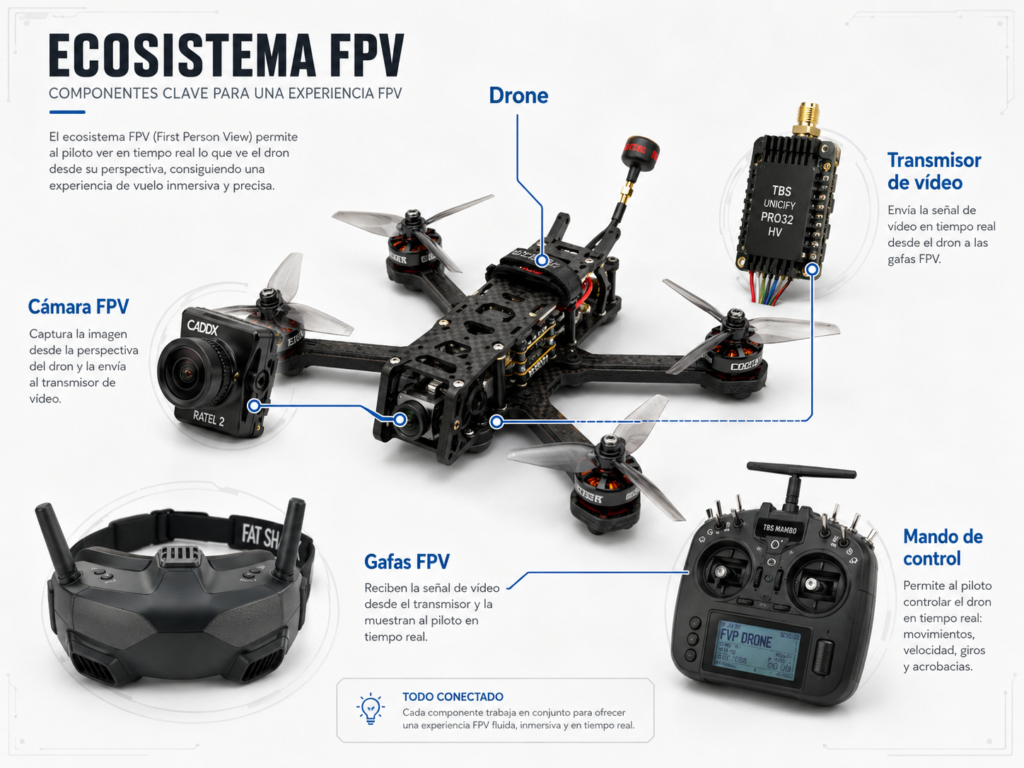
Aunque pueda parecer complejo, el funcionamiento básico de un sistema FPV es relativamente sencillo.
Todos los componentes trabajan conjuntamente para transmitir la imagen desde el drone hasta el piloto con la menor latencia posible.
Los elementos principales son:
Cámara FPV
La cámara captura continuamente la imagen durante el vuelo.
Su objetivo principal es proporcionar una visión clara y rápida del entorno.
Transmisor de vídeo
El transmisor envía la señal capturada por la cámara hacia el receptor del piloto.
La calidad de esta transmisión es fundamental para garantizar una experiencia fluida.
Gafas FPV
Las gafas FPV para drones reciben la señal de vídeo y muestran la imagen en tiempo real.
Son el componente responsable de la sensación inmersiva característica de esta modalidad.
Mando o emisora
Permite controlar todos los movimientos del drone.
La precisión de la emisora influye directamente en la experiencia de vuelo.
Receptor
Recibe la señal enviada por el drone y la muestra en las gafas o monitor compatible.
La combinación de todos estos elementos permite crear una experiencia de vuelo extremadamente envolvente.
Diferencias entre un drone FPV y un drone tradicional
Una de las dudas más habituales entre quienes descubren esta modalidad es conocer la diferencia entre un drone FPV y un drone tradicional.
Aunque ambos comparten elementos como motores, hélices, baterías y sistemas de control, la experiencia de vuelo es completamente distinta.
Los drones convencionales suelen estar diseñados para:
- Fotografía aérea.
- Vídeo estable.
- Facilidad de uso.
- Vuelo asistido.
Por el contrario, los drones FPV priorizan:
- Inmersión.
- Velocidad.
- Agilidad.
- Control manual.
- Maniobras avanzadas.
Además, muchos pilotos FPV utilizan el denominado modo Acro, que elimina gran parte de las ayudas automáticas y permite controlar directamente la inclinación y orientación de la aeronave.
Esto ofrece una libertad enorme, pero también exige más práctica.
| Característica | Drone Tradicional | Drone FPV |
|---|---|---|
| Experiencia de vuelo | Externa | Inmersiva |
| Velocidad | Media | Muy alta |
| Facilidad de aprendizaje | Alta | Media |
| Grabación estable | Excelente | Variable |
| Maniobras acrobáticas | Limitadas | Muy avanzadas |
| Uso principal | Fotografía y vídeo | Freestyle, carreras y cine FPV |
Por este motivo, quienes buscan vuelo inmersivo con drones suelen acabar interesándose por la tecnología FPV.
Tipos de drones FPV
Dentro del mundo FPV también existen diferentes categorías.
Comprenderlas es importante para elegir correctamente y evitar comprar un equipo que no se adapte a nuestros objetivos.
Drones FPV Freestyle
Los drones Freestyle FPV están diseñados para realizar maniobras acrobáticas y vuelos creativos.
Son muy populares entre pilotos que disfrutan realizando:
- Giros.
- Inversiones.
- Vuelo técnico.
- Grabaciones dinámicas.
La prioridad aquí no es la velocidad máxima, sino la libertad de movimientos.
Drones FPV de carreras
Los drones FPV de carreras están optimizados para alcanzar velocidades muy elevadas.
Su objetivo principal es competir en circuitos donde los pilotos deben atravesar obstáculos y puertas a gran velocidad.
Se caracterizan por:
- Chasis ligeros.
- Motores muy potentes.
- Respuesta inmediata.
- Baja latencia.
Más adelante profundizaremos en esta modalidad dentro del artículo específico sobre Drones de carreras.
Drones FPV cinematográficos
También conocidos como Cinewhoop o drones FPV cinematográficos.
Se utilizan para grabaciones profesionales donde se busca combinar:
- Fluidez.
- Proximidad.
- Movimientos espectaculares.
Actualmente muchas productoras utilizan este tipo de drones para grabar:
- Eventos.
- Deportes.
- Publicidad.
- Producciones audiovisuales.
FPV analógico vs FPV digital
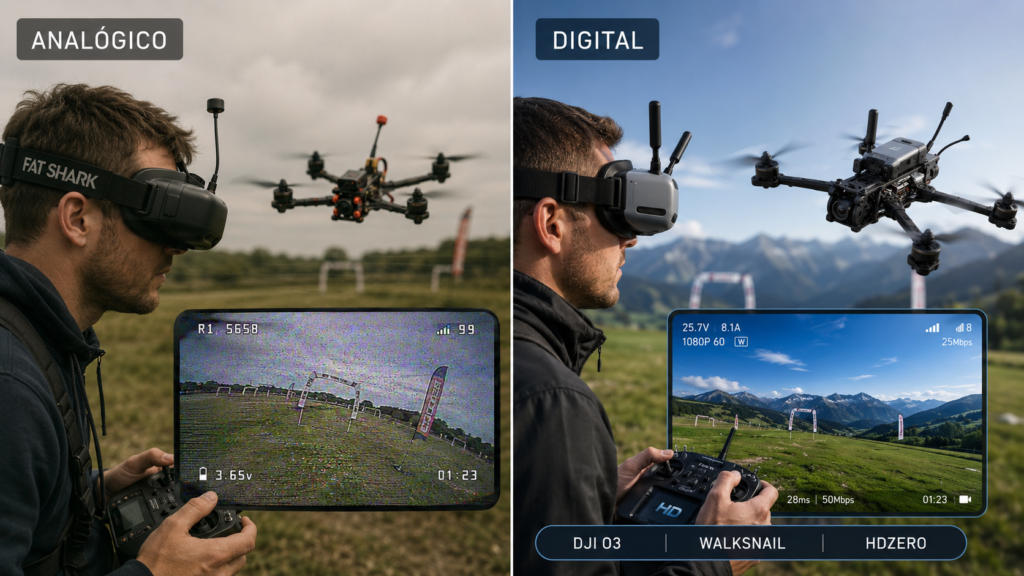
Otro concepto fundamental dentro del sector es la diferencia entre sistemas analógicos y digitales.
FPV analógico
Durante años fue la opción dominante.
Sus ventajas principales son:
- Menor coste.
- Amplia compatibilidad.
- Baja latencia.
Sin embargo, la calidad de imagen suele ser inferior.
FPV digital
Los sistemas digitales han ganado enorme popularidad gracias a su calidad visual.
Tecnologías como:
- DJI O3.
- Walksnail.
- HDZero.
permiten disfrutar de una experiencia mucho más inmersiva.
Entre sus ventajas encontramos:
- Imagen HD.
- Mayor claridad.
- Mejor experiencia visual.
- Grabación integrada en algunos sistemas.
Por este motivo muchos pilotos que buscan qué drone FPV comprar para empezar se interesan por soluciones digitales modernas.
Ventajas de los drones FPV
El crecimiento del FPV no es casualidad.
Existen numerosas razones que explican su popularidad.
Experiencia inmersiva
La posibilidad de ver exactamente lo que ve el drone transforma completamente el vuelo.
Es la principal razón por la que muchos usuarios se enamoran del FPV.
Grabaciones espectaculares
Los drones FPV permiten capturar movimientos imposibles para muchos drones convencionales.
Por ello se utilizan cada vez más en cine y publicidad.
Mayor sensación de control
Muchos pilotos destacan que el FPV transmite una conexión más directa con la aeronave.
La respuesta resulta más natural y precisa.
Comunidad muy activa
El mundo FPV cuenta con una enorme comunidad internacional donde es posible aprender, compartir configuraciones y mejorar rápidamente.
Desventajas de los drones FPV
Aunque son apasionantes, también presentan algunos desafíos.
Curva de aprendizaje superior
Aprender cómo volar un drone FPV suele requerir más práctica que pilotar un drone tradicional.
Mayor riesgo de accidentes
Las velocidades más elevadas y el control manual aumentan el riesgo durante las primeras etapas de aprendizaje.
Inversión inicial
Además del drone, normalmente necesitarás:
- Gafas FPV.
- Emisora.
- Baterías adicionales.
- Cargador.
Esto puede incrementar el coste total del equipo.
Qué necesitas para empezar en FPV
Una de las búsquedas más frecuentes es:
¿Qué necesito para volar FPV?
La respuesta básica incluye:
Drone FPV
Puede ser un modelo para principiantes o un equipo más avanzado.
Gafas FPV
Son imprescindibles para disfrutar de la experiencia inmersiva.
Emisora de radio
Permite controlar la aeronave durante el vuelo.
Baterías
Es recomendable disponer de varias para aumentar el tiempo de práctica.
Simulador FPV
Antes de realizar el primer vuelo real, muchos expertos recomiendan practicar mediante simuladores.
Esto ayuda enormemente a desarrollar reflejos y reducir accidentes.
Drones FPV para principiantes
Si estás empezando, lo más recomendable es evitar configuraciones excesivamente complejas.
Los mejores drones FPV para principiantes suelen destacar por:
- Configuración sencilla.
- Sistemas digitales modernos.
- Facilidad de mantenimiento.
- Buena disponibilidad de repuestos.
Lo importante no es comprar el equipo más potente.
Lo importante es disponer de una plataforma que facilite el aprendizaje y permita ganar experiencia progresivamente.
Con una buena base, el salto a configuraciones más avanzadas llegará de forma natural.
Conclusión
Los drones FPV representan una de las experiencias más emocionantes que puede ofrecer el mundo de los drones.
Gracias a la tecnología First Person View, los pilotos pueden disfrutar de una sensación de inmersión única, observando el vuelo desde la perspectiva de la propia aeronave.
Aunque requieren más práctica y conocimientos que los drones convencionales, también ofrecen un nivel de control, velocidad y espectacularidad difícil de igualar.
Además, la evolución de sistemas como DJI O3, Walksnail o HDZero ha mejorado enormemente la calidad visual disponible para los pilotos actuales.
Tanto si tu objetivo es realizar vuelos recreativos, aprender freestyle, competir en carreras o capturar imágenes cinematográficas, el FPV abre la puerta a una forma completamente diferente de disfrutar esta tecnología.
Y lo mejor de todo es que nunca ha sido tan accesible para quienes quieren empezar.
Sigue aprendiendo sobre drones
Preguntas frecuentes sobre drones FPV
Las siglas FPV provienen de First Person View, que significa “vista en primera persona”.
Este sistema permite que el piloto vea en tiempo real la imagen capturada por la cámara del drone, generando una experiencia de vuelo mucho más inmersiva.
Un drone FPV es una aeronave equipada con un sistema de transmisión de vídeo en directo que permite pilotar utilizando la perspectiva de la propia cámara instalada en el drone.
A diferencia de los drones tradicionales, la experiencia se centra en la inmersión y el control manual.
El sistema FPV funciona mediante varios componentes que trabajan conjuntamente:
Cámara FPV.
Transmisor de vídeo.
Gafas FPV.
Receptor.
Emisora de control.
La cámara envía la imagen al transmisor, que la transmite a las gafas del piloto prácticamente en tiempo real.
La principal diferencia es la experiencia de vuelo.
Mientras que un drone tradicional suele pilotarse observándolo desde el exterior o utilizando una pantalla, un drone FPV permite ver exactamente lo que ve la aeronave.
Además, suelen ofrecer:
Más velocidad.
Mayor maniobrabilidad.
Vuelo más dinámico.
Mayor sensación de inmersión.
La curva de aprendizaje suele ser superior a la de los drones convencionales.
Especialmente cuando se utiliza el modo Acro, donde gran parte de las ayudas automáticas desaparecen.
Por este motivo, muchos pilotos comienzan practicando en simuladores antes de realizar vuelos reales.
Sí.
Las gafas FPV para drones son uno de los elementos fundamentales del sistema.
Permiten recibir la imagen transmitida por la cámara y disfrutar de la experiencia inmersiva característica de esta modalidad.
Depende de las necesidades de cada piloto.
El FPV analógico suele ofrecer:
Menor coste.
Amplia compatibilidad.
Baja latencia.
Por otro lado, el FPV digital destaca por:
Mayor calidad de imagen.
Experiencia visual superior.
Mejor definición.
Actualmente sistemas como DJI O3, Walksnail o HDZero se encuentran entre los más populares.
Para iniciarte en el vuelo FPV normalmente necesitarás:
Drone FPV.
Gafas FPV.
Emisora de radio.
Baterías.
Cargador.
Simulador de vuelo (muy recomendable).
Contar con un simulador antes de realizar vuelos reales suele acelerar enormemente el aprendizaje.
Sí.
De hecho, muchos pilotos utilizan drones FPV cinematográficos para grabar tomas dinámicas que serían imposibles de conseguir con drones convencionales.
Actualmente son muy utilizados en:
Cine.
Publicidad.
Eventos.
Deportes.
Creación de contenido.
No existe una única respuesta válida.
Lo más recomendable es buscar un equipo que combine:
Facilidad de configuración.
Buena disponibilidad de repuestos.
Sistemas digitales modernos.
Comunidad activa.
Lo importante es aprender correctamente y progresar de forma gradual.