
- Guía para Volar Legalmente: Normativa de Drones en España
- Quién regula los drones en España
- Categorías de vuelo según la normativa europea
- Registro como operador de drones
- Certificados para volar drones
- Dónde puedo volar un drone legalmente
- Normativa para drones con cámara
- Errores que pueden acabar en sanción
- Recursos oficiales recomendados
- Sigue aprendiendo sobre drones
- Preguntas frecuentes sobre la normativa de drones en España
Guía para Volar Legalmente: Normativa de Drones en España
Comprar un drone es cada vez más sencillo.
Volarlo legalmente ya es otra historia.
Muchos usuarios adquieren su primer dispositivo pensando que basta con cargar la batería y despegar, pero la realidad es que existe una normativa para drones en España que regula quién puede volar, dónde puede hacerlo y qué requisitos debe cumplir.
Actualmente la legislación española está integrada dentro de la normativa europea de drones, por lo que gran parte de las reglas son comunes en todos los países de la Unión Europea.
Esto afecta tanto a quienes utilizan drones de forma recreativa como a quienes realizan actividades profesionales.
Por ello, antes de despegar, conviene conocer aspectos tan importantes como:
- Registro de operador.
- Certificados obligatorios.
- Categorías de vuelo.
- Zonas restringidas.
- Uso de drones con cámara.
- Limitaciones de altura.
- Normativa europea vigente.
En esta guía encontrarás todo lo que necesitas saber para cumplir la normativa drones España y volar de forma legal y segura.
Quién regula los drones en España
La autoridad responsable de supervisar el uso de drones en España es AESA (Agencia Estatal de Seguridad Aérea).
Este organismo publica los requisitos aplicables a operadores y pilotos, además de gestionar:
- Registros.
- Certificados.
- Formación.
- Operaciones especiales.
👉 Si quieres consultar información oficial actualizada, puedes revisar la sección de drones de AESA:
https://www.seguridadaerea.gob.es
Además, España aplica las directrices establecidas por EASA (European Union Aviation Safety Agency).
Esto significa que gran parte de la normativa europea de drones es común para todos los países miembros.
👉 Información oficial EASA:
Categorías de vuelo según la normativa europea
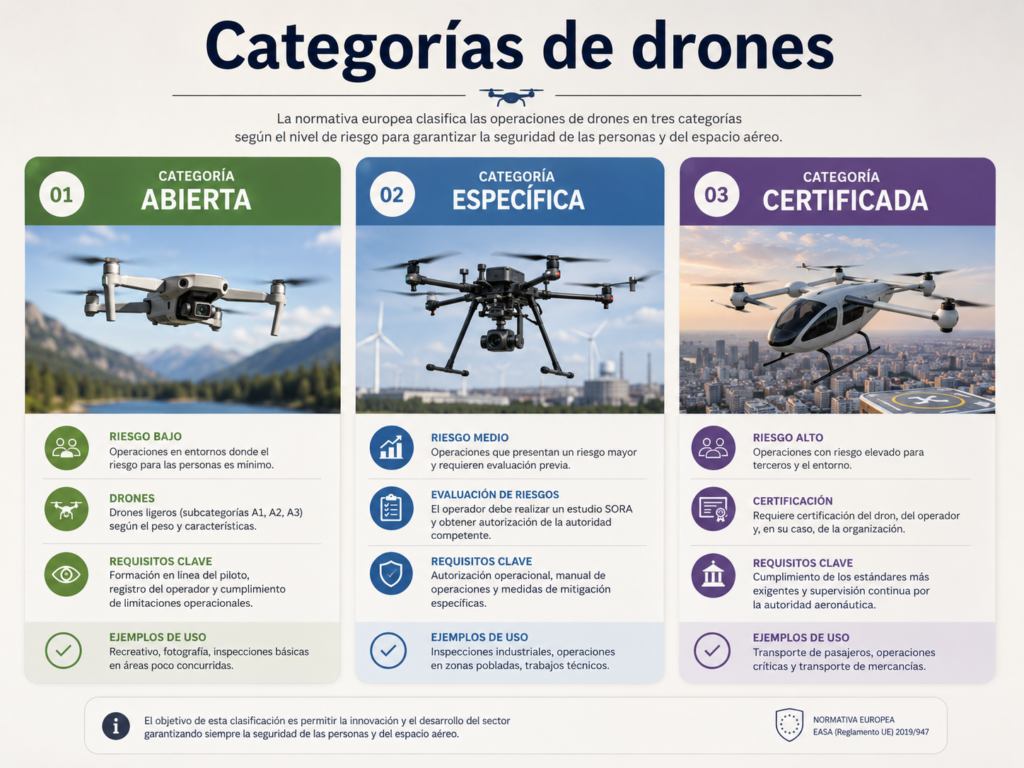
La regulación actual divide las operaciones con drones en tres grandes categorías.
Categoría abierta
La más habitual para usuarios recreativos.
Incluye operaciones de bajo riesgo y la mayoría de vuelos realizados por particulares.
Dentro de esta categoría encontramos:
- A1.
- A2.
- A3.
Es la categoría donde operan la mayoría de los drones para principiantes, drones con cámara y muchos modelos de uso recreativo.
👉 Información oficial:
https://www.seguridadaerea.gob.es
Categoría específica
Aplicable a operaciones que presentan un riesgo superior al permitido dentro de la categoría abierta.
Normalmente afecta a:
- Operaciones profesionales.
- Entornos urbanos complejos.
- Vuelos especiales.
Puede requerir autorizaciones o declaraciones específicas.
Categoría certificada
Es la categoría más exigente.
Se reserva para operaciones de alto riesgo y escenarios avanzados.
No suele afectar al usuario medio.
Registro como operador de drones
Una de las dudas más frecuentes es:
¿Tengo que registrarme como operador?
En muchos casos sí.
Especialmente si utilizas:
- Drones con cámara.
- Drones superiores a determinados límites de peso.
- Drones para actividades profesionales.
El registro es gratuito y puede realizarse online.
👉 Registro oficial de operador UAS:
https://sede.seguridadaerea.gob.es
Una vez registrado recibirás tu número de operador, que deberá identificarse correctamente en las aeronaves utilizadas.
Certificados para volar drones
Otra pregunta habitual es:
¿Necesito licencia para volar un drone?
La respuesta depende del tipo de operación.
Muchos pilotos deberán obtener al menos el certificado:
A1/A3
Este certificado permite operar en gran parte de las situaciones habituales de categoría abierta.
El curso y examen pueden realizarse online.
👉 Curso oficial AESA:
https://sede.seguridadaerea.gob.es
Certificado A2
Permite realizar determinadas operaciones más próximas a personas dentro de los límites establecidos por la normativa.
Es una formación complementaria al A1/A3.
Antes de realizar cualquier vuelo conviene verificar qué certificado corresponde a cada caso.
Dónde puedo volar un drone legalmente
No todos los lugares son aptos para el vuelo.
Existen restricciones relacionadas con:
- Aeropuertos.
- Helipuertos.
- Espacios aéreos controlados.
- Infraestructuras críticas.
- Áreas protegidas.
- Determinadas zonas urbanas.
Por este motivo, antes de despegar, es recomendable consultar siempre el mapa oficial de restricciones.
👉 Consulta de zonas permitidas:
La plataforma ENAIRE Drones permite verificar:
- Restricciones.
- Espacios controlados.
- Limitaciones temporales.
- Información aeronáutica relevante.
Normativa para drones con cámara
Muchos usuarios desconocen que la legislación no solo afecta al vuelo.
También afecta a la grabación.
Cuando utilizas un drone con cámara, debes respetar:
- La privacidad.
- La protección de datos.
- El derecho a la propia imagen.
Esto resulta especialmente importante en:
- Playas.
- Eventos.
- Entornos urbanos.
- Espacios privados.
Cumplir la normativa aérea no exime de respetar el resto de obligaciones legales.
Errores que pueden acabar en sanción
Los errores más habituales son:
- Volar sin revisar restricciones.
- No registrarse como operador.
- No disponer del certificado necesario.
- Sobrevolar personas.
- Volar cerca de aeropuertos.
- Ignorar limitaciones locales.
- Grabar a terceros sin respetar su privacidad.
La mayoría de sanciones pueden evitarse simplemente planificando el vuelo correctamente.
Recursos oficiales recomendados
AESA
Registro, certificados y normativa oficial.
https://www.seguridadaerea.gob.es
Sede Electrónica AESA
Registro de operador y formación.
https://sede.seguridadaerea.gob.es
ENAIRE Drones
Consulta de zonas permitidas.
EASA
Normativa europea de drones.
Conclusión
Conocer la normativa drones España es fundamental para disfrutar de esta tecnología sin problemas legales ni riesgos innecesarios.
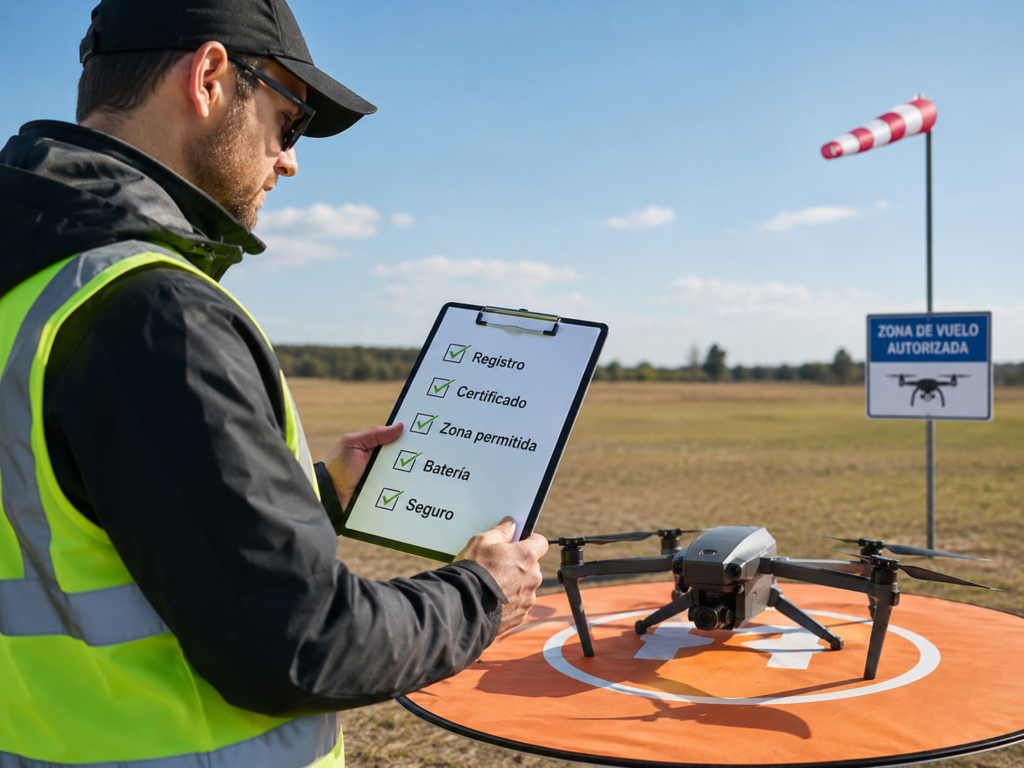
Antes de cada vuelo debes comprobar las restricciones aplicables, verificar si necesitas registro o certificados y consultar siempre las fuentes oficiales cuando tengas dudas.
La buena noticia es que actualmente AESA, EASA y ENAIRE ponen a disposición de los usuarios herramientas que facilitan enormemente el cumplimiento de la normativa.
Invertir unos minutos en revisar estos requisitos puede evitar sanciones y ayudarte a volar con total tranquilidad.
Sigue aprendiendo sobre drones
Preguntas frecuentes sobre la normativa de drones en España
Dependerá del tipo de drone y de la operación realizada, pero en muchos casos sí es obligatorio.
En numerosas operaciones dentro de categoría abierta será necesario disponer del certificado A1/A3.
La herramienta oficial recomendada es ENAIRE Drones.
AESA es la autoridad competente en materia de seguridad aérea para drones.
No completamente.
España aplica el marco regulatorio establecido por EASA para todos los países de la Unión Europea.
Dependerá del tipo de operación, del entorno y de los requisitos específicos aplicables.